
In the event your granisetron patch falls off, your immediate goal is to restore the continuous delivery of your medication. First, try to reattach the patch to a clean, dry area of skin. If it does not stick securely, you should dispose of the old patch safely and apply a new one immediately.
The single most critical rule is to maintain your original treatment schedule. A replacement patch should only be worn for the remainder of the original patch's intended duration and removed on the originally scheduled day.
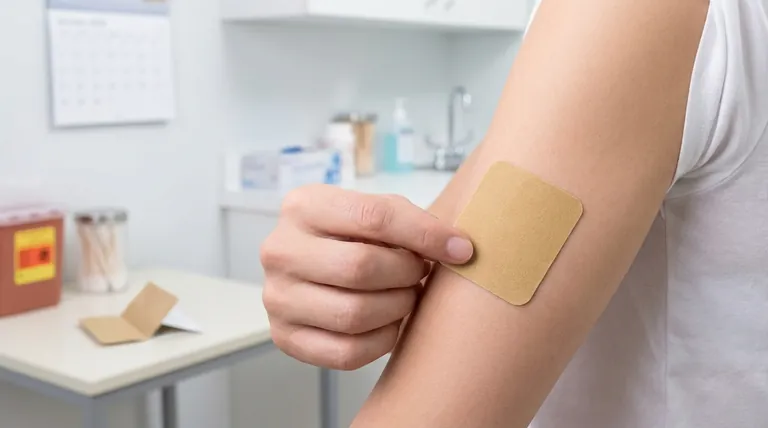
The Immediate Action Plan
When a patch detaches, it interrupts the steady dose of medication your body needs. Acting promptly and correctly ensures your treatment remains effective.
Step 1: Attempt to Reapply the Original Patch
The simplest solution is often the best. Carefully pick up the patch, avoiding contact with the adhesive side as much as possible.
Press it firmly back onto a clean, dry, and hairless area of skin. Hold it in place with the palm of your hand for about 30 seconds to help the adhesive bond with your skin's warmth.
Step 2: If Reapplication Fails, Apply a New Patch
If the original patch will not stick, it can no longer deliver medication reliably. You must apply a new patch right away.
Place the new patch on a completely different site to avoid skin irritation. A common location is the upper outer arm.
Step 3: Dispose of the Old Patch Safely
Once a patch is no longer usable, it still contains active medication. Fold the patch in half so the sticky, medicated sides press together firmly.
Dispose of it in a manner that keeps it away from children and pets.
The Critical Rule: Maintain Your Original Schedule
Applying a new patch does not reset your schedule. This concept is vital to prevent receiving an incorrect dose of medication.
Why the Removal Date is Fixed
The granisetron patch is designed to deliver a specific amount of medication over a set period, typically up to seven days. Changing your removal date would disrupt this cycle.
Sticking to the original schedule ensures you do not overlap doses, which could lead to an overdose, or create a gap in your treatment.
Example Scenario
Imagine you apply a patch on Monday and are scheduled to remove it the following Monday. If the patch falls off on Wednesday and you apply a new one, you must still remove that new patch on the originally scheduled Monday. You do not wear it for a full seven days from Wednesday.
Common Pitfalls to Avoid
Navigating medication can be complex, and transdermal patches have unique considerations. Understanding these common mistakes is key to safe and effective use.
Do Not Use Extra Patches to "Catch Up"
Never apply more than one patch at a time unless specifically instructed by your doctor. Using extra patches will not make up for lost time and significantly increases the risk of an overdose.
Do Not Cut a Patch
A transdermal patch is a complex drug delivery system. Cutting it can damage this system, leading to an unpredictable and potentially unsafe release of the medication.
Securing a Loosening Patch
If you notice just an edge or corner of the patch lifting, you may not need to replace it. Press it down firmly. If needed, you can secure the edges to your skin with a skin-friendly medical tape or adhesive film.
Preventing Detachment
To help the patch adhere properly, always apply it to clean, dry, and hairless skin. While the patch is water-resistant for normal bathing and showering, limiting prolonged time in water, such as long swims or hot tubs, can help prevent it from falling off.
How to Apply This to Your Situation
Your priority is to ensure an uninterrupted, correct dose of medication to control nausea. Your actions should reflect this goal.
- If your primary focus is immediate continuity: Try to reattach the patch. If it fails, apply a new one without delay.
- If your primary focus is safety and dosing accuracy: Remove any replacement patch on the original, scheduled removal day, not a week after you applied the replacement.
- If your primary focus is prevention: Apply the patch to a clean, dry, hairless area and consider using medical tape on the edges if you notice them lifting.
Following these steps ensures your treatment remains consistent, safe, and effective.
Summary Table:
| Action | Key Takeaway |
|---|---|
| Patch Falls Off | Goal: Restore continuous medication delivery immediately. |
| Step 1: Reapply | Press original patch firmly onto clean, dry skin for 30 seconds. |
| Step 2: Replace | If it won't stick, apply a new patch to a different skin site. |
| Critical Rule | Remove the replacement patch on the original scheduled day. |
| Disposal | Fold used patch (sticky sides together) and dispose of safely. |
Ensure your patients never face treatment interruptions. As a bulk manufacturer of reliable transdermal patches, Enokon provides healthcare and pharma brands with technically advanced, adhesive-secure products. Benefit from our custom R&D expertise to develop patches that stay on and deliver medication consistently.
Contact our experts today to discuss your transdermal patch development needs.
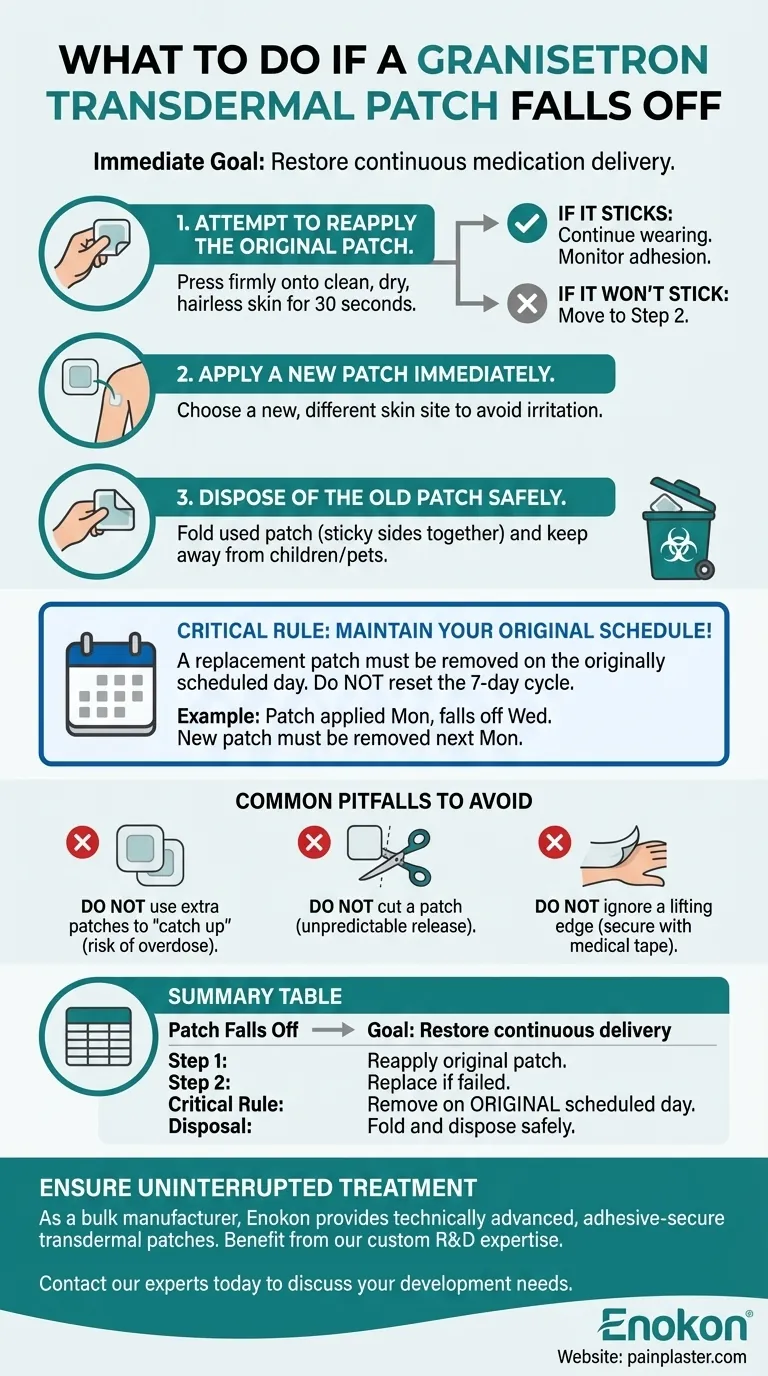
Visual Guide
Related Products
- Far Infrared Heat Pain Relief Patches Transdermal Patches
- Silicone Scar Sheets Patch Transdermal Drug Patch
- Icy Hot Menthol Medicine Pain Relief Patch
- Menthol Gel Pain Relief Patch
- Mugwort Wormwood Pain Relief Patch for Neck Pain
People Also Ask
- Why is the selection of matrix materials critical when developing customized transdermal patches? Optimize Efficacy
- What are the physical impacts of external heat exposure on the performance and safety of transdermal patches? - Guide
- What are the clinical advantages of local transdermal delivery systems? Unlock Safer, More Effective Pain Relief Solutions
- What role does a skin tolerance scoring system play in the safety evaluation of transdermal patches? Key Safety Metrics
- How does high-purity far-infrared ceramic powder contribute to the efficacy of far-infrared physical therapy patches?















