
First and foremost, if your nitroglycerin patch loosens, try to press it firmly back into place. If it falls off completely or will not stick, you must remove the old patch and immediately apply a fresh one to a new, clean area of skin. The goal is to ensure you do not miss a dose of this critical medication.
Your primary objective is to maintain a continuous, therapeutic level of nitroglycerin in your system to prevent chest pain (angina). A detached patch interrupts this delivery, and the immediate solution is to replace it promptly while strictly adhering to your original dosing schedule.
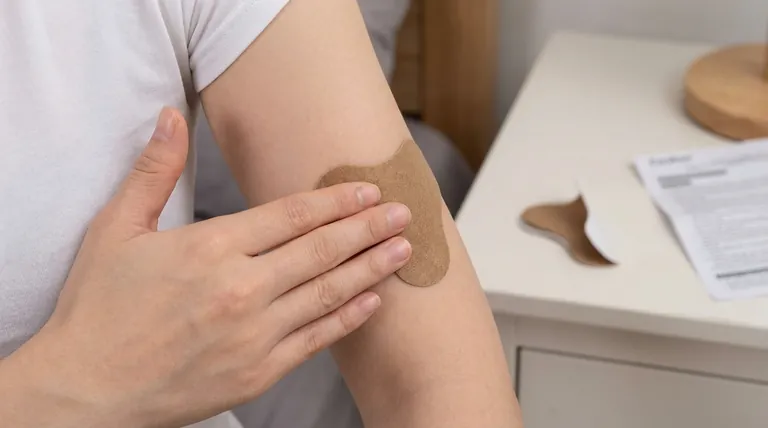
The Immediate Protocol: When a Patch Looses or Falls Off
Following a clear, simple procedure ensures your treatment remains effective and safe.
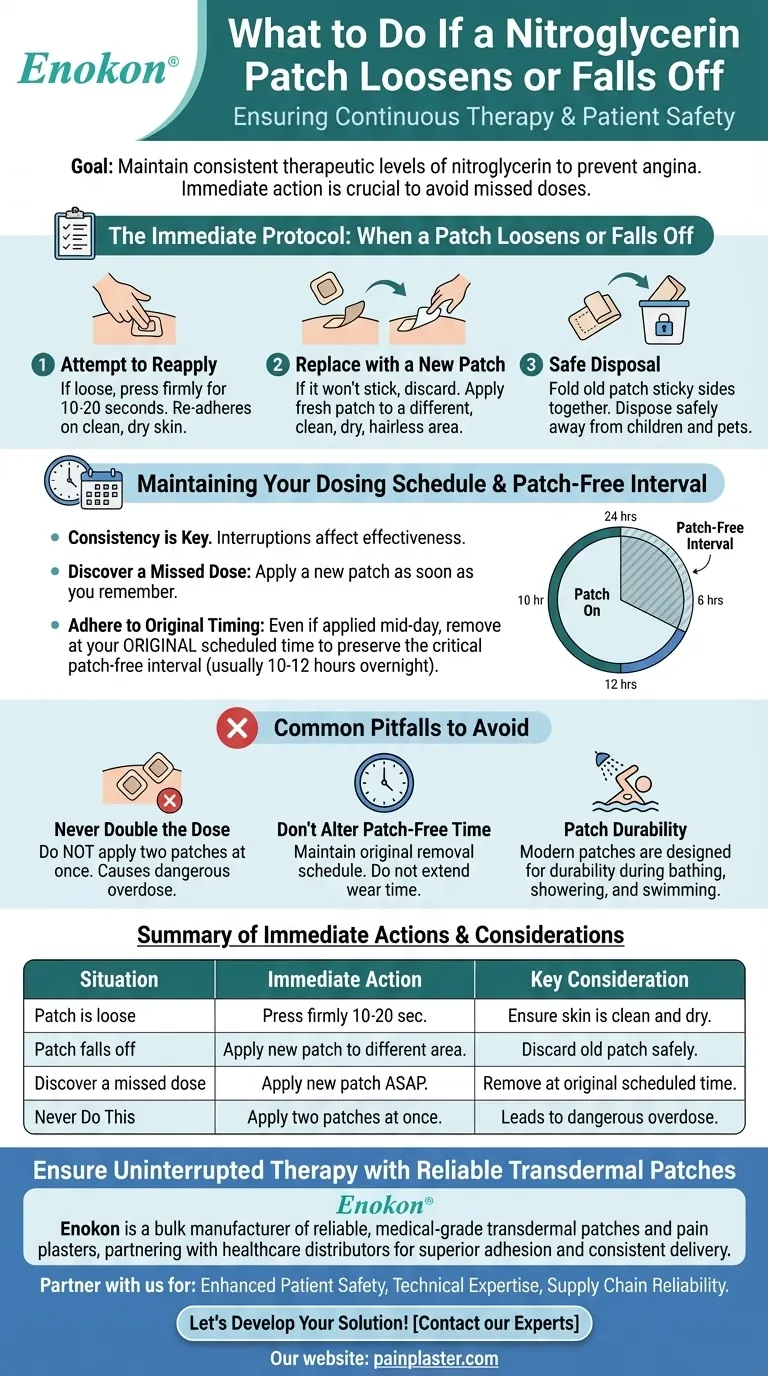
Step 1: Attempt to Reapply
If a patch is merely loose, first try to press it firmly back onto your skin with the palm of your hand for 10-20 seconds. Many patches will re-adhere if the skin is clean and dry.
Step 2: Replace with a New Patch
If the old patch will not stick, discard it and apply a brand new one. Choose a different, clean, dry, and hairless area on your chest, back, or upper arms to ensure good adhesion.
Step 3: Safe Disposal of the Old Patch
Once an old patch is removed, fold it in half with the sticky, medicated sides together. This prevents accidental exposure to others. Dispose of it in a location that is safely out of reach of children and pets.
Maintaining Your Dosing Schedule
Consistency is the key to successful nitroglycerin therapy. A patch falling off is an interruption that needs to be managed within the context of your overall schedule.
The Importance of Consistency
Nitroglycerin patches work by releasing a steady, controlled amount of medication through your skin over many hours. Any interruption in this delivery can reduce the protective effect against angina.
If You Discover a Missed Dose
If you realize a patch has been off for some time, apply a new one as soon as you remember. The priority is to re-establish the delivery of medication.
Adhering to Your Original Timing
Even if you apply a new patch mid-day, you should still remove it at your originally scheduled time. This preserves the crucial patch-free interval (usually 10-12 hours overnight) that prevents your body from developing a tolerance to the medication.
Common Pitfalls to Avoid
Correcting a detached patch is simple, but several critical mistakes must be avoided to ensure your safety.
Never Double the Dose
Do not apply two patches at the same time to make up for a missed dose. This can deliver a dangerously high amount of medication and should only be done if explicitly instructed by your healthcare provider.
Don't Alter Your Patch-Free Time
Applying a replacement patch does not mean you should change your schedule. If you normally remove your patch at 10 PM, continue to do so, even if you had to apply a new one at 3 PM.
Understanding Patch Durability
Modern patches are designed to be durable. You can typically wear a nitroglycerin patch while bathing, showering, or even swimming without it coming loose.
Making the Right Choice for Your Goal
Navigating this issue is about maintaining consistent, safe medication levels.
- If your primary focus is immediate action: Try to re-stick the loose patch; if it fails, replace it immediately with a new one.
- If your primary focus is maintaining your schedule: Apply a replacement patch as soon as you notice it's missing, but remove it at the original, scheduled time.
- If your primary focus is safety: Never wear two patches at once and always fold an old patch in half for safe disposal.
Ultimately, proactively managing your medication ensures you receive the consistent protection you need.
Summary Table:
| Situation | Immediate Action | Key Consideration |
|---|---|---|
| Patch is loose | Press firmly for 10-20 seconds to re-adhere. | Ensure skin is clean and dry. |
| Patch falls off | Apply a new patch to a different, clean skin area. | Discard the old patch safely. |
| Discover a missed dose | Apply a new patch as soon as possible. | Remove it at your originally scheduled time to maintain the patch-free interval. |
| Never Do This | Apply two patches at once. | This can lead to a dangerous overdose. |
Ensure Uninterrupted Therapy with Reliable Transdermal Patches
Managing a critical medication like nitroglycerin requires patches you can trust to stay in place. Fluctuating doses due to patch failure can compromise patient safety and treatment efficacy.
Enokon is a bulk manufacturer of reliable, medical-grade transdermal patches and pain plasters. We partner with healthcare and pharmaceutical distributors and brands to deliver products with superior adhesion and consistent drug delivery.
By partnering with us, you can:
- Enhance Patient Safety: Minimize the risk of missed doses with patches designed for durable, long-lasting wear.
- Leverage Technical Expertise: Benefit from our custom R&D and development services to create a patch tailored to your specific drug formulation and patient needs.
- Ensure Supply Chain Reliability: Access consistent, high-volume manufacturing that meets stringent quality standards.
Let's develop the reliable transdermal solution your patients depend on. Contact our experts today to discuss your project requirements.
Visual Guide
Related Products
- Icy Hot Menthol Medicine Pain Relief Patch
- Menthol Gel Pain Relief Patch
- Far Infrared Heat Pain Relief Patches Transdermal Patches
- Silicone Scar Sheets Patch Transdermal Drug Patch
- Mugwort Wormwood Pain Relief Patch for Neck Pain
People Also Ask
- What are the benefits of using pain relief patches compared to oral medications? Targeted Relief with Fewer Side Effects
- What is the shelf-life of the pain relief patch? Ensure Potency and Safety for Your Patients
- What are the common side effects of pain relief patches? Risks & Safety Tips
- What should you consider when choosing between a pain relief patch and a cream? Key Factors for Effective Pain Management
- What alternatives exist for pain relief patches? Compare systemic meds & physical therapy



















