
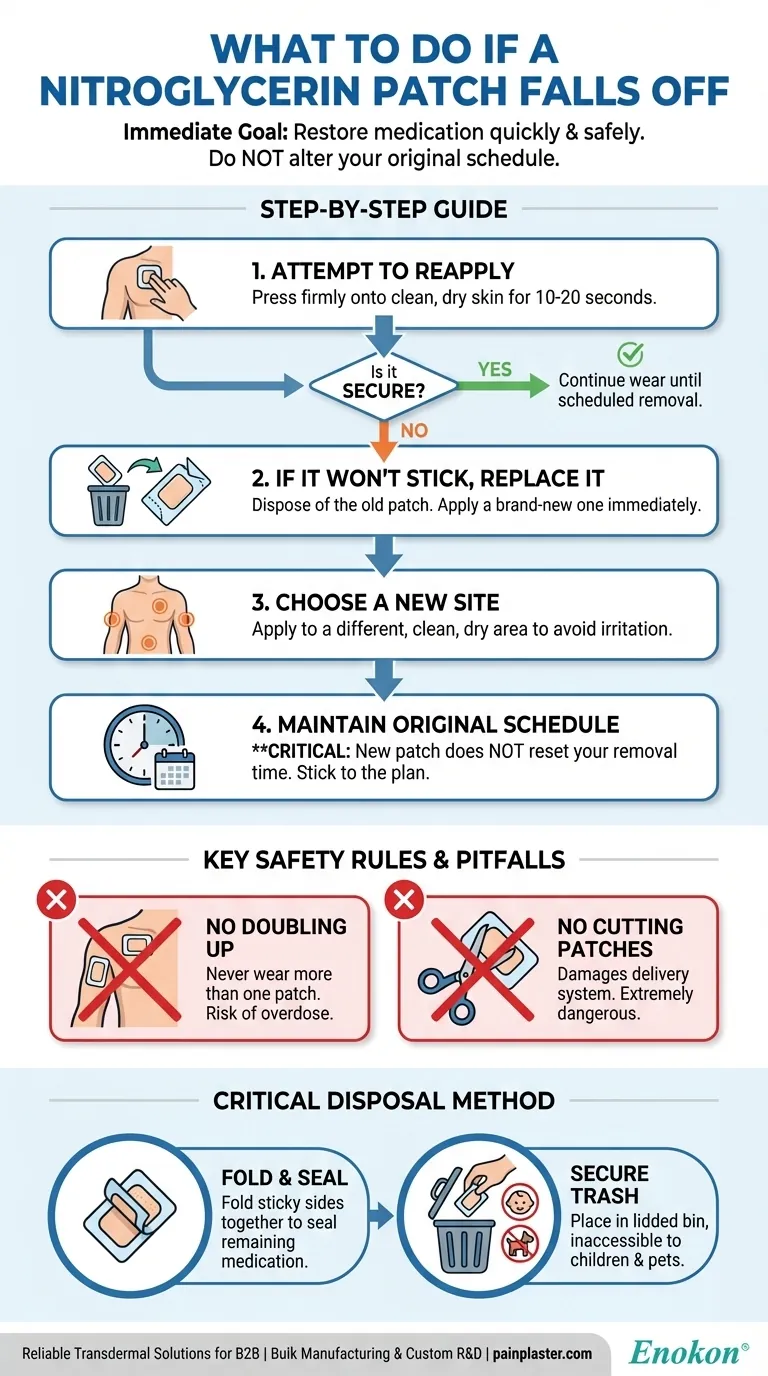
If a nitroglycerin patch falls off, your immediate goal is to restore the medication as quickly and safely as possible. The correct action is to first try sticking the patch back onto clean, dry skin. If it does not adhere securely, you must remove that patch, dispose of it properly, and apply a brand-new patch to a different skin site. Critically, you must continue with your original removal schedule.
The guiding principle is medication continuity. If a nitroglycerin patch detaches, immediately replace it with a new one but do not alter your original schedule for when you are supposed to apply and remove the patch. This ensures a consistent dose and prevents therapeutic gaps.
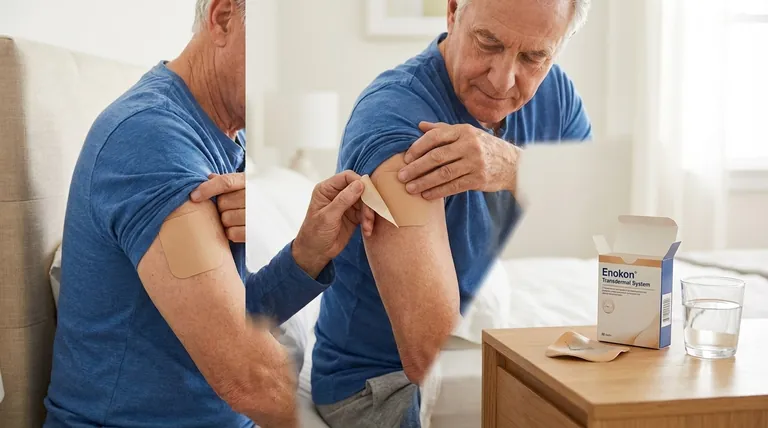
A Step-by-Step Guide for a Detached Patch
Managing a detached patch is straightforward if you follow a clear process. The priority is to maintain the therapeutic level of medication your body needs to prevent angina (chest pain).
Step 1: Attempt to Reapply
Your first and simplest action is to try and re-stick the patch. Press it firmly back onto clean, dry skin with the palm of your hand for 10-20 seconds.
If only an edge is loose, you can try pressing it back down. While some suggest using medical tape, replacing the patch is often the more reliable solution if it doesn't feel completely secure.
Step 2: If It Won't Stick, Replace It
If the original patch will not stick firmly, it can no longer deliver a reliable dose. You must dispose of it and apply a new patch immediately.
Step 3: Choose a New, Clean Skin Site
Apply the new patch to a completely different location to avoid skin irritation. The chest, back, upper arms, or shoulders are common sites.
Ensure the new area is clean, dry, and free of hair, cuts, or irritation, as this can affect how the medication is absorbed.
Step 4: Maintain Your Original Schedule
This is the most critical step. Applying a new patch does not reset your dosing clock.
For example, if you apply your patch at 9 AM and remove it at 9 PM, and it falls off at 3 PM, you should apply a new one immediately but still remove that new patch at your original 9 PM deadline. This prevents accidental overdose from wearing it too long.
Common Pitfalls and Key Safety Rules
Understanding the principles behind the instructions is key to using nitroglycerin patches safely and effectively. Avoiding common mistakes is just as important as knowing what to do.
The Risk of a Missed Dose
Nitroglycerin patches work by providing a slow, continuous dose of medication to prevent angina attacks. Failing to replace a patch that has fallen off creates a gap in this protection, potentially increasing your risk of experiencing chest pain.
The Danger of "Doubling Up"
Never wear more than one patch at a time to "make up" for a patch that fell off or a dose you forgot to apply. This can lead to an overdose, with symptoms like severe headache, dizziness, or a drop in blood pressure.
Why You Should Never Cut a Patch
A transdermal patch is a complex drug delivery system. Cutting it can damage this system, causing the medication to be released too quickly or unpredictably, which is extremely dangerous. Always use the full patch as prescribed.
Preventing a Patch from Falling Off
To minimize the chance of a patch detaching, always apply it to a clean, dry, and relatively hairless area of skin. If you notice patches frequently coming loose during activities like swimming or showering, speak with your doctor or pharmacist about potential solutions.
The Critical Importance of Safe Disposal
Even a used nitroglycerin patch contains a significant amount of active medication. This residual drug can be extremely harmful or fatal if accidentally ingested by a child or a pet.
Why Proper Disposal Matters
The amount of nitroglycerin left in a used patch can be enough to cause serious medical issues in someone for whom it was not prescribed. Safe disposal is a non-negotiable part of using this medication.
The "Fold and Throw" Method
After removing a patch, immediately fold it in half with the sticky sides pressed firmly together. This seals in the remaining medication.
Dispose of the folded patch in a trash can with a lid, where it is inaccessible to others in your household.
Post-Removal Skin Care
After you peel off a patch, you may notice some adhesive residue. Gently wash the area with soap and water to remove any remaining medication from your skin.
Making the Right Choice for Your Health
Navigating medication can be complex, but following these key principles ensures you manage your nitroglycerin therapy safely and effectively.
- If your patch falls off completely: Immediately apply a new patch to a different, clean area and stick to your original removal time.
- If your patch edge is loose: Try pressing it back on firmly. If it does not feel completely secure, it is safest to replace it with a new one.
- When disposing of any patch: Always fold it sticky-side-in and place it in a secure trash bin, away from children and pets.
Consistent and correct use of your medication is the foundation of effective angina prevention.
Summary Table:
| Action | Key Steps | Why It's Important |
|---|---|---|
| Patch Falls Off | 1. Try to re-stick to clean, dry skin. 2. If it won't stick, apply a new patch to a different site. 3. Maintain your original removal schedule. |
Prevents a gap in medication, reducing angina risk. |
| Common Mistakes to Avoid | - Never wear two patches at once. - Never cut a patch. - Always dispose of used patches safely. |
Prevents overdose and protects others from accidental exposure. |
Need a reliable supply of nitroglycerin or other transdermal patches? As Enokon, a bulk manufacturer of reliable transdermal patches and pain plasters for healthcare distributors and pharmaceutical brands, we ensure consistent quality and precise drug delivery. Benefit from our technical expertise for custom R&D and development to create the patches your patients can trust. Contact our experts today to discuss your needs.
Visual Guide
Related Products
- Silicone Scar Sheets Patch Transdermal Drug Patch
- Far Infrared Heat Pain Relief Patches Transdermal Patches
- Icy Hot Menthol Medicine Pain Relief Patch
- Menthol Gel Pain Relief Patch
- Mugwort Wormwood Pain Relief Patch for Neck Pain
People Also Ask
- What role does a silicone-based transdermal delivery system play in Parkinson's? Enhancing Early-Stage Patient Care
- How is the long-term skin tolerance of silicone-based transdermal patches evaluated in clinical settings? R&D and Safety
- Why is a polarizing microscope used to evaluate the long-term stability of transdermal drug patches? Ensure Efficacy.
- What are common adverse effects of transdermal drug delivery? Risks & Prevention Tips
- What are the advantages of transdermal drug patches? Optimize Medication Delivery with Patches















