
In the event of skin irritation from a patch, the immediate steps are to remove it and apply a small amount of hydrocortisone cream to the affected area. You should then apply a new patch to a different, clean, and dry skin site. If the irritation is severe or persists, it is essential to consult your healthcare provider.
While minor irritation is a common and often manageable side effect of transdermal patches, understanding how to prevent it and when to seek medical advice is critical for ensuring your treatment is both safe and effective.

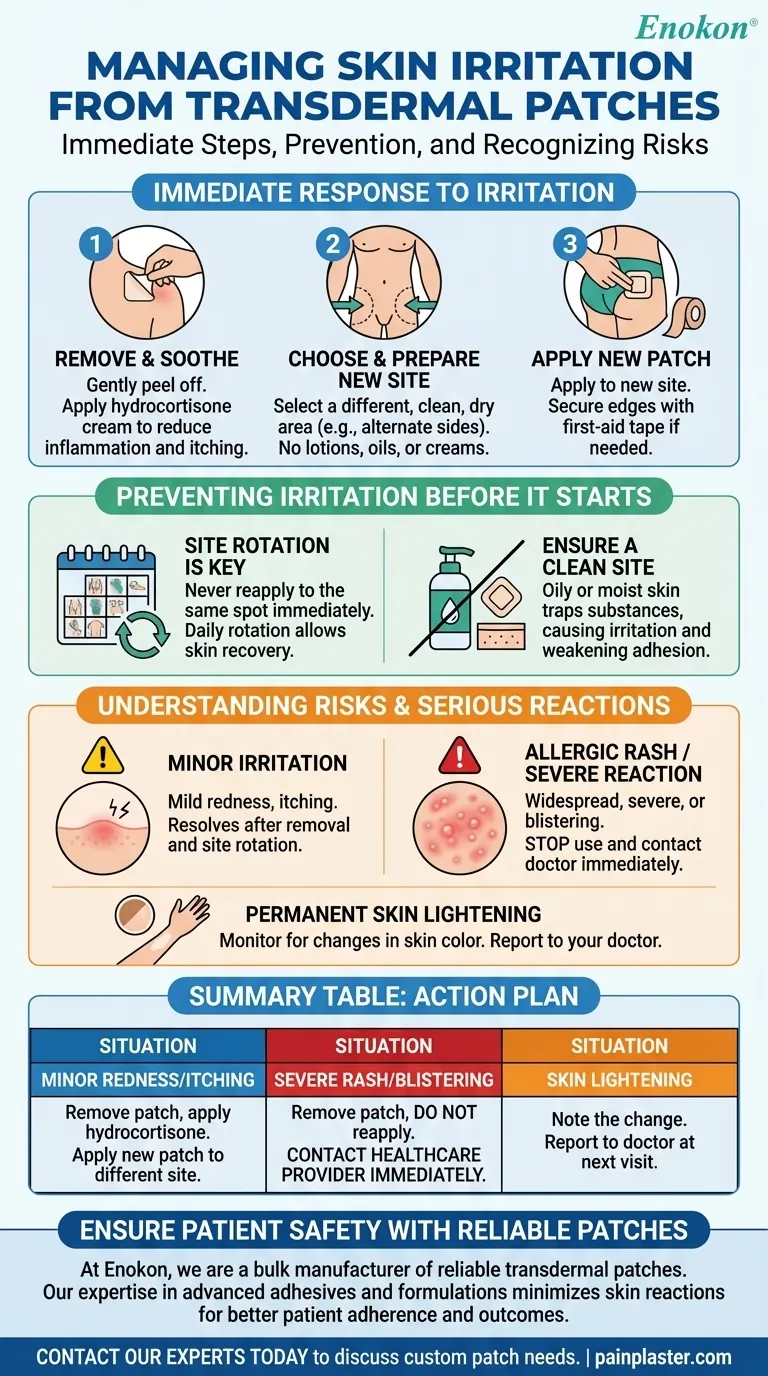
The Immediate Response to Skin Irritation
When you notice redness, itching, or discomfort at the patch site, a clear, methodical response can resolve the issue quickly and prevent it from worsening.
Step 1: Remove the Patch and Soothe the Skin
Gently peel off the patch. After removal, you can apply a small amount of over-the-counter hydrocortisone cream to the irritated skin to help reduce inflammation and itching.
Step 2: Choose and Prepare a New Site
Select a different location for the new patch. The most common advice is to alternate between the left and right sides of your body, such as the hips.
Ensure the new area is completely clean, dry, and free of any lotions, oils, or creams, as these can interfere with adhesion and cause irritation.
Step 3: Apply the New Patch
Apply the new patch to the freshly prepared site. If the edges of the new patch loosen, you can secure them with first-aid tape.
Preventing Irritation Before It Starts
The most effective way to manage skin reactions is to prevent them. Proper application technique is the foundation of successful patch therapy.
The Principle of Site Rotation
Site rotation is the single most important factor in preventing contact dermatitis from patches. Never apply a new patch to the same spot you just used.
Alternating sites daily or with each new patch gives the skin time to recover and breathe, significantly reducing the likelihood of irritation.
The Importance of a Clean Application Site
Applying a patch to skin that is oily, moist, or has lotion on it can trap substances under the adhesive, leading to irritation. It also weakens the patch's seal, causing it to lift or fall off.
Understanding the Risks and Serious Reactions
Not all skin reactions are the same. It's crucial to distinguish between minor irritation and a more serious issue that requires immediate medical attention.
Minor Irritation vs. Allergic Rash
Minor irritation typically involves mild redness or itching that resolves after you remove the patch and rotate sites.
An allergic rash may be more widespread, severe, or include blistering. If you suspect an allergic reaction, stop using the patch and contact your healthcare provider immediately.
The Risk of Permanent Skin Lightening
Over time, some transdermal patches may cause permanent changes in skin pigmentation, resulting in lighter patches of skin at the application site.
Monitor your skin for any new areas of lightening and report these changes to your doctor right away. They may need to adjust or stop your treatment.
When to Contact Your Doctor Immediately
Beyond a severe rash or skin color changes, you should contact your provider if you experience any other significant side effects, such as vision changes. Always inform your medical team about all your medications and health conditions.
Making the Right Choice for Your Situation
Proactively managing your patch therapy is key to minimizing side effects and achieving the best possible outcome.
- If your primary focus is managing mild redness: Strictly follow the site rotation protocol and apply hydrocortisone cream to irritated areas after patch removal.
- If your primary focus is keeping the patch secure: Ensure the skin is clean and dry before application, and use first-aid tape or a see-through adhesive dressing if it begins to lift.
- If your primary focus is safety: Immediately report any severe rashes, skin color changes, or other concerning side effects to your doctor.
Properly caring for your skin during patch therapy empowers you to continue your treatment safely and with confidence.
Summary Table:
| Situation | Immediate Action | Next Step |
|---|---|---|
| Minor Redness/Itching | Remove patch, apply hydrocortisone cream. | Apply new patch to a different, clean, dry site. |
| Severe Rash/Blistering | Remove patch, do not reapply. | Contact your healthcare provider immediately. |
| Skin Lightening | Note the change. | Report to your doctor at your next visit. |
Ensure patient safety and comfort with reliable transdermal patches.
At Enokon, we are a bulk manufacturer of reliable transdermal patches and pain plasters for healthcare and pharmaceutical distributors and brands. We understand that managing side effects like skin irritation is critical for treatment adherence and patient outcomes.
Our technical expertise allows for custom R&D and development of patches with advanced adhesives and formulations designed to minimize skin reactions. Partner with us to deliver safer, more effective therapies.
Contact our experts today to discuss your custom transdermal patch needs.
Visual Guide
Related Products
- Far Infrared Heat Pain Relief Patches Transdermal Patches
- Icy Hot Menthol Medicine Pain Relief Patch
- Silicone Scar Sheets Patch Transdermal Drug Patch
- Menthol Gel Pain Relief Patch
- Mugwort Wormwood Pain Relief Patch for Neck Pain
People Also Ask
- Why is the selection of matrix materials critical when developing customized transdermal patches? Optimize Efficacy
- What are the clinical advantages of local transdermal delivery systems? Unlock Safer, More Effective Pain Relief Solutions
- What are the physical impacts of external heat exposure on the performance and safety of transdermal patches? - Guide
- What role does a skin tolerance scoring system play in the safety evaluation of transdermal patches? Key Safety Metrics
- How does high-purity far-infrared ceramic powder contribute to the efficacy of far-infrared physical therapy patches?



















