
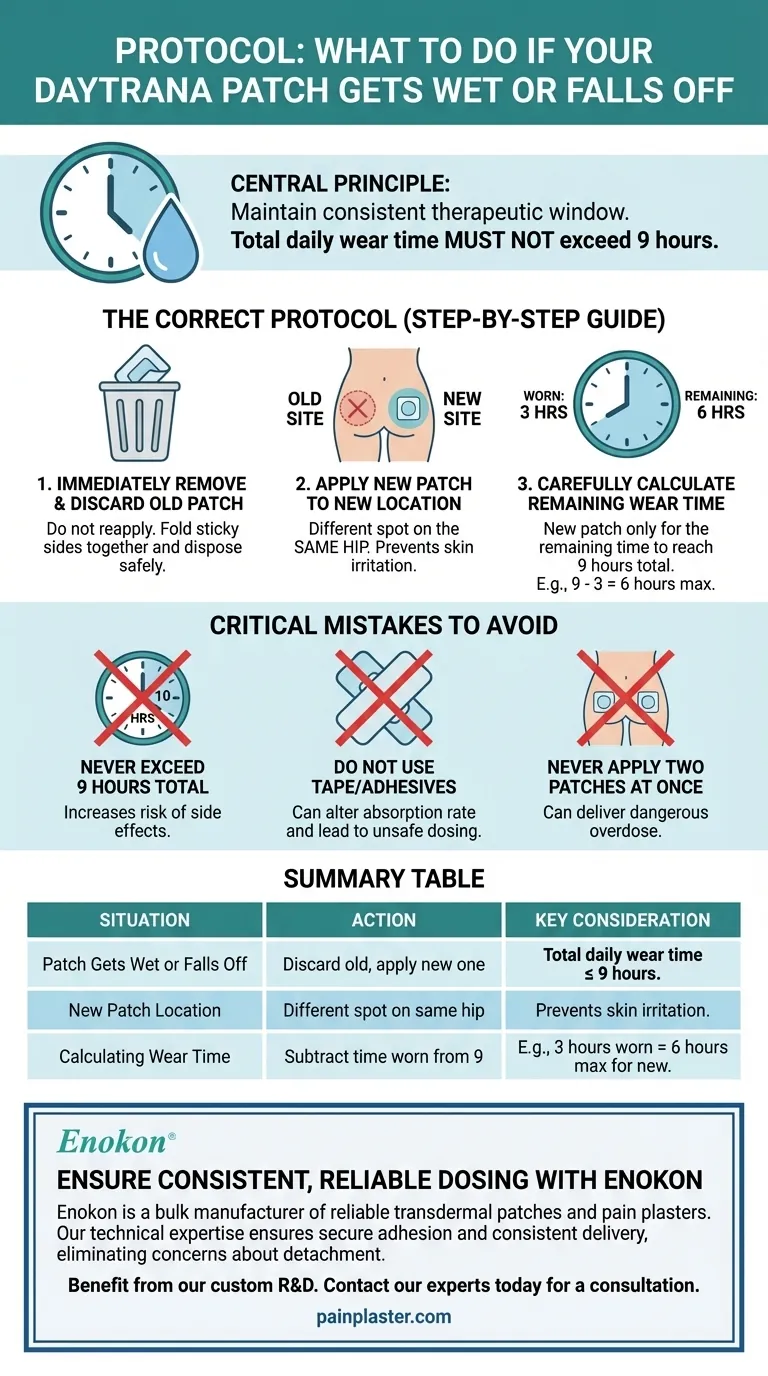
First and foremost, if a Daytrana patch gets wet or falls off, you should discard the old patch and apply a new one. The new patch should be placed on a different area of the same hip, and you must ensure the total combined time both patches are worn for the day does not go over the prescribed maximum of nine hours.
The central principle is to maintain a consistent therapeutic window without risking over-medication. When a Daytrana patch detaches, the goal is to replace it immediately while strictly adhering to the total nine-hour daily wear time limit.
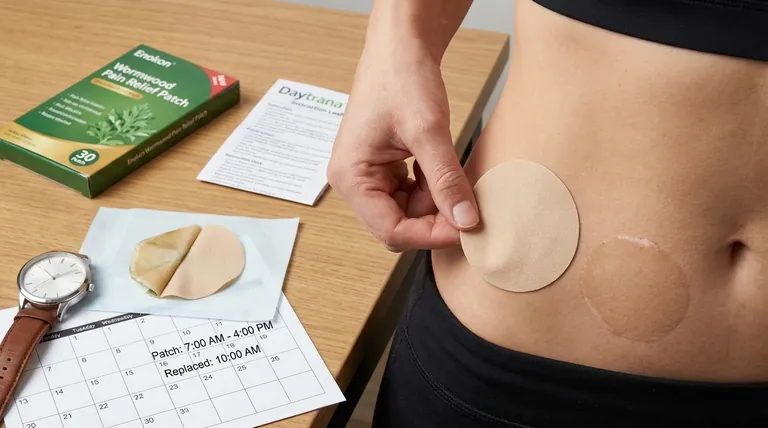
The Correct Protocol for a Detached Daytrana Patch
When a patch detaches, following a precise protocol is essential for ensuring both safety and the medication's effectiveness. The steps are straightforward but must be followed carefully.
Step 1: Immediately Remove and Discard the Old Patch
If the Daytrana patch comes loose or falls off completely, do not attempt to reapply it. The adhesive may be compromised, which can affect how well the medication is absorbed through the skin.
Properly fold the used patch in half so the sticky sides press together, and dispose of it safely where children or pets cannot access it.
Step 2: Apply a New Patch to a New Location
Open a new patch and apply it to a clean, dry, and non-irritated area of skin.
It is crucial to place the new patch on a different spot on the same hip as the original patch. Alternating locations helps prevent skin irritation, a common side effect of transdermal patches.
Step 3: Carefully Calculate the Remaining Wear Time
This is the most critical step. The maximum recommended wear time for a Daytrana patch is nine hours per day.
If the original patch was on for three hours before it fell off, the new replacement patch should only be worn for a maximum of six additional hours to reach the nine-hour total for that day.
Critical Mistakes to Avoid
Managing a detached patch is as much about what you don't do as what you do. Certain actions can lead to incorrect dosing or skin reactions.
Never Exceed Nine Hours of Total Wear Time
The nine-hour limit is based on the medication's delivery rate and therapeutic effect. Exceeding this total daily time significantly increases the risk of side effects like insomnia, appetite loss, or skin irritation.
Do Not Use Tape or External Adhesives
Never use tape, bandages, or other adhesives to try and re-secure a loose Daytrana patch.
These external materials can change the rate at which the medication is absorbed into the skin, leading to unpredictable and potentially unsafe dosing.
Never Apply Two Patches at Once
If a patch falls off, it must be removed before a new one is applied. Wearing two patches simultaneously, even for a short time, can deliver a dangerous overdose of medication.
Understand that Not All Patches Are the Same
You may find conflicting advice online because different types of patches (e.g., for birth control or pain relief) have entirely different rules. Some are worn for multiple days and have different reapplication protocols. The advice here is specific to Daytrana.
How to Apply This to Your Situation
Your response will depend on when the patch falls off and how long it was worn.
- If the patch falls off early in the day: Replace it with a new one and make a note of the time, ensuring you remove the new patch once the nine-hour total for the day is reached.
- If the patch falls off near the end of the nine-hour window: You may decide with your doctor not to replace it. For example, if it falls off after eight hours, the benefit of reapplying for one hour may be minimal.
- If you are ever unsure about timing or dosage: The safest course of action is always to remove the patch and contact your doctor or pharmacist for guidance.
Ultimately, your goal is to replace the lost dose while strictly respecting the maximum nine-hour daily limit for safety and efficacy.
Summary Table:
| Situation | Action | Key Consideration |
|---|---|---|
| Patch Gets Wet or Falls Off | Discard old patch, apply a new one. | Total wear time for the day must not exceed 9 hours. |
| New Patch Location | Apply to a different spot on the same hip. | Prevents skin irritation. |
| Calculating Wear Time | Subtract time worn from 9 hours. | E.g., 3 hours worn = new patch worn for max 6 hours. |
| Critical Mistakes | Do not use tape or wear two patches at once. | Prevents unsafe dosing and overdose risk. |
Ensure Consistent, Reliable Dosing with Your Transdermal Patches
Managing a patch that falls off highlights the critical importance of consistent adhesive performance and precise drug delivery. Fluctuations can compromise patient safety and treatment efficacy.
Enokon is a bulk manufacturer of reliable transdermal patches and pain plasters. We partner with healthcare and pharmaceutical distributors and brands to eliminate these concerns. Our technical expertise ensures your patches adhere securely and deliver medication consistently.
Benefit from our custom R&D and development services to create patches that perform as intended, every time.
Let's discuss how we can enhance your product's reliability. Contact our experts today for a consultation.
Visual Guide
Related Products
- Herbal Medicated Anti Diarrhea Patch for Digestive Relief
- Menthol Gel Pain Relief Patch
- Hydra Gel Health Care Eye Patch
- Icy Hot Menthol Medicine Pain Relief Patch
- Cooling Fever Patches Color Change Cold Fever Patch
People Also Ask
- What are the pharmacological effects of multi-target herbal patches in relieving joint inflammation? Science-Backed OEM
- What activities should be avoided while using this patch? Key Precautions for Safe & Effective Use
- What should be done if a patch falls off or a dose is missed? Quick Fixes & Safety Tips
- What should be avoided when using the patch? Key Safety Tips for Herbal Patch Users
- What should be done if a patch comes loose or falls off? Ensure Continuous & Effective Treatment



















