
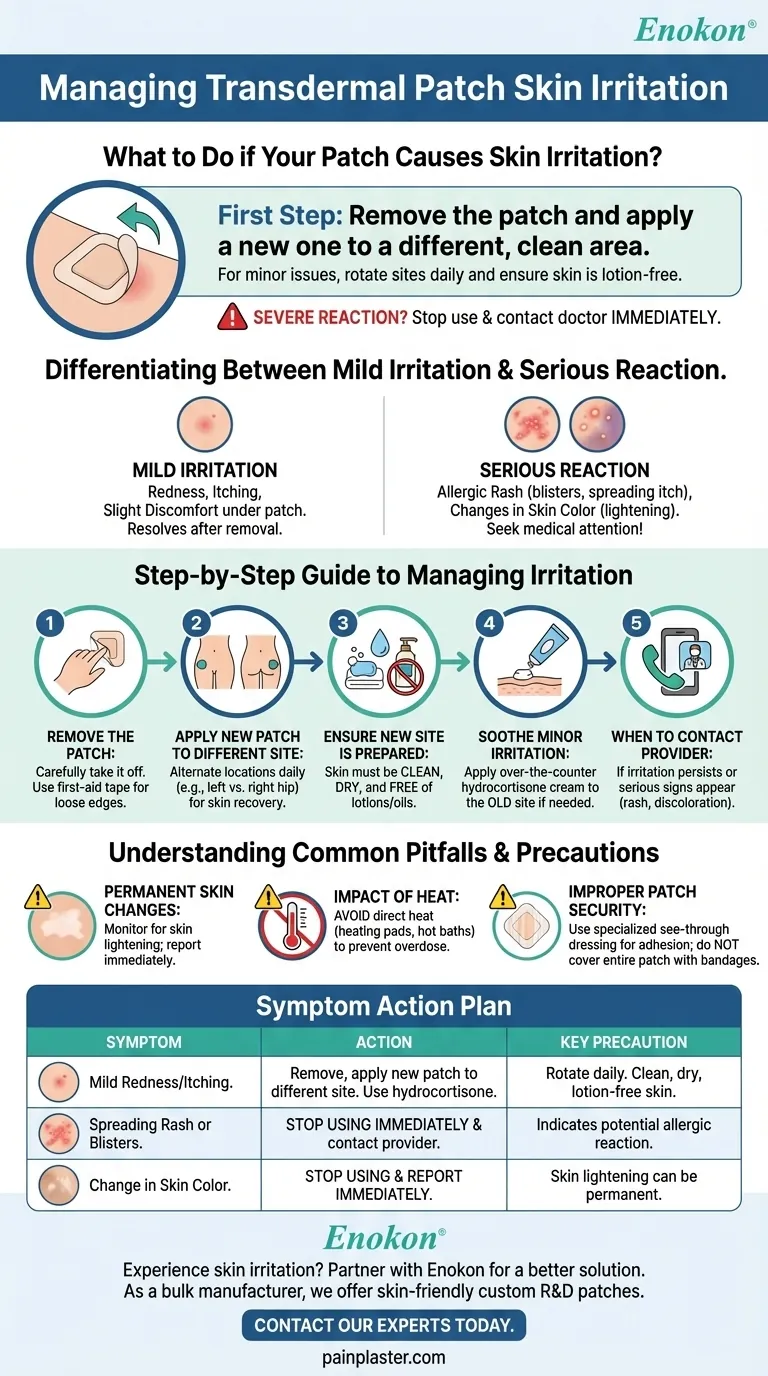
If your transdermal patch is causing skin irritation, the first step is to remove it and apply a new patch to a different, clean area of skin. For minor redness or itching, you can often manage this by rotating application sites daily and ensuring the skin is completely free of lotions or oils. However, for a severe allergic rash or changes in skin color, you must stop using the patch and contact your healthcare provider immediately.
The key to managing patch-related skin issues is understanding the difference between common, manageable irritation and a serious reaction. While proper application techniques can prevent most minor problems, any sign of an allergic reaction or skin discoloration requires immediate medical attention.
Differentiating Between Mild Irritation and a Serious Reaction
Not all skin reactions are equal. Knowing what to look for is critical for determining the right course of action.
What Is Mild Irritation?
Mild irritation typically presents as redness, itching, or slight discomfort directly under the patch. This is often caused by the adhesive, trapped moisture, or the medication itself and usually resolves on its own after the patch is removed.
Signs of a Serious Reaction
A serious reaction goes beyond simple redness. You must contact your doctor right away if you experience an allergic rash (which may include blisters or intense itching that spreads) or any changes in skin color, especially skin lightening, which can be permanent.
A Step-by-Step Guide to Managing Irritation
If you notice irritation, follow a clear and logical process to address it safely.
Step 1: Remove the Patch
Carefully remove the patch that is causing irritation. If its edges are loose but it hasn't fallen off, you can try securing them with first-aid tape.
Step 2: Apply a New Patch to a Different Site
Apply a fresh patch to a new location. The most common advice is to alternate the application site daily, for example, between your left and right hip, to give the skin time to recover.
Step 3: Ensure the New Site is Prepared
Before applying the new patch, make sure the skin is clean, dry, and completely free of any lotions, oils, or creams. These products can interfere with adhesion and increase the risk of irritation.
Step 4: Soothe Minor Irritation
For mild redness or itching at the old site, you can apply a small amount of over-the-counter hydrocortisone cream after the patch has been removed.
Step 5: When to Contact Your Healthcare Provider
If irritation persists despite these measures, or if you notice signs of a serious reaction like a rash or skin discoloration, consult your doctor. They may suggest an alternative treatment.
Understanding the Common Pitfalls and Precautions
Proper patch use involves more than just application. Being aware of potential issues is key to safe and effective treatment.
The Risk of Permanent Skin Changes
Over time, some transdermal patches may cause permanent skin lightening in the application area. Monitor your skin for any new, lighter patches and report these changes to your doctor immediately.
The Impact of Heat
You must avoid exposing the patch to direct heat sources, such as heating pads or long, hot baths. Heat can increase the rate at which the medication is absorbed, potentially leading to an overdose and worsening skin reactions.
Improper Patch Security
If a patch has adhesion issues, you can cover it with a specialized see-through adhesive dressing. Never use other types of bandages or tape to cover the entire patch, as this can interfere with how the medication is delivered.
How to Apply This to Your Situation
Your response should be guided by the specific symptoms you are experiencing.
- If your primary focus is managing mild redness or itching: Consistently rotate application sites daily and ensure your skin is perfectly clean and dry before applying a new patch.
- If your primary focus is a spreading rash or blisters: Stop using the patch immediately and contact your healthcare provider, as this signals a potential allergic reaction.
- If your primary focus is a change in skin color: Report this to your doctor without delay, as your treatment plan may need to be adjusted.
- If your primary focus is preventing irritation from starting: Be meticulous about your application routine, focusing on daily site rotation and avoiding all lotions on the patch site.
Ultimately, proactive skin care and clear communication with your doctor are the most effective tools for managing your treatment safely.
Summary Table:
| Symptom | Action to Take | Key Precaution |
|---|---|---|
| Mild Redness/Itching | Remove patch, apply new one to a different site. Use hydrocortisone cream if needed. | Rotate application sites daily. Ensure skin is clean, dry, and free of lotions. |
| Spreading Rash or Blisters | Stop using the patch immediately and contact your healthcare provider. | This indicates a potential allergic reaction requiring medical attention. |
| Change in Skin Color | Stop using the patch and report to your doctor immediately. | Skin lightening can be permanent; your treatment plan may need adjustment. |
Experience skin irritation with your current patches? Partner with Enokon for a better solution.
As a bulk manufacturer of reliable transdermal patches and pain plasters for healthcare and pharma distributors, we understand that skin compatibility is paramount. Our technical expertise allows for custom R&D to develop patches with advanced, skin-friendly adhesives and formulations that minimize the risk of irritation.
Let us help you provide a safer, more comfortable experience for your end-users. Contact our experts today to discuss your custom patch development needs.
Visual Guide
Related Products
- Far Infrared Heat Pain Relief Patches Transdermal Patches
- Silicone Scar Sheets Patch Transdermal Drug Patch
- Icy Hot Menthol Medicine Pain Relief Patch
- Menthol Gel Pain Relief Patch
- Mugwort Wormwood Pain Relief Patch for Neck Pain
People Also Ask
- Why is the selection of matrix materials critical when developing customized transdermal patches? Optimize Efficacy
- What are the physical impacts of external heat exposure on the performance and safety of transdermal patches? - Guide
- What role does a skin tolerance scoring system play in the safety evaluation of transdermal patches? Key Safety Metrics
- What are the clinical advantages of local transdermal delivery systems? Unlock Safer, More Effective Pain Relief Solutions
- How does high-purity far-infrared ceramic powder contribute to the efficacy of far-infrared physical therapy patches?



















