
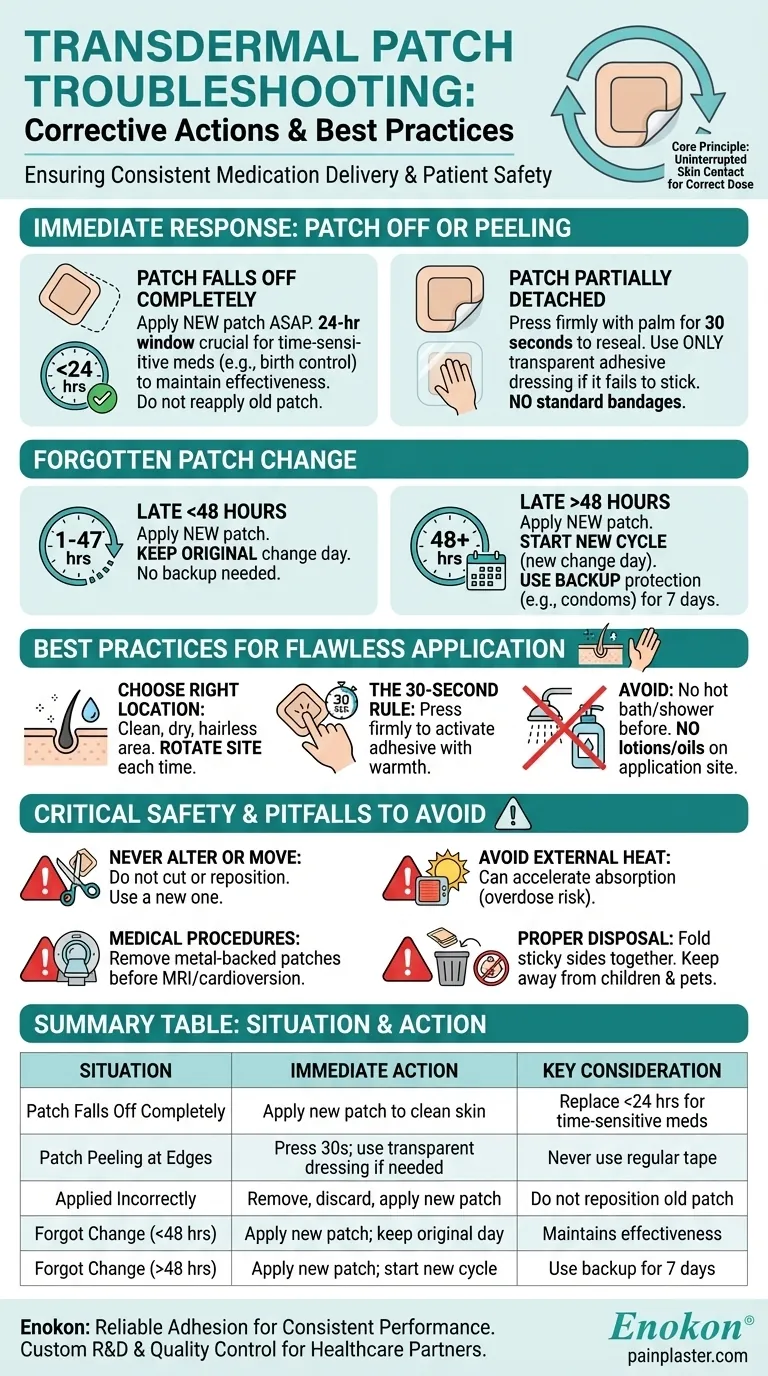
If your patch comes off or is applied incorrectly, the immediate action is to apply a new patch as soon as possible. For many medications, like contraceptive patches, if this is done within 24 hours, its effectiveness is not compromised. Do not attempt to reapply an old patch that is no longer sticky, and never use household tapes or standard bandages to secure it.
The core principle of a transdermal patch is consistent medication delivery through direct, uninterrupted skin contact. Any time this contact is broken, you risk an incorrect dose, so the priority is always to restore proper application with a fresh patch immediately.
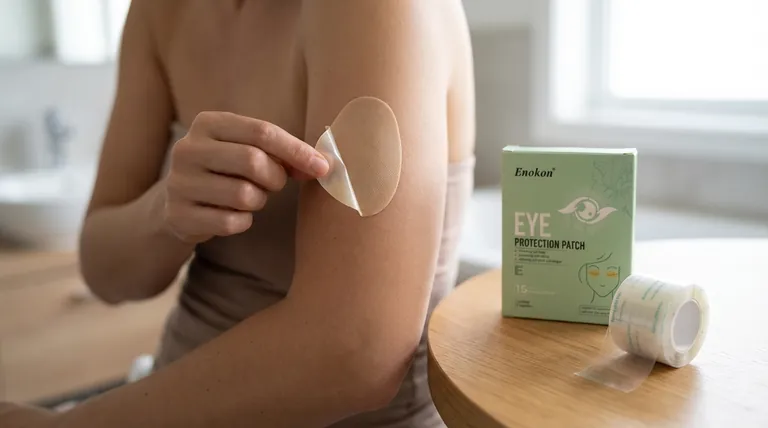
The First Response: Correcting a Detached Patch
When a patch loses its adhesion, your response depends on whether it's completely off or just peeling at the edges.
If a Patch Falls Off Completely
Your first and only step should be to apply a brand-new patch to a clean, dry area of skin. Do not try to salvage the old one.
The urgency depends on your specific medication. For time-sensitive patches like birth control, replacing it within 24 hours is crucial to maintain contraceptive protection without needing a backup method.
If a Patch Is Partially Detached
First, try to press the peeling edges down firmly with your palm for 30 seconds to reseal the adhesive.
If the edges will not stick, you may secure them with a product specifically designed for this purpose, such as a transparent adhesive dressing. Never use standard cloth bandages or other types of tape, as this can interfere with medication absorption.
Understanding the "Forgot to Change" Window
Forgetting to change your patch on schedule is another common issue. Many medications have a grace period.
If you are late by less than 48 hours, you can typically remove the old patch, apply a new one, and keep your original "patch change day."
If you are more than 48 hours late, apply a new patch immediately, but you will need to start a new cycle with this day as your new "patch change day." Crucially, you must use backup protection (like condoms for contraception) for the next 7 days.
Best Practices for Flawless Application
Preventing a patch from falling off begins with correct application. This ensures the adhesive works as intended from the start.
Choose the Right Location
Always apply the patch to a clean, dry, and relatively hairless area of skin. Common locations include the upper arm, abdomen, or hip. Avoid areas with irritated skin, scars, or where tight clothing will rub against it.
Most importantly, rotate the application site with each new patch to prevent skin irritation.
The 30-Second Rule
After applying the patch, press down on it firmly with the palm of your hand for at least 30 seconds. The warmth and pressure help activate the adhesive and ensure a secure bond with your skin.
What to Avoid Before and During Application
Do not apply a patch immediately after a hot bath or shower, as steam and moisture interfere with adhesion.
Avoid using lotions, oils, or powders on the area where you plan to place the patch, as these create a barrier between the adhesive and your skin.
Critical Safety and Common Pitfalls to Avoid
Improperly managing your patch can lead to incorrect dosing or dangerous side effects. Understanding what not to do is as important as knowing what to do.
Never Alter, Trim, or Move a Patch
Cutting a patch can damage the medication reservoir, leading to a dangerously inaccurate dose. Once a patch is applied, it should not be moved, as this compromises the adhesive. If you apply it to the wrong spot, you must remove it and use a new one.
The Danger of External Heat
Do not expose the patch to direct heat sources. This includes heating pads, electric blankets, saunas, or prolonged direct sunlight. Heat can accelerate the rate at which the medication is absorbed into your bloodstream, potentially causing an overdose.
Special Medical Precautions
A patch containing metal components, such as an aluminum backing, must be removed before an MRI or cardioversion procedure. Failing to do so can result in serious skin burns at the patch site. Always inform your healthcare providers about any patches you are wearing.
Proper Handling and Disposal
Always wash your hands after handling a patch to avoid transferring medication to your eyes or mouth. When you remove a used patch, fold it in half with the sticky sides together and dispose of it safely, keeping it away from children and pets.
Making the Right Choice for Your Goal
Your specific action should always align with maintaining safety and medication effectiveness.
- If your patch has fallen off completely: Replace it with a new one right away on a clean, dry spot of skin.
- If your patch is peeling at the edges: Attempt to press it down for 30 seconds; only use a recommended transparent medical dressing if it fails to stick.
- If you applied the patch incorrectly: Remove it, discard it properly, and apply a fresh patch to the correct location.
- If your skin becomes red or irritated: Remove the patch and apply a new one to a different site, allowing the irritated skin to heal.
Always refer to the specific instructions provided with your medication, as grace periods and application sites can vary.
Summary Table:
| Situation | Immediate Action | Key Consideration |
|---|---|---|
| Patch Falls Off Completely | Apply a new patch to clean, dry skin. | Replace within 24 hours for time-sensitive meds (e.g., birth control). |
| Patch Peeling at Edges | Press firmly for 30 seconds to reseal. | Use a transparent adhesive dressing if it won't stick; never use regular tape. |
| Applied Incorrectly | Remove and discard; apply a new patch correctly. | Do not move or reposition the old patch. |
| Forgot to Change Patch (<48 hrs late) | Apply new patch; keep original change day. | Maintains effectiveness without backup protection. |
| Forgot to Change Patch (>48 hrs late) | Apply new patch; start new cycle. | Use backup protection (e.g., condoms) for next 7 days. |
Ensure Your Patches Deliver Consistent, Reliable Performance
As a bulk manufacturer of reliable transdermal patches and pain plasters, Enokon understands that secure adhesion and correct application are critical for patient safety and medication effectiveness. Our technical expertise ensures the adhesives and designs we develop meet the highest standards for consistent drug delivery.
Are you a healthcare distributor or brand looking for a trusted manufacturing partner?
-
Benefit from custom R&D to develop patches with optimal adhesion for specific patient needs and body locations.
-
Ensure product reliability with our rigorous quality control, minimizing the risk of detachment or application issues for end-users.
Let's collaborate to create a superior product that builds patient trust.
Contact our experts today to discuss your custom transdermal patch development needs.
Visual Guide
Related Products
- Far Infrared Heat Pain Relief Patches Transdermal Patches
- Silicone Scar Sheets Patch Transdermal Drug Patch
- Icy Hot Menthol Medicine Pain Relief Patch
- Menthol Gel Pain Relief Patch
- Mugwort Wormwood Pain Relief Patch for Neck Pain
People Also Ask
- Why is the selection of matrix materials critical when developing customized transdermal patches? Optimize Efficacy
- What are the clinical advantages of local transdermal delivery systems? Unlock Safer, More Effective Pain Relief Solutions
- What are the physical impacts of external heat exposure on the performance and safety of transdermal patches? - Guide
- What role does a skin tolerance scoring system play in the safety evaluation of transdermal patches? Key Safety Metrics
- How does high-purity far-infrared ceramic powder contribute to the efficacy of far-infrared physical therapy patches?



















