
If the protective cover of your Daytrana patch is difficult to remove, the most common and effective technique is to store the patches in the refrigerator. Cooling the patch can make the adhesive slightly less tacky, often allowing the protective liner to separate more easily. If the patch becomes damaged in any way during this process, it is critical to discard it and use a new one.
The core principle of handling a Daytrana patch is maintaining its integrity. While refrigeration can solve the common problem of a stubborn protective liner, the absolute rule is to never use a patch that is cut, damaged, or fails to adhere properly on its own.
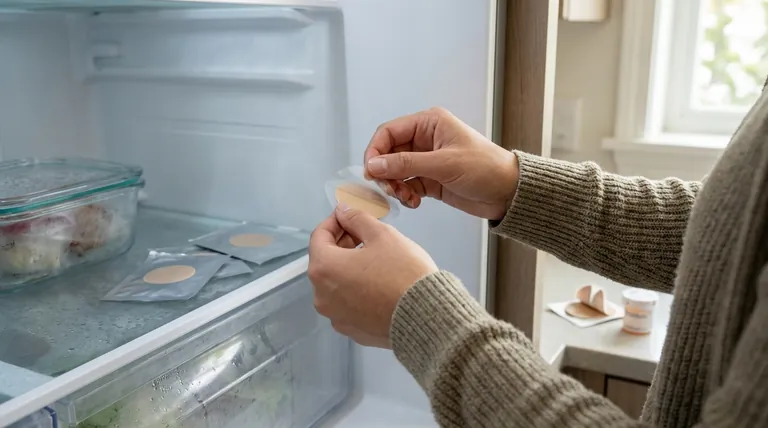
The Primary Solution: Refrigeration
This is a widely recognized practical solution for a common issue with patch application. Cooling the adhesive can significantly ease the removal of the protective liner.
How Refrigeration Helps
Chilling the patch firms up the adhesive layer. This makes it less sticky and prone to stretching, allowing for a cleaner separation from the liner without damaging the medication matrix.
Proper Storage Technique
Some families find success by storing the patches in the refrigerator consistently. This ensures they are always cool and ready for application when needed.
Critical Handling Procedures
Properly managing the patch from application to disposal is essential for ensuring correct dosage and preventing accidental exposure.
What to Do If a Patch is Damaged
If you accidentally tear, cut, or otherwise damage the patch while trying to remove the liner, do not use it. Discard it immediately and start over with a fresh patch. A damaged patch may not deliver the medication correctly.
If the Patch Peels or Falls Off
Gently try to reattach the patch to the skin, being careful not to touch the adhesive side. If it does not stick securely, it must be replaced.
When replacing a patch that has fallen off, apply a new one to a different area of the same hip. Crucially, ensure the total application time for the day does not exceed the prescribed nine hours.
Common Pitfalls to Avoid
Following strict safety protocols is just as important as successful application. These rules protect the patient and others in the household.
Never Use External Adhesives
Do not use tape, bandages, or any other type of adhesive to re-secure a patch that is peeling or has fallen off. These materials can interfere with the patch's ability to release medication properly and may cause skin irritation.
Safe Disposal is Non-Negotiable
After removing a used patch, or when discarding a damaged one, immediately fold it in half so the adhesive side sticks to itself. This deactivates the patch and prevents any remaining medication from being accidentally touched.
Dispose of the folded patch in a secure location that is out of reach of children and pets to prevent accidental contact or ingestion.
Making the Right Choice for Your Goal
Consistent and safe application is key to the medication’s effectiveness. Your actions should prioritize safety and proper dosage at every step.
- If your primary focus is easier liner removal: Store the patches in the refrigerator before application.
- If your primary focus is correct dosage: Never use a patch that has been cut or damaged, and never exceed the nine-hour daily wear time.
- If your primary focus is patch adhesion: If a patch peels, try to reapply it once; if it fails, always replace it with a new patch in a different spot.
- If your primary focus is safety: Always fold a used patch onto itself and dispose of it where children and pets cannot access it.
Following these handling principles ensures the medication works as intended while maintaining a safe environment for your household.
Summary Table:
| Issue | Primary Solution | Key Action |
|---|---|---|
| Difficult to Remove Liner | Refrigerate Patch | Cool adhesive for easier separation |
| Damaged or Torn Patch | Discard Immediately | Never use a compromised patch |
| Patch Peels or Falls Off | Reapply or Replace | Ensure total wear time ≤ 9 hours |
| Safe Disposal | Fold in Half | Stick adhesive to itself to deactivate |
Struggling with patch application or adhesion issues? As Enokon, a bulk manufacturer of reliable transdermal patches and pain plasters for healthcare and pharmaceutical distributors and brands, we understand the critical importance of user-friendly design and consistent drug delivery. Benefit from our technical expertise for custom R&D and development to create patches that are easy to apply and reliably effective for your end-users. Contact our experts today to discuss your transdermal product needs.
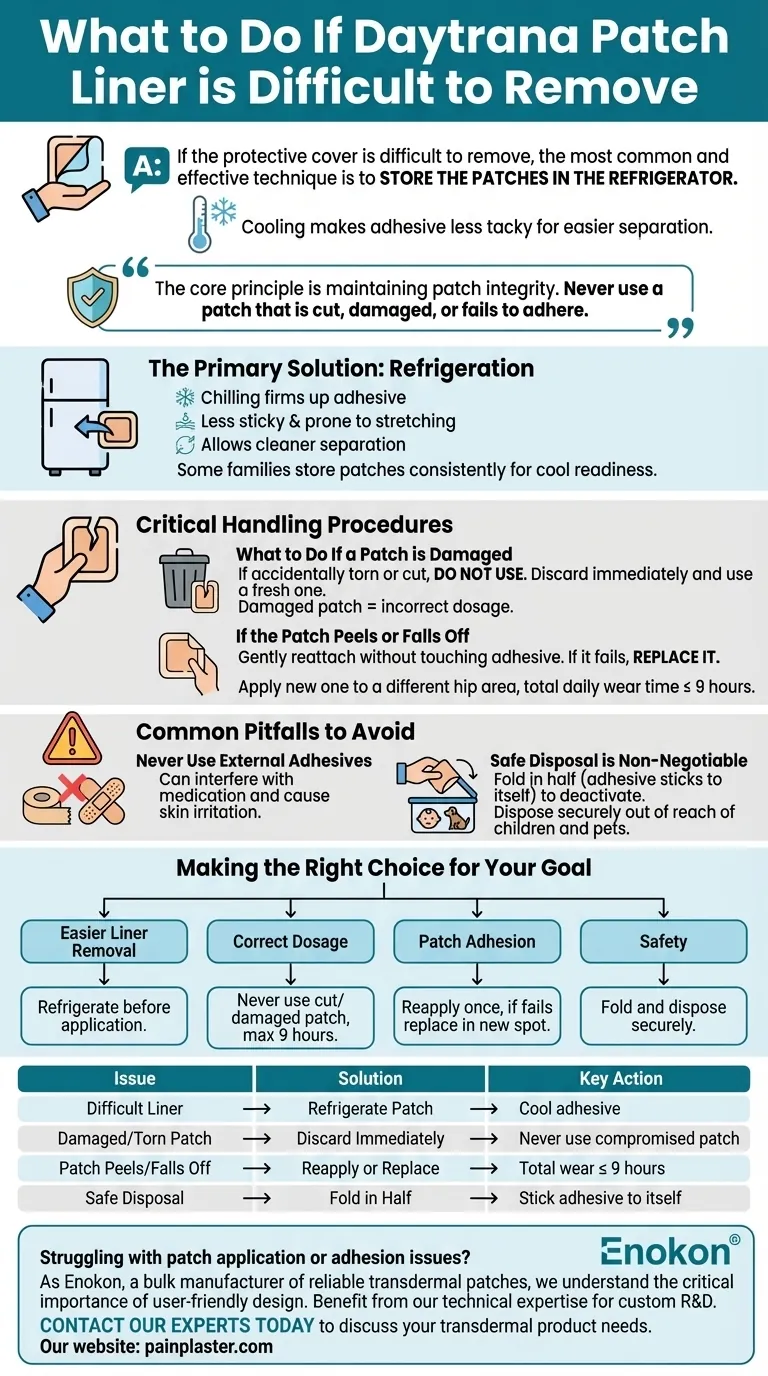
Visual Guide
Related Products
- Herbal Medicated Anti Diarrhea Patch for Digestive Relief
- Menthol Gel Pain Relief Patch
- Hydra Gel Health Care Eye Patch
- Icy Hot Menthol Medicine Pain Relief Patch
- Cooling Fever Patches Color Change Cold Fever Patch
People Also Ask
- What activities should be avoided while using this patch? Key Precautions for Safe & Effective Use
- What are the pharmacological effects of multi-target herbal patches in relieving joint inflammation? Science-Backed OEM
- What should be done if a patch falls off or a dose is missed? Quick Fixes & Safety Tips
- What should be avoided when using the patch? Key Safety Tips for Herbal Patch Users
- What should be done if a patch comes loose or falls off? Ensure Continuous & Effective Treatment



















