
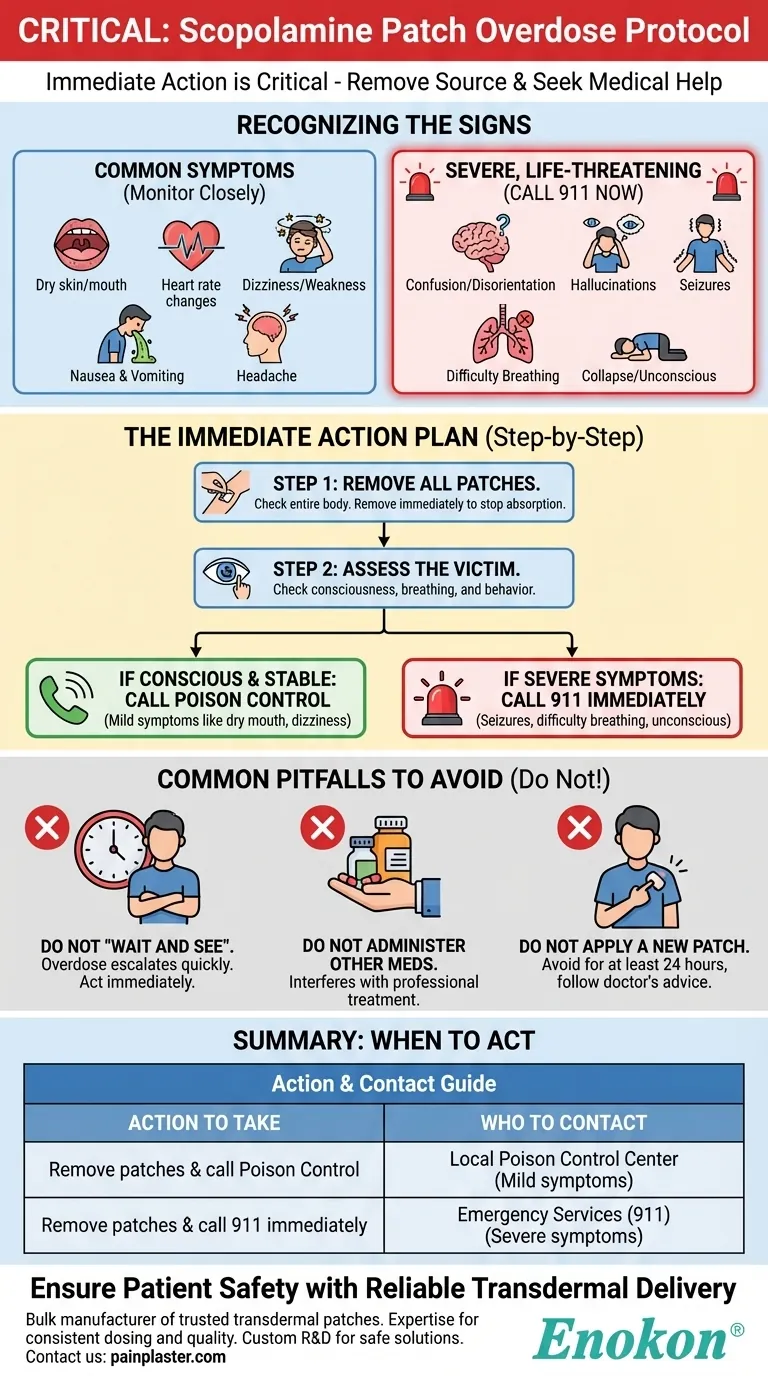
In the event of a suspected scopolamine patch overdose, immediate action is critical. Your first steps should be to remove any and all patches from the person's skin. Following this, you must contact professional medical help by calling either your local poison control center or emergency services (911).
A scopolamine overdose is a serious medical event where the correct response is non-negotiable. It requires removing the source of the drug and seeking professional guidance without delay, escalating to 911 for any severe symptoms like seizures, collapse, or difficulty breathing.

Recognizing the Signs of an Overdose
Understanding the symptoms is the first step in responding appropriately. An overdose occurs when the body is exposed to too much of the drug, often by applying multiple patches at once, failing to remove an old patch before applying a new one, or, in rare cases, by a child chewing or swallowing a patch.
Common Overdose Symptoms
Initial signs can vary but often involve changes in the body's normal functions. Be watchful for symptoms such as:
- Dry skin or mouth
- Changes in heart rate (either unusually fast or slow)
- Dizziness or muscle weakness
- Nausea and vomiting
- Headache
Severe, Life-Threatening Symptoms
The situation becomes a true medical emergency if you observe more severe neurological or respiratory symptoms. These require immediate intervention.
- Confusion or disorientation
- Hallucinations (seeing or hearing things that are not there)
- Seizures
- Difficulty breathing
- Fainting, collapse, or inability to be awakened
The Immediate Action Plan: A Step-by-Step Guide
In a high-stress situation, a clear plan is essential. Follow these steps methodically.
Step 1: Remove All Patches
Carefully check the entire body for any scopolamine patches and remove them immediately. This stops further absorption of the medication into the bloodstream. If a patch was swallowed, try to remove it from the mouth if it is safe to do so.
Step 2: Assess the Victim's Condition
Quickly evaluate the person's symptoms. Are they conscious and alert? Are they breathing normally? Is their behavior erratic? This assessment will determine your next call.
Step 3: When to Call Poison Control
If the person is conscious, breathing is stable, and the symptoms are not immediately life-threatening (e.g., dizziness, dry mouth, mild confusion), call your local poison control center right away. They can provide expert instructions tailored to the specific situation.
Step 4: When to Call 911 Immediately
Do not hesitate to call 911 or your local emergency services if the person experiences any severe symptoms. This includes seizures, hallucinations, difficulty breathing, collapsing, or if they cannot be woken up. This is a medical emergency that requires immediate paramedic response.
Common Pitfalls to Avoid
In a moment of panic, it's easy to make a mistake. Understanding what not to do is just as important as knowing the right steps.
Do Not "Wait and See"
The effects of an overdose can escalate quickly. Delaying the call for help can lead to more severe outcomes. Always err on the side of caution and seek professional medical advice immediately.
Do Not Administer Other Medications
Never attempt to treat the symptoms yourself with other medications or home remedies. This can interfere with professional medical treatment or worsen the person's condition.
Do Not Apply a New Patch
One source notes that you should not apply any additional patches for at least 24 hours after a suspected overdose, even if the medication is for a legitimate purpose. Follow a doctor's guidance on when it is safe to resume use.
Making the Right Call Under Pressure
Your decision-making in the first few minutes is crucial. Use the victim's symptoms as your guide.
- If the person is conscious and symptoms are developing: Immediately remove all patches and call your local poison control center for expert guidance.
- If the person is having a seizure, has trouble breathing, or is unconscious: Call 911 or your local emergency services immediately, as this is a life-threatening emergency.
Knowing these critical steps empowers you to respond effectively and safely in a potential overdose situation.
Summary Table:
| Action | When to Take It | Who to Contact |
|---|---|---|
| Remove all patches & call Poison Control | For mild symptoms (dry mouth, dizziness, mild confusion) | Local Poison Control Center |
| Remove all patches & call 911 immediately | For severe symptoms (seizures, hallucinations, trouble breathing, collapse) | Emergency Services (911) |
Ensure Patient Safety with Reliable Transdermal Delivery
An effective emergency response starts with a reliably manufactured product. At Enokon, we are a bulk manufacturer of trusted transdermal patches and pain plasters for healthcare and pharmaceutical distributors and brands. Our technical expertise ensures consistent dosing and quality, which are critical for patient safety.
Benefit from our custom R&D and development services to create safe, effective transdermal solutions for your patients.
Contact our experts today to discuss your manufacturing needs.
Visual Guide
Related Products
- Asthma Cough and Pain Relief Patch for Adults and Kids
- Lidocaine Hydrogel Pain Relief Patch for Pain Relief
- Menthol Gel Pain Relief Patch
- Herbal Medicated Anti Diarrhea Patch for Digestive Relief
- Icy Hot Menthol Medicine Pain Relief Patch
People Also Ask
- What role do natural ingredients and acupoint stimulation play in a cough relief patch? Synergistic Relief Explained
- What are the key benefits of using the cough relief patch? Soothe Your Cough with Targeted, Non-Oral Relief
- How does the cough relief patch provide targeted relief? Direct, Soothing Comfort for Coughs & Chest Congestion
- What makes the cough relief patch a convenient option for managing coughs? A Mess-Free, On-the-Go Solution
- What are the different types of pain relief patches available? Find the Right Solution for Your Pain


















