
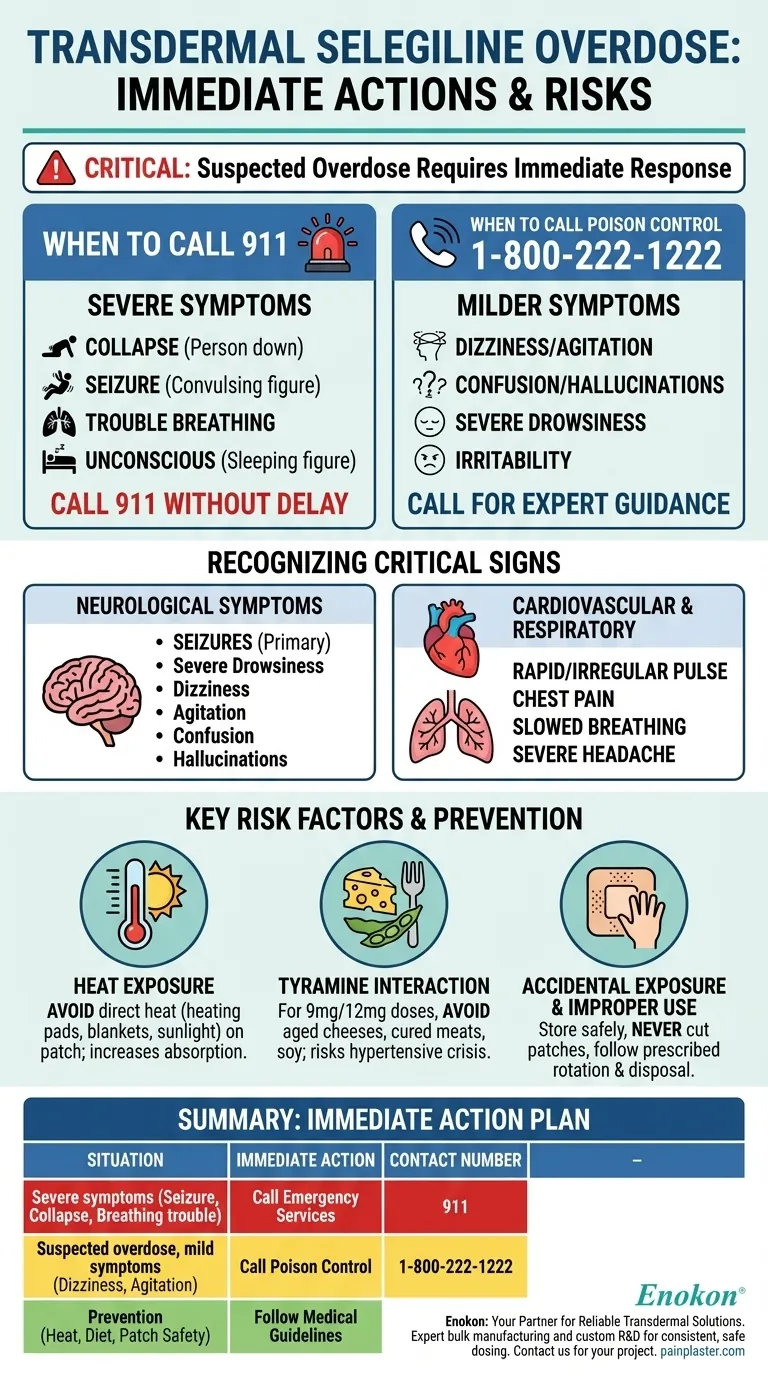
In the event of a suspected transdermal selegiline overdose, you must take immediate action. The first step is to call the Poison Control helpline. If the individual has collapsed, is having a seizure, has trouble breathing, or is unconscious, call 911 for emergency services without delay.
A selegiline overdose is a serious medical emergency defined by severe neurological and cardiovascular symptoms. Your immediate response should be to contact poison control or emergency medical services, as professional intervention is critical.
Recognizing the Critical Signs of an Overdose
Understanding the symptoms of a selegiline overdose is the first step toward a rapid and effective response. These signs often impact the central nervous system and cardiovascular function.
Neurological Symptoms
The most common signs are neurological. Be alert for sudden changes in mental state or physical control.
Symptoms include severe drowsiness, dizziness, agitation, irritability, confusion, or hallucinations. The most severe neurological sign is the onset of seizures.
Cardiovascular and Respiratory Symptoms
Overdose can also place significant strain on the heart and lungs.
Watch for a rapid or irregular pulse, chest pain, or slowed, difficult breathing. A severe headache can also be a key indicator.
Immediate Steps to Take
Your actions in the first few minutes are crucial. Do not attempt to manage the situation on your own.
When to Call Poison Control
For any suspected overdose, your first call should be to the Poison Help line at 1-800-222-1222.
Their experts can provide immediate, specific instructions based on the situation, even if symptoms appear mild.
When to Call 911
Emergency services are required for life-threatening symptoms.
Call 911 immediately if the person collapses, has a seizure, has trouble breathing, or cannot be awakened. These symptoms require urgent medical intervention.
Understanding Key Risk Factors and Prevention
Preventing an overdose is always the best course of action. This involves understanding how overdose can occur, beyond simply applying too many patches.
The Role of Heat Exposure
You must avoid exposing the patch to direct heat sources like heating pads, electric blankets, or prolonged direct sunlight.
Heat can increase the rate at which the medication is absorbed into your body, potentially leading to an unintended overdose even with a correctly applied patch.
The Critical Tyramine Interaction
Patients using higher doses (9 mg or 12 mg) must avoid tyramine-rich foods (like aged cheeses, cured meats, and soy products).
Consuming tyramine with these doses can trigger a hypertensive crisis, a dangerous spike in blood pressure with symptoms like severe headache and irregular heartbeat that can mimic an overdose.
Accidental Exposure and Improper Use
A primary risk is accidental exposure, especially for children who may find a discarded or improperly stored patch.
Never cut a patch, as this can alter the dosage delivery. Always follow the prescribed dose and rotate application sites every 24 hours to ensure consistent, safe absorption. Proper storage and disposal are essential safety measures.
Making the Right Choice for Your Goal
Navigating a potential overdose is about taking decisive, correct action. Your response depends on the severity of the signs you observe.
- If you suspect an overdose with mild symptoms (like dizziness or agitation): Your primary action is to call the Poison Control Helpline at 1-800-222-1222 for expert guidance.
- If the person collapses, has a seizure, or has trouble breathing: Your only action should be to call 911 for emergency services without any delay.
- If you are a patient or caregiver: Your goal is prevention by strictly following all application, storage, and dietary guidelines provided by your doctor.
Understanding these signs and safety protocols is the most effective way to manage the risks associated with transdermal selegiline.
Summary Table:
| Situation | Immediate Action | Contact Number |
|---|---|---|
| Suspected overdose, mild symptoms (dizziness, agitation) | Call Poison Control for expert guidance | 1-800-222-1222 |
| Severe symptoms (seizure, collapse, trouble breathing) | Call 911 for emergency medical services | 911 |
| Key prevention measures | Avoid heat exposure, follow tyramine diet, proper patch use | - |
Ensure the Safety and Reliability of Your Transdermal Products
At Enokon, we are a bulk manufacturer of reliable transdermal patches and pain plasters for healthcare and pharmaceutical distributors and brands. Our technical expertise ensures every patch delivers consistent, safe dosing. We offer comprehensive custom R&D and development services to create solutions tailored to your specific drug formulations and patient safety needs.
Partner with us to develop high-quality, dependable transdermal delivery systems. Contact our experts today to discuss your project.
Visual Guide
Related Products
- Silicone Scar Sheets Patch Transdermal Drug Patch
- Far Infrared Heat Pain Relief Patches Transdermal Patches
- Menthol Gel Pain Relief Patch
- Icy Hot Menthol Medicine Pain Relief Patch
- Mugwort Wormwood Pain Relief Patch for Neck Pain
People Also Ask
- What role does a silicone-based transdermal delivery system play in Parkinson's? Enhancing Early-Stage Patient Care
- How is the long-term skin tolerance of silicone-based transdermal patches evaluated in clinical settings? R&D and Safety
- Why is a polarizing microscope used to evaluate the long-term stability of transdermal drug patches? Ensure Efficacy.
- What are common adverse effects of transdermal drug delivery? Risks & Prevention Tips
- What are the advantages of transdermal drug patches? Optimize Medication Delivery with Patches


















