
When replacing a medication patch, the most critical step is to apply the new one to a completely different area of clean, dry skin. To prevent significant skin irritation and ensure the medication absorbs correctly, you must wait at least one full week before applying a patch to the same spot again.
The goal of proper patch replacement is not just about swapping old for new. It's a careful process centered on site rotation to protect your skin and consistent application to maintain a steady, effective dose of medication.
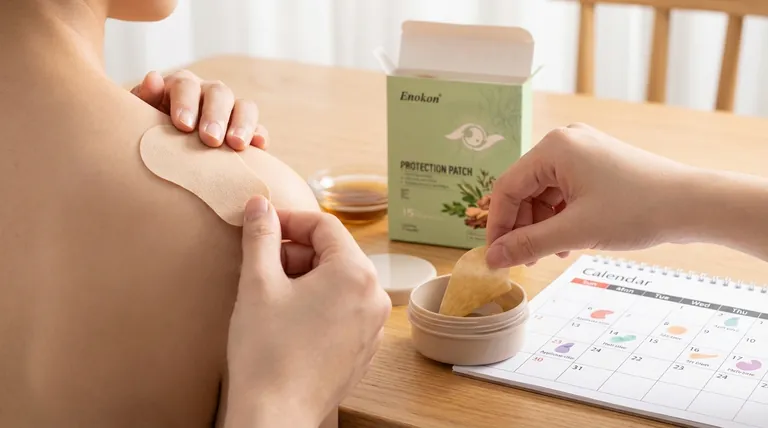
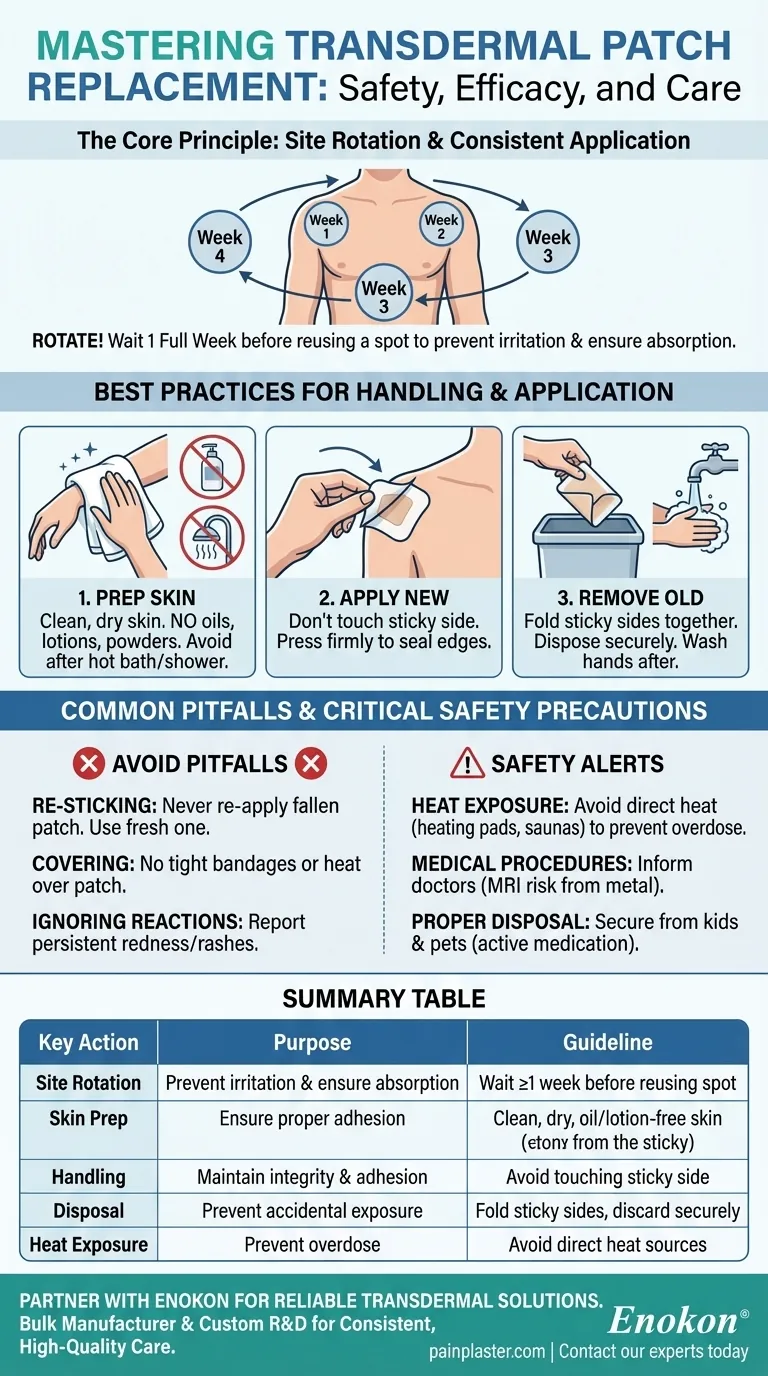
The Core Principle: Site Rotation
The single most important rule for using transdermal patches is changing where you place them. This isn't an optional step; it is fundamental to the treatment's safety and effectiveness.
Why Rotation is Non-Negotiable
Applying a patch to the same spot repeatedly can lead to skin irritation, redness, and itching. Over time, irritated or damaged skin may not absorb the medication properly, compromising your treatment.
The One-Week Rule
The standard guideline is to wait at least one week before reusing a specific application site. This gives the skin under the old patch ample time to heal and recover fully.
Best Practices for Handling and Application
How you handle the patch directly impacts its adhesion and the delivery of medication. Always follow a precise and careful procedure.
Preparing the Skin
Do not apply a patch immediately after a hot bath or shower. Ensure the skin is completely dry and free of any lotions, oils, or powders that could interfere with the adhesive.
Applying the New Patch
When you open the new patch, avoid touching the sticky, medicated side with your fingers. This can remove medication and reduce its ability to stick to your skin. Press it firmly in place to ensure the edges are sealed.
Removing Old Patches
If a patch leaves behind sticky residue, you can use an oil-based product to gently remove it. Always wash your hands thoroughly with soap and water after handling both old and new patches.
Common Pitfalls to Avoid
Simple mistakes can lead to incorrect dosing or adverse effects. Being aware of these common pitfalls is essential for your safety.
Reapplying a Fallen Patch
If a patch becomes loose or falls off, do not try to re-stick it. Dispose of it properly and apply a fresh one to a new site. Check your medication's specific instructions, as some have limits on how long a patch can be off before it must be replaced.
Covering or Bandaging the Patch
Never place a bandage or tight clothing directly over the patch. This can trap heat, which may increase the rate of medication absorption to a potentially dangerous level.
Ignoring Skin Reactions
While mild, temporary redness is common after removing a patch, you should report any persistent irritation, rashes, or vision changes to your healthcare provider immediately.
Critical Safety Precautions
Beyond application, several external factors require your attention to ensure the treatment remains safe.
The Danger of Heat Exposure
Do not expose the patch to direct heat sources. This includes heating pads, electric blankets, saunas, and prolonged, direct sunlight. Heat can accelerate medication release, leading to an overdose.
Interacting with Medical Procedures
Inform all healthcare providers that you use a patch. It may need to be removed before certain procedures like an MRI or cardioversion, as some patches contain metal that can cause serious burns.
Proper and Safe Disposal
A used patch still contains active medication. To dispose of it, fold the patch in half with the sticky sides together and place it in a secure trash receptacle, out of reach of children and pets.
Making the Right Choice for Your Goal
Your approach should be guided by a clear understanding of the principles behind patch-based medication.
- If your primary focus is maximum effectiveness: Always apply the patch to clean, dry skin, ensure it remains fully adhered, and replace it immediately if it falls off.
- If your primary focus is long-term skin health: Strictly follow the site rotation schedule and never apply a new patch to irritated or broken skin.
- If you are managing other health conditions or medications: Maintain open communication with your doctor about all treatments, allergies, and your full medical history.
Following these procedures carefully empowers you to get the most benefit from your treatment while minimizing potential risks.
Summary Table:
| Key Action | Purpose | Guideline |
|---|---|---|
| Site Rotation | Prevent skin irritation & ensure proper absorption | Wait at least 1 week before reusing a spot |
| Skin Preparation | Ensure proper adhesion | Apply to clean, dry skin free of oils/lotions |
| Handling | Maintain medication integrity & adhesion | Avoid touching the sticky, medicated side |
| Disposal | Prevent accidental exposure | Fold patch sticky sides together; discard securely |
| Heat Exposure | Prevent overdose | Avoid direct heat sources (heating pads, saunas) |
Need Reliable Transdermal Patches for Your Patients?
As a bulk manufacturer of reliable transdermal patches and pain plasters, Enokon provides healthcare and pharmaceutical distributors and brands with products built on technical expertise. We offer custom R&D and development to create solutions that prioritize patient safety and effective medication delivery.
Let us help you ensure consistent, high-quality care. Contact our experts today to discuss your needs.
Visual Guide
Related Products
- Far Infrared Heat Pain Relief Patches Transdermal Patches
- Icy Hot Menthol Medicine Pain Relief Patch
- Silicone Scar Sheets Patch Transdermal Drug Patch
- Menthol Gel Pain Relief Patch
- Mugwort Wormwood Pain Relief Patch for Neck Pain
People Also Ask
- Why is the selection of matrix materials critical when developing customized transdermal patches? Optimize Efficacy
- What are the physical impacts of external heat exposure on the performance and safety of transdermal patches? - Guide
- What are the clinical advantages of local transdermal delivery systems? Unlock Safer, More Effective Pain Relief Solutions
- What role does a skin tolerance scoring system play in the safety evaluation of transdermal patches? Key Safety Metrics
- How does high-purity far-infrared ceramic powder contribute to the efficacy of far-infrared physical therapy patches?



















