
Before using the rivastigmine patch, the most critical precautions are to provide your doctor with a complete medical history, disclose all medications and allergies, and understand how to handle the patch safely. You must also be aware of environmental factors, particularly the need to avoid exposing the patch to any external heat source.
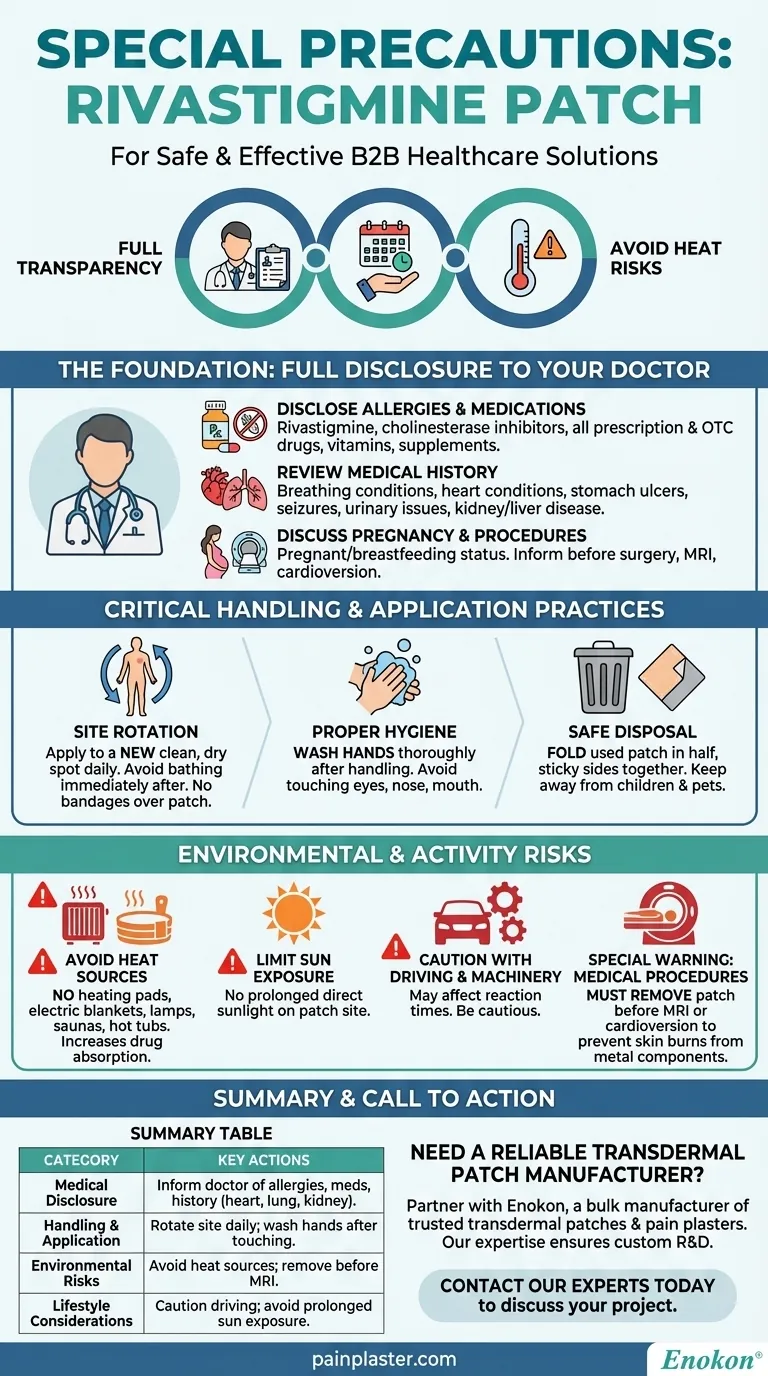
The safe and effective use of the rivastigmine patch depends on three core principles: complete transparency with your healthcare provider, strict adherence to daily handling protocols, and avoiding environmental risks like heat that can dangerously alter drug absorption.
The Foundation: Full Disclosure to Your Doctor
Your doctor can only prescribe this medication safely with a complete picture of your health. Omitting information can lead to serious complications.
Disclosing All Allergies and Medications
You must inform your doctor of any allergies, especially to rivastigmine or other cholinesterase inhibitors like neostigmine or physostigmine.
Provide a comprehensive list of all prescription drugs, over-the-counter medications, vitamins, and supplements you are currently taking.
Reviewing Your Complete Medical History
Certain pre-existing conditions require careful consideration before using this patch.
Be sure to discuss any history of:
- Breathing conditions like asthma or lung disease
- Heart conditions
- Stomach ulcers
- Seizures
- Urinary issues, such as blockages or prostate problems
- Kidney or liver disease
Discussing Pregnancy and Upcoming Procedures
Inform your doctor if you are pregnant, planning to become pregnant, or breastfeeding.
You must also notify any doctor, dentist, or technician that you are using the rivastigmine patch before any surgery, MRI, or cardioversion procedure.
Critical Handling and Application Practices
How you handle and apply the patch directly impacts its safety and effectiveness.
The Importance of Site Rotation
To prevent skin irritation, you must apply the patch to a new spot on your body each day.
Apply the patch to clean, dry, and healthy skin. Do not apply it immediately after bathing or place a bandage over it.
Proper Hygiene and Handling
Always wash your hands thoroughly after touching the patch.
Avoid touching your eyes, nose, or mouth after handling it, as this can transfer the medication.
Safe Disposal of Used Patches
When you remove an old patch, fold it in half with the sticky sides together.
Dispose of it carefully, ensuring it is out of reach of children and pets.
Understanding the Environmental and Activity Risks
External factors can significantly and dangerously alter how much medication your body absorbs from the patch.
Why You Must Avoid External Heat Sources
Exposing the patch to heat can cause your body to absorb the medication too quickly, leading to a potential overdose.
Strictly avoid placing heating pads, electric blankets, and heat lamps on or near the patch. You should also avoid saunas, hot tubs, and heated water beds.
Limiting Sun Exposure
Do not expose the application site to prolonged, direct sunlight. This is another form of external heat that can increase drug absorption.
Caution with Driving and Machinery
The medication can affect your reaction times and alertness.
Avoid driving or operating heavy machinery until you know how the rivastigmine patch affects you.
Special Warning for Medical Procedures
The patch contains metal components that can heat up and cause skin burns during certain medical procedures.
For this reason, the patch must be removed before an MRI or cardioversion.
Making the Right Choice for Your Safety
Following these precautions is not optional; it is essential for your health and well-being.
- If you are just starting: Your primary focus is ensuring your doctor has a complete picture of your health, allergies, and all current medications.
- For your daily routine: Be meticulous about rotating patch sites, washing your hands after handling, and strictly avoiding all direct heat sources.
- If you have an upcoming medical procedure: Your priority is to inform every medical professional involved that you use this patch, especially before any MRI.
Diligent adherence to these guidelines is the most important factor in the safe and effective use of your medication.
Summary Table:
| Precaution Category | Key Actions |
|---|---|
| Medical Disclosure | Inform doctor of all allergies, medications, and medical history (heart, lung, kidney conditions). |
| Handling & Application | Rotate application site daily; wash hands after touching the patch. |
| Environmental Risks | Avoid heat sources (heating pads, saunas); remove patch before an MRI. |
| Lifestyle Considerations | Use caution when driving; avoid prolonged sun exposure on the patch. |
Need a reliable transdermal patch manufacturer? Partner with Enokon, a bulk manufacturer of trusted transdermal patches and pain plasters for healthcare and pharma distributors. Our technical expertise ensures custom R&D and development to meet your specific needs. Contact our experts today to discuss your project.
Visual Guide
Related Products
- Lidocaine Hydrogel Pain Relief Patch for Pain Relief
- Menthol Gel Pain Relief Patch
- Icy Hot Menthol Medicine Pain Relief Patch
- Far Infrared Pain Patch Relief Pain Reliever for Back
- Asthma Cough and Pain Relief Patch for Adults and Kids
People Also Ask
- How does the aqueous base in a lidocaine patch contribute to drug delivery? Unlocking Sustained Pain Relief Technology
- What are the advantages of topical anesthetics over invasive Lidocaine infiltration? Discover Safer, Scalable Relief
- Which pain patch is most effective for arthritis? Find the Best Relief for Your Joint Pain
- Why are lidocaine patches preferred over oral medications? Targeted Relief & Scale Your Brand with OEM R&D Solutions
- Will a GP routinely continue prescribing lidocaine patches after the initial period? Understanding Short-Term Pain Relief



















