
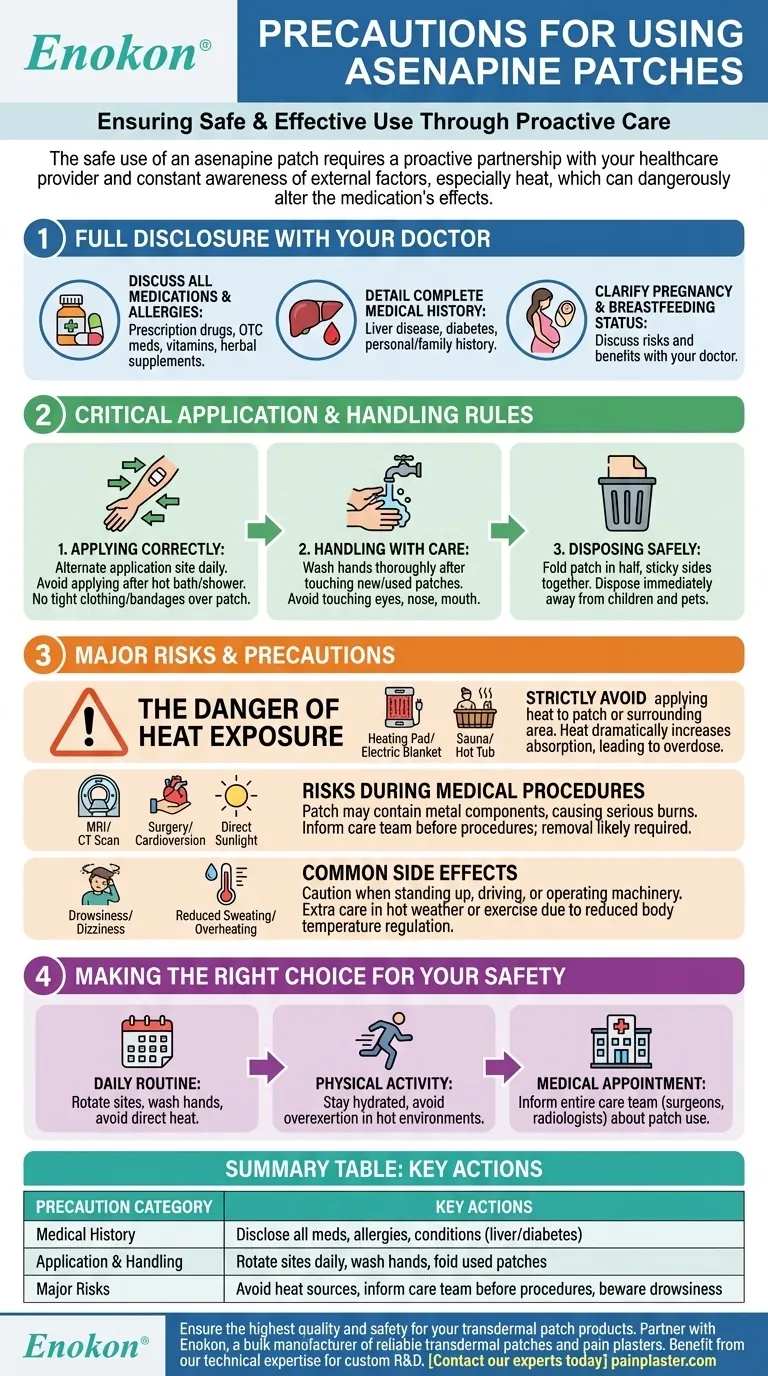
Before using an asenapine patch, you must take several critical precautions. These involve providing a complete medical history to your doctor, understanding the risks associated with heat exposure, and adhering to strict rules for application, handling, and disposal. You must also be aware of potential side effects that can affect daily activities and know when to remove the patch for certain medical procedures.
The safe and effective use of an asenapine patch is not just about applying it correctly. It requires a proactive partnership with your healthcare provider and a constant awareness of how external factors, especially heat, can dangerously alter the medication's effects.

The Foundation: Full Disclosure with Your Doctor
Before you apply the first patch, your doctor needs a complete picture of your health. Omitting information can lead to serious complications.
Discuss All Medications and Allergies
You must inform your doctor about every substance you use. This includes all prescription drugs, over-the-counter medications, vitamins, and even herbal supplements. An exhaustive list prevents potentially harmful drug interactions.
Detail Your Complete Medical History
Certain pre-existing conditions require careful consideration. Be sure to discuss any personal or family history of liver disease or diabetes.
Clarify Pregnancy and Breastfeeding Status
If you are pregnant, planning to become pregnant, or breastfeeding, it is crucial to discuss this with your doctor. They must weigh the benefits against potential risks to the child.
Critical Application and Handling Rules
Proper handling ensures you receive the correct dose and prevents accidental exposure to others.
Applying the Patch Correctly
You should alternate the application site daily to avoid skin irritation. Do not apply the patch immediately after a hot bath or shower. Never cover the application area with a bandage or tight clothing.
Handling with Care
Always wash your hands thoroughly after touching a patch, whether new or used. Be careful to avoid touching your eyes, nose, or mouth after handling it.
Disposing of Patches Safely
When you remove a patch, fold it in half with the sticky sides together. Dispose of it immediately in a manner that keeps it safely away from children and pets.
Understanding the Major Risks and Precautions
Asenapine patches come with specific risks that demand your attention, particularly regarding heat and medical procedures.
The Danger of Heat Exposure
You must strictly avoid applying heat to the patch or the surrounding area. Heat dramatically increases the rate at which the medication is absorbed into your bloodstream, which can lead to an overdose.
This includes direct heat sources like heating pads, electric blankets, saunas, and hot tubs, as well as prolonged exposure to direct sunlight.
Risks During Medical Procedures
The patch may contain metal components that can cause serious burns during certain medical procedures. You must inform your care team that you are using the patch before any MRI, CT scan, surgery, or cardioversion. You will likely be required to remove it beforehand.
Navigating Common Side Effects
Asenapine can cause drowsiness and dizziness, especially when standing up quickly. Until you know how it affects you, do not drive or operate heavy machinery.
The medication can also reduce your ability to sweat and regulate body temperature. This makes you more vulnerable to overheating, so you must take extra care in hot weather or during exercise.
Making the Right Choice for Your Safety
Your daily habits and upcoming medical needs directly impact how you should manage your asenapine patch treatment.
- If your primary focus is daily routine: Prioritize rotating the patch site, washing your hands after handling, and completely avoiding any direct heat sources on the patch.
- If your primary focus is physical activity: Be mindful that the patch may reduce your ability to sweat, so stay hydrated and avoid overexertion in hot environments.
- If you have an upcoming medical appointment: Always inform your entire care team—including surgeons, radiologists, and technicians—that you are using an asenapine patch.
Proactive communication with your healthcare providers is the single most important factor in using your medication safely.
Summary Table:
| Precaution Category | Key Actions |
|---|---|
| Medical History | Disclose all medications, allergies, and conditions like liver disease or diabetes. |
| Application & Handling | Rotate application sites daily, wash hands after handling, fold used patches for disposal. |
| Major Risks | Avoid heat sources (heating pads, saunas), inform care team before MRIs/surgery, beware of drowsiness. |
Ensure the highest quality and safety for your transdermal patch products. Partner with Enokon, a bulk manufacturer of reliable transdermal patches and pain plasters for healthcare and pharma distributors and brands. Benefit from our technical expertise for custom R&D and development to create safe, effective patches tailored to your needs. Contact our experts today to discuss your project.
Visual Guide
Related Products
- Silicone Scar Sheets Patch Transdermal Drug Patch
- Far Infrared Heat Pain Relief Patches Transdermal Patches
- Menthol Gel Pain Relief Patch
- Icy Hot Menthol Medicine Pain Relief Patch
- Mugwort Wormwood Pain Relief Patch for Neck Pain
People Also Ask
- What role does a silicone-based transdermal delivery system play in Parkinson's? Enhancing Early-Stage Patient Care
- How is the long-term skin tolerance of silicone-based transdermal patches evaluated in clinical settings? R&D and Safety
- Why is a polarizing microscope used to evaluate the long-term stability of transdermal drug patches? Ensure Efficacy.
- What are common adverse effects of transdermal drug delivery? Risks & Prevention Tips
- What are the advantages of transdermal drug patches? Optimize Medication Delivery with Patches











