
Discussions surrounding transdermal contraceptive patches primarily focus on three core areas: proper patient selection, essential patient counseling, and the correct method of use. These topics are designed to ensure this highly effective estrogen-progestin contraception is used safely by eligible individuals.
The transdermal patch is a highly effective, reversible contraceptive method. However, its convenience is balanced by strict criteria for patient eligibility and precise guidelines for application, management, and disposal to ensure both safety and efficacy.
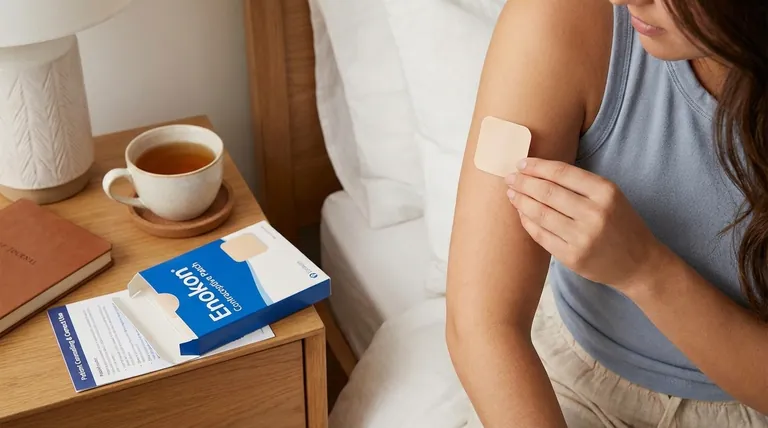
Who is a Suitable Candidate?
Identifying the right candidate is the first step in the successful use of contraceptive patches. It involves evaluating a person's health profile and contraceptive goals.
The Ideal User Profile
Most individuals who want a reversible, nonevent-based method of contraception can safely use the patch. It is an excellent option for those who prefer not to take a daily pill.
Key Medical Considerations
The primary filter for candidacy is a person's medical history. Anyone with contraindications to estrogens or progestins is not a suitable candidate for this method.
Essential Patient Counseling
Effective counseling empowers the user with the knowledge to use the patch correctly and confidently. It goes beyond simple instructions to cover the benefits and responsibilities.
Effectiveness and Reversibility
Patients should understand that the patch is a highly effective form of birth control when used correctly. A key benefit is that its contraceptive effect is also reversible after discontinuation.
Convenience and Flexibility
The patch offers significant convenience with its weekly application schedule. It is also suitable for extended cycle use, allowing for flexibility in managing menstrual cycles under medical guidance.
Practical Guidelines for Correct Use
Adherence to specific application and management protocols is critical for the patch to work as intended. Incorrect use can compromise its effectiveness and safety.
Proper Application Technique
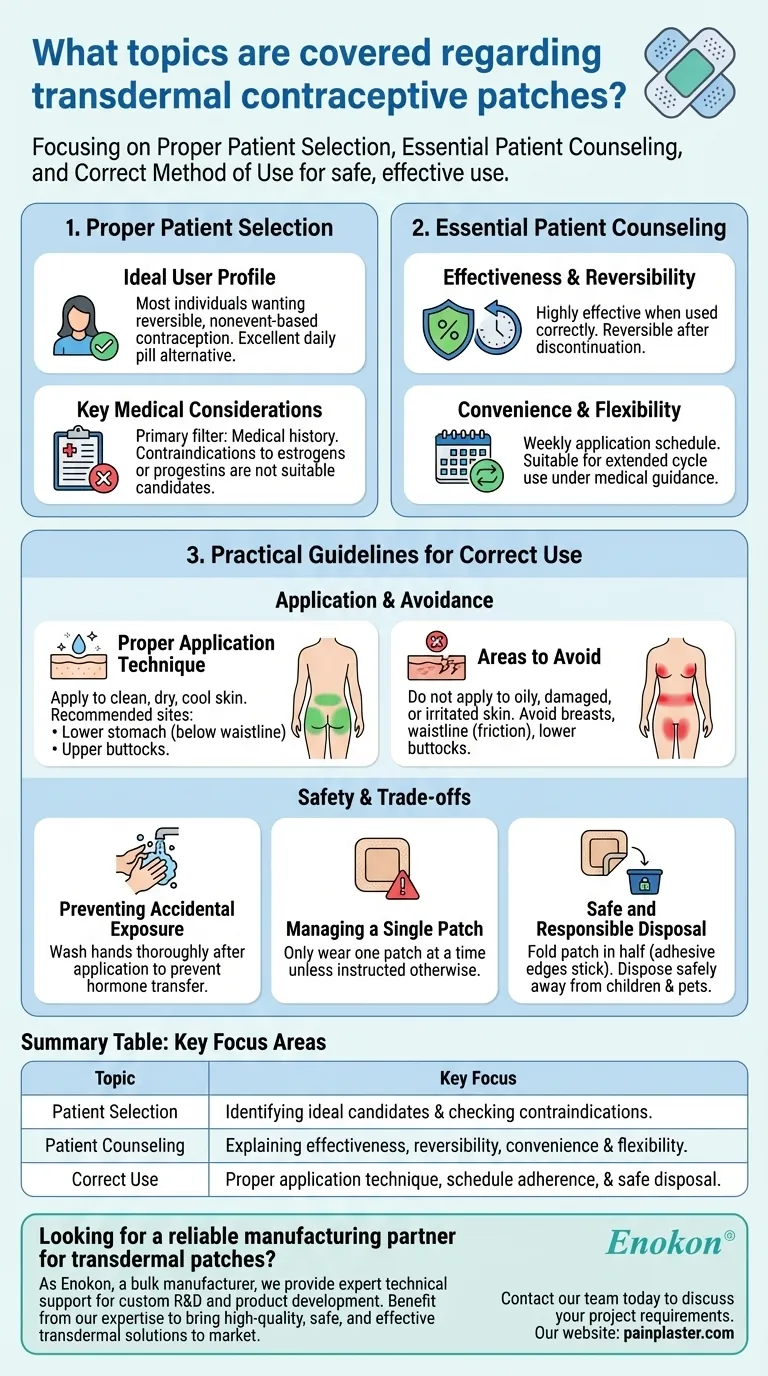
Apply the patch to clean, dry, cool skin. Recommended locations are the lower stomach (below the waistline) or the upper buttocks.
Areas to Avoid
Do not apply the patch to oily, damaged, or irritated skin. Also avoid the breasts, the waistline (due to friction from clothing), or the lower buttocks where sitting could cause it to loosen.
Maintaining a Consistent Schedule
A consistent weekly schedule for changing the patch is crucial. If a patch becomes loose or falls off, it must be replaced promptly to maintain contraceptive protection.
Understanding Safety and Trade-offs
While convenient, the patch requires careful handling to prevent unintended consequences and ensure safety for the user and others in their household.
Preventing Accidental Exposure
It is critical to wash your hands thoroughly after applying a patch. This prevents the accidental transfer of hormones to other people or to sensitive areas of your own body.
Managing a Single Patch
You should only ever wear one patch at a time, unless specifically instructed otherwise by a healthcare provider. Using more than one increases hormone exposure without adding benefit.
Safe and Responsible Disposal
Used patches still contain hormones. To dispose of one safely, fold it in half so the adhesive edges stick together. Throw it away in a place where children and pets cannot access it.
Making the Right Choice for Your Goal
Selecting a contraceptive method is a personal decision based on health, lifestyle, and priorities.
- If your primary focus is convenience: The weekly patch offers a significant advantage over daily pills, but requires remembering the weekly change day.
- If your primary focus is safety: Proper application, adhering to the one-patch rule, and careful disposal are non-negotiable for safe use.
- If your primary focus is eligibility: A thorough medical history review is essential to rule out any contraindications to estrogen or progestin before starting.
Ultimately, the transdermal patch is an excellent contraceptive choice for the right individual who is well-informed on its specific usage requirements.
Summary Table:
| Topic | Key Focus |
|---|---|
| Patient Selection | Identifying ideal candidates and checking for medical contraindications. |
| Patient Counseling | Explaining effectiveness, reversibility, convenience, and flexibility. |
| Correct Use | Proper application technique, schedule adherence, and safe disposal. |
Looking for a reliable manufacturing partner for transdermal patches?
As Enokon, a bulk manufacturer of reliable transdermal patches and pain plasters, we provide healthcare and pharma distributors and brands with expert technical support for custom R&D and product development. Benefit from our expertise to bring high-quality, safe, and effective transdermal solutions to market.
Contact our team today to discuss your project requirements.
Visual Guide
Related Products
- Silicone Scar Sheets Patch Transdermal Drug Patch
- Far Infrared Heat Pain Relief Patches Transdermal Patches
- Mugwort Wormwood Pain Relief Patch for Neck Pain
- Icy Hot Menthol Medicine Pain Relief Patch
- Menthol Gel Pain Relief Patch
People Also Ask
- What role does a silicone-based transdermal delivery system play in Parkinson's? Enhancing Early-Stage Patient Care
- How is the long-term skin tolerance of silicone-based transdermal patches evaluated in clinical settings? R&D and Safety
- Why is a polarizing microscope used to evaluate the long-term stability of transdermal drug patches? Ensure Efficacy.
- What are common adverse effects of transdermal drug delivery? Risks & Prevention Tips
- What are the advantages of transdermal drug patches? Optimize Medication Delivery with Patches








