
The efficacy of transdermal diclofenac has been demonstrated to be comparable to oral diclofenac tablets in managing post-endodontic and post-extraction pain, with additional advantages such as better patient compliance and fewer adverse effects, particularly gastrointestinal discomfort. However, further large-scale clinical trials are recommended to explore its full potential, especially in post-traumatic pain scenarios requiring higher drug concentrations. The Diclofenac Transdermal Patch offers a viable alternative for patients who experience gastric issues with oral administration.
Key Points Explained:
-
Comparable Efficacy to Oral Diclofenac
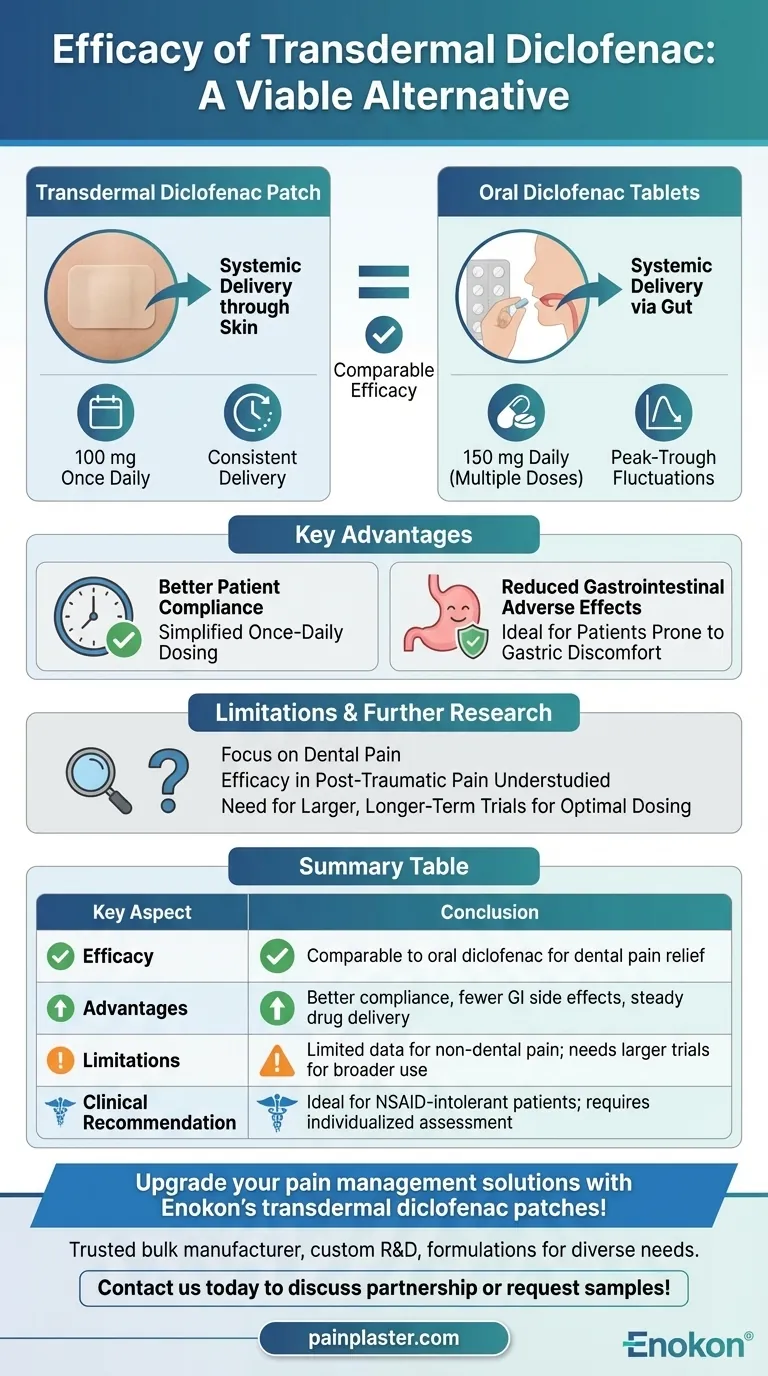
- Multiple studies concluded that the transdermal diclofenac patch (100 mg once daily) was as effective as oral diclofenac (150 mg daily) for pain relief after dental procedures like endodontic treatment and tooth extraction.
- This suggests that the transdermal route delivers sufficient drug concentrations systemically to achieve therapeutic effects similar to oral administration.
-
Advantages Over Oral Administration
- Better Patient Compliance: The once-daily application simplifies dosing compared to multiple oral doses.
- Reduced Gastrointestinal Adverse Effects: Ideal for patients prone to gastric discomfort, a common side effect of oral NSAIDs like diclofenac.
- Consistent drug delivery through the skin may also minimize peak-trough fluctuations seen with oral dosing.
-
Limitations and Need for Further Research
- Current evidence primarily covers dental pain; its efficacy in other pain types (e.g., post-traumatic) remains understudied.
- Larger, longer-term trials are needed to confirm optimal dosing for conditions requiring higher drug concentrations.
- Questions remain about cost-effectiveness and patch adhesion issues in real-world use.
-
Clinical Implications
- The patch is a promising alternative for patients with oral NSAID intolerance or compliance challenges.
- Healthcare providers should weigh individual patient factors (e.g., pain severity, GI history) when choosing between transdermal and oral forms.
This evidence positions the diclofenac transdermal patch as a versatile tool in pain management, bridging gaps where traditional oral therapy falls short. Future research could expand its applications beyond dental care, potentially revolutionizing NSAID delivery for diverse patient needs.
Summary Table:
| Key Aspect | Conclusion |
|---|---|
| Efficacy | Comparable to oral diclofenac for dental pain relief. |
| Advantages | Better compliance, fewer GI side effects, steady drug delivery. |
| Limitations | Limited data for non-dental pain; needs larger trials for broader use. |
| Clinical Recommendation | Ideal for NSAID-intolerant patients; requires individualized assessment. |
Upgrade your pain management solutions with Enokon’s transdermal diclofenac patches!
As a trusted bulk manufacturer, we specialize in high-quality transdermal patches and pain plasters tailored for healthcare distributors and brands. Benefit from our technical expertise in custom R&D to develop formulations that meet your patients' needs—whether for dental, post-traumatic, or chronic pain.
Contact us today to discuss partnership opportunities or request samples!
Visual Guide
Related Products
- Menthol Gel Pain Relief Patch
- Silicone Scar Sheets Patch Transdermal Drug Patch
- Icy Hot Menthol Medicine Pain Relief Patch
- Far Infrared Heat Pain Relief Patches Transdermal Patches
- Mugwort Wormwood Pain Relief Patch for Neck Pain
People Also Ask
- How effective are pain relief patches for muscle pain? Target Localized Pain with Transdermal Delivery
- How do pain relief patches compare to other pain relief methods? Discover Targeted, Long-Lasting Relief
- Who should consult a healthcare professional before using pain relief patches? Ensure Your Safety with Medical Advice
- How do drug loading and permeation enhancers ensure patch efficacy? Achieve Superior Clinical-Grade Pain Relief.
- What are some common applications of pain relief patches? Effective Relief for Muscle & Joint Pain





