
After three weeks of use, capsicum plaster demonstrated a statistically significant improvement in low back pain compared to a placebo. The treatment reduced a key pain score by 42% (versus 31% for placebo), and 67% of users were classified as "responders" to the treatment, a much higher rate than the 49% observed in the placebo group.
The core takeaway from the clinical data is that capsicum plaster provides a meaningful and measurable advantage over placebo for pain relief, with benefits confirmed by both objective pain scores and subjective assessments from patients and investigators.
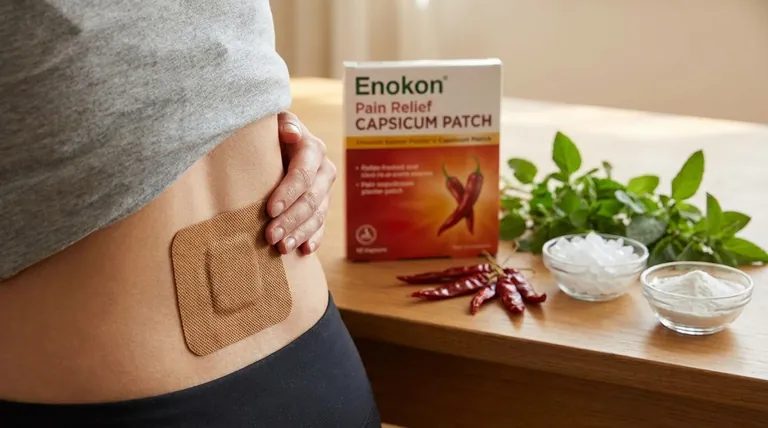
Primary Outcome: Quantifying Pain Reduction
To objectively measure the plaster's effectiveness, the study focused on specific, predefined metrics for pain relief.
The Compound Pain Subscore
The primary measure was a compound pain subscore, which saw a 42% reduction in the group using the capsicum plaster.
In contrast, the placebo group experienced only a 31% reduction in the same pain score over the three-week period.
Defining a "Responder"
The study also defined a "responder" as any patient who saw at least a 30% reduction in their pain score.
Using this benchmark, 67% of patients in the capsicum group were classified as responders. This result was statistically significant when compared to the 49% responder rate in the placebo group.
Subjective Efficacy: How Patients and Doctors Rated the Treatment
Beyond numerical scores, the study captured global assessments from both the clinicians running the trial and the patients themselves. These subjective ratings strongly favored the capsicum plaster.
Investigator Ratings
When physicians evaluated the treatment's efficacy, they rated it as "excellent or good" for 74% of patients using the capsicum plaster.
This stands in sharp contrast to the placebo group, where only 36% of patients received a similar positive rating from investigators.
Patient-Reported Outcomes
Patients' personal experiences mirrored the clinical assessment. A significant 82% of patients in the capsicum group reported being "symptom-free or improved."
This was substantially higher than the placebo group, where only 50% of patients reported a similar level of improvement.
Understanding the Trade-offs: Safety and Tolerability
No treatment is without potential side effects. The study monitored for adverse reactions to ensure a balanced view of the plaster's profile.
Local Side Effects
Adverse local drug reactions, such as skin irritation at the application site, occurred in 7.5% of patients using the capsicum plaster.
This rate was higher than that seen in the placebo group, which had a local reaction rate of 3.1%.
Systemic Safety
Crucially, no systemic side-effects were observed in either group. This indicates that the effects of the plaster, including adverse reactions, are confined to the local area of application.
How to Interpret These Results
Based on the evidence, the capsicum plaster's effectiveness can be viewed through different lenses depending on your primary goal.
- If your primary focus is significant pain relief: The data shows capsicum plaster offers a statistically significant advantage over placebo in reducing pain scores and achieving a meaningful clinical response.
- If your primary focus is overall improvement: Both patients and investigators reported substantially higher rates of satisfaction and perceived efficacy with the capsicum plaster.
- If your primary focus is safety: The treatment is well-tolerated, with the main trade-off being a slightly higher chance of minor, local skin reactions compared to placebo.
Ultimately, the three-week clinical results provide strong evidence that capsicum plaster is an effective and safe topical treatment for reducing low back pain.
Summary Table:
| Metric | Capsicum Plaster Group | Placebo Group |
|---|---|---|
| Pain Score Reduction | 42% | 31% |
| Responder Rate (≥30% pain reduction) | 67% | 49% |
| Investigator Rating (Excellent/Good) | 74% | 36% |
| Patient-Reported Improvement | 82% | 50% |
| Local Skin Reaction Rate | 7.5% | 3.1% |
Ready to offer your customers clinically-proven pain relief?
These results demonstrate the powerful efficacy and safety profile of a well-formulated capsicum plaster. As a bulk manufacturer of reliable transdermal patches and pain plasters, Enokon can help you bring this proven solution to market.
We partner with healthcare and pharma distributors and brands to provide:
- Custom R&D and formulation expertise to match your specific requirements.
- High-quality, consistent manufacturing at scale.
- Technical support from concept to finished product.
Let us help you develop a pain management product that delivers real results for end-users.
Contact our technical experts today to discuss your project and how we can support your success.
Visual Guide

Related Products
- Heat Relief Capsicum Patch for Lower Back Pain Relief
- Capsaicin Chili Medicated Pain Relief Patches
- Natural Herbal Wormwood Patch Pain Plaster
People Also Ask
- What were the inclusion criteria for the study on capsicum plaster for back pain? Key Requirements Explained
- What is Capsicum Plaster used for? Targeted Pain Relief for Musculoskeletal Discomfort
- What are some alternatives to lidocaine patches for lower back pain? Explore 5 Effective Options
- How does the active ingredient Capsicum in the Heat Patch work? A Dual-Action Path to Pain Relief
- What conditions can capsicum plasters be used for? Natural Pain Relief for Muscles & Joints


