
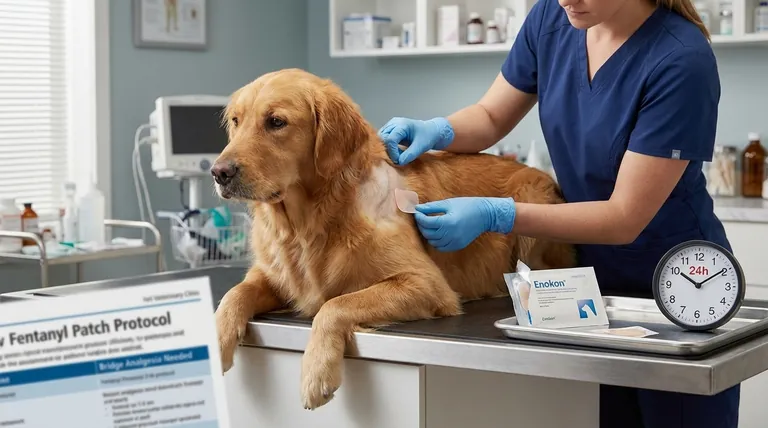
For a dog, a transdermal fentanyl patch does not provide immediate pain relief. Following application, it takes approximately 24 hours for the fentanyl to be absorbed through the skin and reach effective analgesic concentrations in the bloodstream. This significant delay is a critical factor that must be accounted for when managing a dog's pain.
The core principle to understand is that a fentanyl patch is not an emergency pain solution for dogs. Its 24-hour onset time requires veterinary professionals to implement a "bridge" protocol with faster-acting analgesics to ensure the animal remains comfortable.
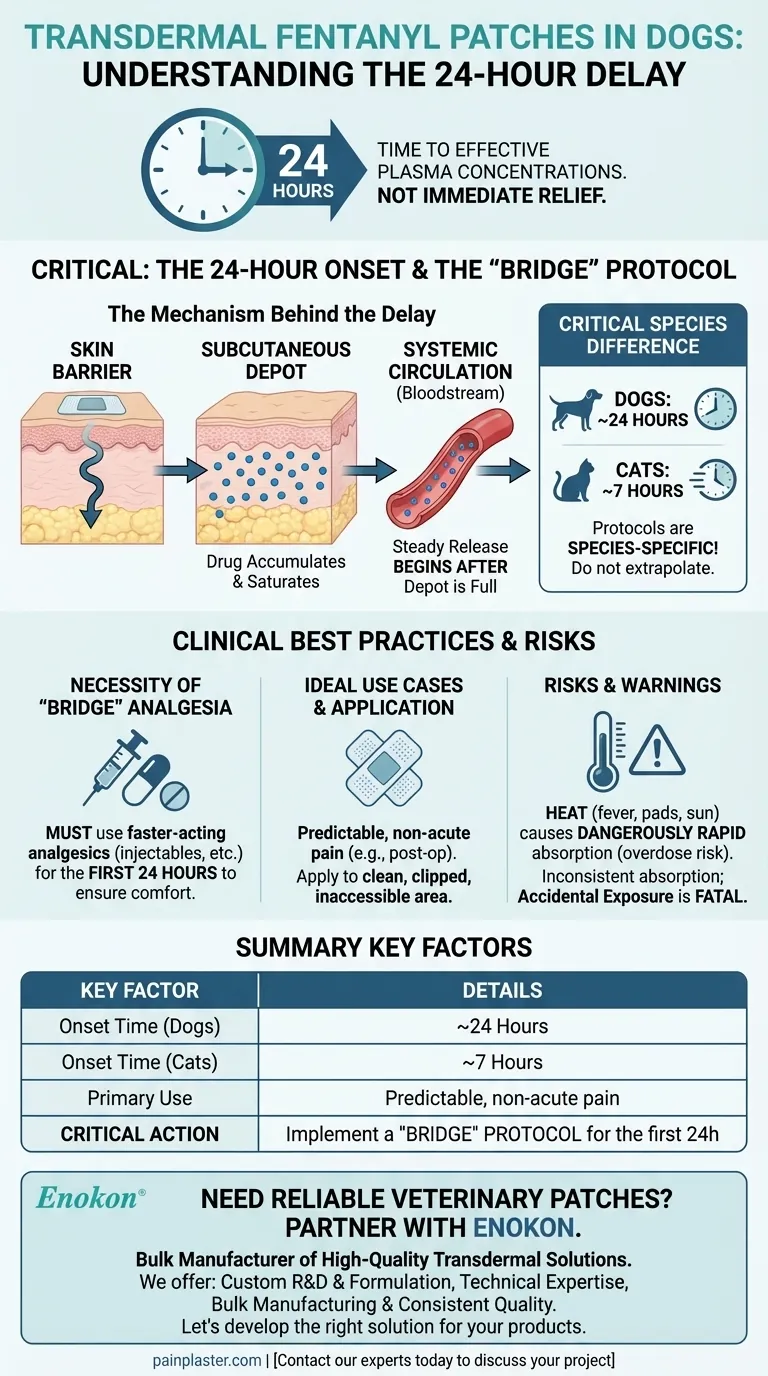
The Mechanism Behind the 24-Hour Delay
The slow absorption rate is not a flaw in the product but a fundamental aspect of its transdermal delivery mechanism. Several physiological factors contribute to this timeline.
The Skin as a Barrier
A dog's skin, specifically the outer layer called the stratum corneum, is designed to be a barrier. Fentanyl must first penetrate this layer before it can be absorbed.
Creating a Subcutaneous Depot
Once through the initial skin layers, the fentanyl does not go directly into the blood. It first accumulates in the fat and tissue just beneath the skin, creating a reservoir or subcutaneous depot. Only after this depot is saturated can the drug begin to release steadily into the systemic circulation. This depot-forming process is what takes the majority of the time.
Critical Species Differences
This absorption timeline is highly species-specific. While it takes about 24 hours in dogs, cats achieve effective plasma concentrations in as little as 7 hours. This stark difference underscores why veterinary protocols cannot be extrapolated between species and must be based on specific pharmacological data.
Clinical Implications and Best Practices
Understanding the 24-hour delay is essential for the effective and humane use of fentanyl patches in a clinical setting. Simply applying a patch and waiting is not an acceptable standard of care.
The Necessity of "Bridge" Analgesia
Because the patch will not provide any pain relief for the first day, the patient must be treated with other, faster-acting analgesics. This often includes injectable opioids or other pain medications to manage pain during the initial 24-hour window.
Ideal Use Cases
Fentanyl patches are best suited for managing predictable, non-acute pain. A common application is for post-operative pain, where the patch can be applied many hours before the procedure or immediately after, with the understanding that other analgesics will be used concurrently.
Proper Application is Crucial
For consistent absorption, the patch must be applied correctly. The hair should be clipped (not shaved, which can cause skin irritation) from a clean, dry area of skin. The patch must have full contact and be placed in a location where the dog cannot lick, chew, or remove it, such as between the shoulder blades.
Understanding the Trade-offs and Risks
While effective for steady pain management, transdermal fentanyl is not without risks that require careful monitoring.
The Impact of Temperature
The rate of drug absorption is influenced by skin temperature and blood flow. If a dog has a fever or if an external heat source (like a heating pad or direct sunlight) is applied over the patch, it can cause a rapid, dangerous increase in absorption. This can lead to an overdose.
Inconsistent Absorption
Individual factors like skin thickness, body fat percentage, and circulation can cause variability in absorption rates between different dogs. What works for one may not work exactly the same way for another.
Risk of Accidental Exposure
A used or dislodged patch still contains a significant amount of fentanyl. It is critical to ensure the patch remains securely on the patient and is disposed of properly to prevent accidental exposure to other pets or to children in the household, which can be fatal.
Making the Right Choice for Your Goal
Effective pain management requires planning around the patch's specific properties.
- If your primary focus is managing predictable, post-operative pain: Apply the patch well before the pain is expected to peak, and ensure a separate protocol of fast-acting analgesics is in place to cover the 24-hour onset period.
- If your primary focus is providing steady, long-term analgesia for chronic conditions: Use the patch as a baseline for pain control, but be prepared to supplement with other medications to manage breakthrough pain.
- If your primary focus is patient safety: Monitor the dog's temperature and respiratory rate, ensure the patch site is secure and inaccessible, and educate owners on the signs of overdose and the critical importance of proper disposal.
Ultimately, leveraging a fentanyl patch effectively depends on respecting its delayed onset and planning proactively to ensure continuous comfort for the patient.
Summary Table:
| Key Factor | Details |
|---|---|
| Onset Time in Dogs | Approximately 24 hours to reach effective plasma concentrations. |
| Onset Time in Cats | Significantly faster, around 7 hours. |
| Primary Use | Managing predictable, non-acute pain (e.g., post-operative). |
| Critical Action | Implement a "bridge" protocol with faster-acting analgesics for the first 24 hours. |
Need a Reliable Transdermal Patch for Veterinary Use?
Managing a pet's pain effectively requires precise, high-quality transdermal solutions. At Enokon, we are a bulk manufacturer of reliable transdermal patches and pain plasters for healthcare and pharmaceutical distributors and brands.
Partner with us to benefit from:
- Custom R&D and Development: We tailor formulations to meet specific pharmacological requirements for different species, ensuring optimal delivery and efficacy.
- Technical Expertise: Our team provides the technical support needed to develop patches with consistent and predictable absorption rates.
- Bulk Manufacturing: We deliver high-volume, consistent quality to support your supply chain.
Let's develop the right solution for your veterinary pain management products.
Contact our experts today to discuss your project
Visual Guide
Related Products
- Silicone Scar Sheets Patch Transdermal Drug Patch
- Menthol Gel Pain Relief Patch
- Far Infrared Heat Pain Relief Patches Transdermal Patches
- Icy Hot Menthol Medicine Pain Relief Patch
- Mugwort Wormwood Pain Relief Patch for Neck Pain
People Also Ask
- What role does a silicone-based transdermal delivery system play in Parkinson's? Enhancing Early-Stage Patient Care
- How is the long-term skin tolerance of silicone-based transdermal patches evaluated in clinical settings? R&D and Safety
- Why is a polarizing microscope used to evaluate the long-term stability of transdermal drug patches? Ensure Efficacy.
- What are common adverse effects of transdermal drug delivery? Risks & Prevention Tips
- What are the advantages of transdermal drug patches? Optimize Medication Delivery with Patches

















