
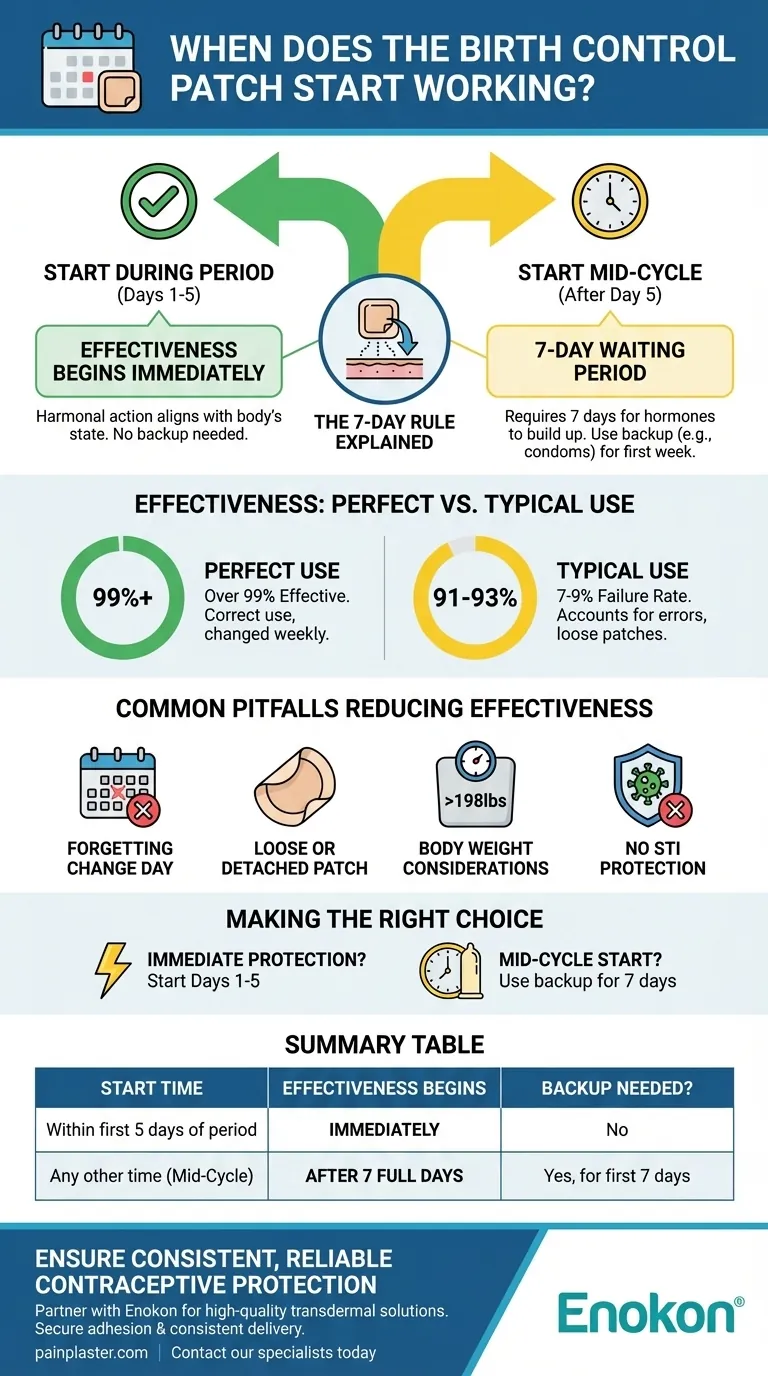
The birth control patch's effectiveness begins at different times depending on when you start it within your menstrual cycle. If you apply your first patch within the first five days of your period starting, it begins working immediately. If you start the patch at any other time, it takes a full seven days to become effective, and you must use a backup birth control method during this initial week.
The timing of your first patch application is the critical factor. Starting it with your period offers immediate protection, while a mid-cycle start requires a 7-day waiting period with backup contraception to prevent pregnancy.
How the Patch Works: The 7-Day Rule Explained
Understanding why the start time matters is key to using the patch correctly and confidently. The hormones need time to build up in your system to reliably prevent ovulation.
Starting During Your Period (Days 1-5)
When you apply the patch during the first five days of your menstrual cycle, you are aligning its hormonal action with your body's natural state at that time. This synchronization allows the patch to begin preventing pregnancy right away.
Starting Mid-Cycle (After Day 5)
If you start the patch on any other day, your body is already further along in its cycle. The patch needs seven full days to release enough hormones into your bloodstream to suppress ovulation and thicken cervical mucus.
During this initial 7-day window, you are not protected. It is essential to use an additional form of contraception, such as condoms, to prevent pregnancy.
Understanding True Effectiveness: Perfect vs. Typical Use
The patch is a highly effective method of birth control, but its success rate depends entirely on how consistently it is used.
The "Perfect Use" Scenario
With perfect use—meaning the patch is changed on the correct day every single week without fail—it is over 99% effective. In this scenario, fewer than 1 out of 100 users will become pregnant in a year.
The "Typical Use" Reality
Typical use accounts for common human error, such as forgetting to change the patch on time or the patch becoming loose. With typical use, the effectiveness drops, and about 7 to 9 out of 100 users will experience a pregnancy within a year.
This difference highlights that consistent, correct application is the single most important factor for success.
Common Pitfalls and Factors That Reduce Effectiveness
To ensure you are protected, you must be aware of the factors that can compromise the patch's effectiveness.
Forgetting Your "Patch Change Day"
The most common reason for the patch failing is forgetting to apply a new one on time. Missing or delaying an application can lower the hormone levels in your body, potentially allowing ovulation to occur.
A Loose or Detached Patch
The patch must remain firmly attached to your skin to work correctly. If it becomes loose or falls off, its ability to deliver a steady dose of hormones is compromised, reducing its effectiveness.
Body Weight Considerations
The patch may be less effective for individuals who weigh more than 198 pounds (90 kg). If this applies to you, it is important to discuss its suitability with your healthcare provider.
A Critical Note on STI Protection
The birth control patch offers zero protection against sexually transmitted infections (STIs), including HIV. You must use barrier methods like condoms to protect against STIs.
Making the Right Choice for Your Goal
Your approach to starting the patch should align with your immediate contraceptive needs and long-term goals.
- If your primary focus is immediate protection: Start the patch on one of the first five days of your menstrual period.
- If you are starting mid-cycle: Use a backup method like condoms for the first full seven days without exception.
- If your goal is minimizing pregnancy risk over time: Set a recurring weekly alarm for your "patch change day" and check daily that the patch is securely attached.
Consistent and correct use is the key to making the birth control patch a reliable contraceptive method.
Summary Table:
| Start Time | Effectiveness Begins | Backup Method Needed? |
|---|---|---|
| Within first 5 days of period | Immediately | No |
| Any other time (Mid-Cycle) | After 7 full days | Yes, for first 7 days |
Ensure Consistent, Reliable Contraceptive Protection
For healthcare distributors and brands, providing patients with dependable transdermal solutions is critical. Inconsistent patch adhesion or hormone delivery can compromise user safety and product efficacy.
Partner with Enokon, a bulk manufacturer of reliable transdermal patches and pain plasters. We combine rigorous manufacturing standards with deep technical expertise to deliver products that perform as intended, cycle after cycle.
We help you deliver confidence to your end-users by providing:
- High-Quality Patches: Engineered for secure adhesion and consistent drug delivery.
- Custom R&D: Our experts can collaborate on developing new formulations or optimizing existing ones to meet specific market needs.
Let's discuss how we can support your product line with technically advanced, reliable transdermal solutions.
Contact our specialists today to explore partnership opportunities.
Visual Guide
Related Products
- Heating Pain Relief Patches for Menstrual Cramps
- Prostate Pain Kidney Health Care Patch for Men
- Silicone Scar Sheets Patch Transdermal Drug Patch
- Cooling Fever Patches Color Change Cold Fever Patch
- Mugwort Wormwood Pain Relief Patch for Neck Pain
People Also Ask
- What are the benefits of Period Pain Heat Patches? Drug-Free, On-the-Go Relief
- What are the key benefits of heating patches for elderly individuals? Relieve Pain & Improve Mobility
- What are the different types of heat patches? Find the Right Pain Relief for Your Needs
- What are the key differences between conventional heat patches and deep heat devices? Choosing the Right Pain Relief Solution
- What percentage of people with back pain use heat patches for relief? Discover the Popular Choice for Pain Management




