
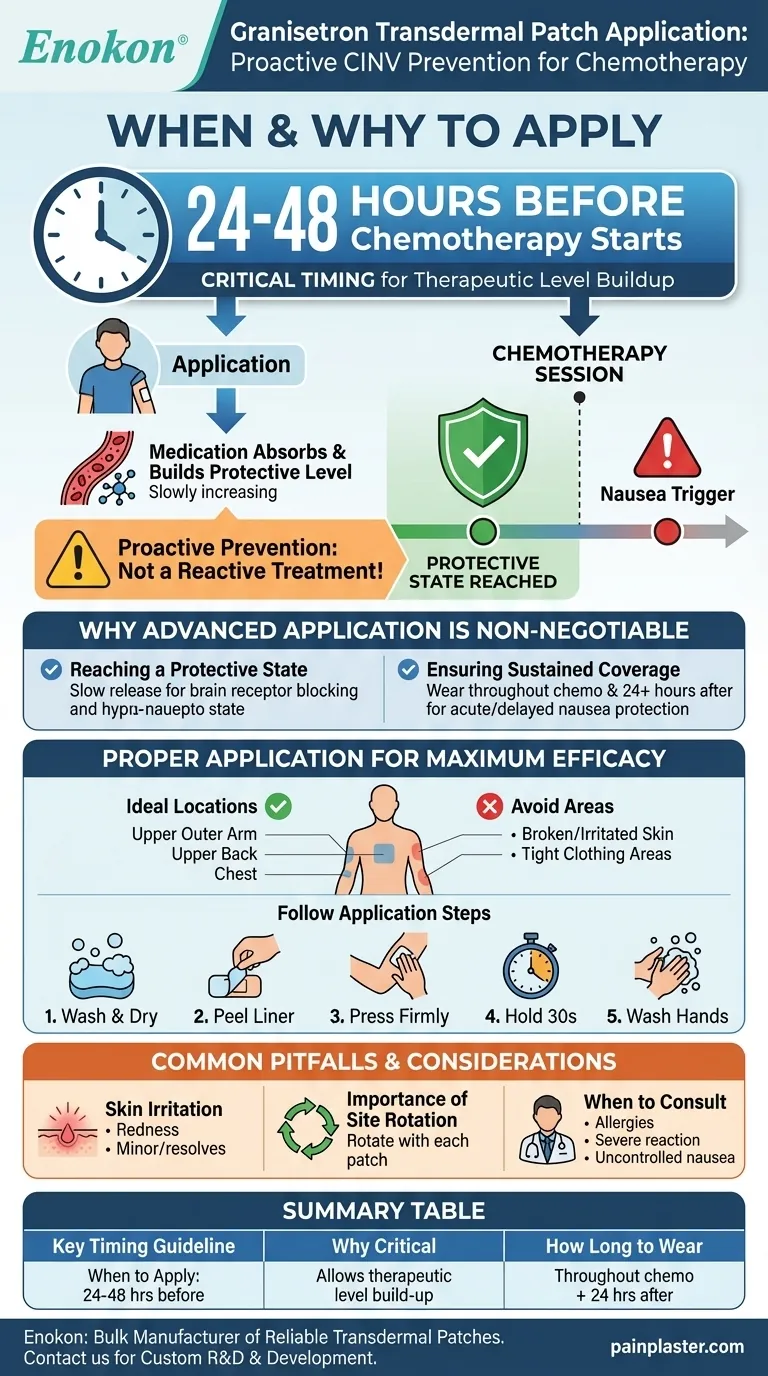
To ensure effectiveness, the granisetron transdermal patch must be applied to the skin at least 24 to 48 hours before you begin your chemotherapy session. This advanced timing is crucial because the medication needs time to absorb through your skin and build up to a therapeutic level in your bloodstream before treatment starts.
The central principle of the granisetron patch is proactive prevention. It is not a reactive treatment for nausea that has already started; it works by establishing a protective level of medication in your body before the chemotherapy drugs can trigger nausea and vomiting.

Why Advanced Application is Non-Negotiable
Chemotherapy-induced nausea and vomiting (CINV) is best managed by preventing it from occurring in the first place. The granisetron patch is designed specifically for this purpose, but its transdermal delivery system has a built-in time delay.
Reaching a Protective State
The patch releases granisetron slowly and continuously through the skin. It takes a full day or two for enough medication to enter your system and effectively block the serotonin receptors in the brain that trigger nausea. Applying it just before your appointment will not provide protection when you need it most.
Ensuring Sustained Coverage
Once applied, the patch provides a steady, consistent dose of medication. You must keep it on throughout your chemotherapy and for at least 24 hours after your session is complete. This ensures you are protected from both acute nausea (within the first 24 hours) and delayed nausea (which can occur days later).
Proper Application for Maximum Efficacy
Correctly applying the patch is just as important as the timing. Following these steps ensures proper adhesion and medication delivery.
Choose the Right Location
Apply the patch to a clean, dry, and relatively hair-free area of skin. The upper outer arm, upper back, or chest are ideal locations.
Avoid any skin that is broken, irritated, red, or will be covered by tight clothing or waistbands.
Follow the Application Steps
- Wash the area with soap and water, then dry it completely.
- Remove the patch from its pouch and peel off the protective liner.
- Immediately press the patch firmly onto the prepared skin site.
- Hold it in place with the palm of your hand for about 30 seconds to ensure the edges are sealed.
- Wash your hands thoroughly after application.
Common Pitfalls and Considerations
While highly effective, transdermal patches require care to avoid common issues that can reduce their benefit.
The Risk of Skin Irritation
The most common side effect is redness, itching, or mild irritation at the application site. This is typically minor and resolves after the patch is removed.
The Importance of Site Rotation
To prevent significant skin irritation, you must rotate the application site with each new patch. Never apply a new patch to the exact same spot you just used.
When to Consult Your Medical Team
Always discuss your medical history and any allergies with your doctor before using the patch. If you experience a severe skin reaction or find that your nausea is not well-controlled despite using the patch correctly, contact your oncology team.
How to Apply This to Your Treatment
Use these guidelines to integrate the granisetron patch successfully into your chemotherapy plan.
- If you are preparing for your treatment cycle: Apply the patch a full 24 to 48 hours before your scheduled appointment to ensure you are protected from the start.
- If you experience mild skin irritation: Choose a completely different location on your upper body for the next patch application.
- If nausea persists despite using the patch: Do not wait. Contact your doctor or nurse, as your anti-nausea regimen may need to be adjusted with additional medications.
Taking this simple, proactive step well before your treatment is the key to managing your side effects effectively.
Summary Table:
| Key Timing Guideline | Details |
|---|---|
| When to Apply | 24 to 48 hours before chemotherapy starts. |
| Why the Timing is Critical | Allows medication to build up to a therapeutic level in the bloodstream. |
| How Long to Wear | Keep the patch on throughout chemotherapy and for at least 24 hours after it ends. |
Ensure your patients receive the best possible protection from chemotherapy-induced nausea and vomiting (CINV). Partner with Enokon, a bulk manufacturer of reliable transdermal patches like granisetron, for healthcare and pharmaceutical distributors and brands. Benefit from our technical expertise for custom R&D and development to create effective, patient-friendly solutions. Contact our experts today to discuss your transdermal patch needs.
Visual Guide
Related Products
- Far Infrared Heat Pain Relief Patches Transdermal Patches
- Silicone Scar Sheets Patch Transdermal Drug Patch
- Icy Hot Menthol Medicine Pain Relief Patch
- Menthol Gel Pain Relief Patch
- Mugwort Wormwood Pain Relief Patch for Neck Pain
People Also Ask
- Why is the selection of matrix materials critical when developing customized transdermal patches? Optimize Efficacy
- What are the physical impacts of external heat exposure on the performance and safety of transdermal patches? - Guide
- What are the clinical advantages of local transdermal delivery systems? Unlock Safer, More Effective Pain Relief Solutions
- What role does a skin tolerance scoring system play in the safety evaluation of transdermal patches? Key Safety Metrics
- How does high-purity far-infrared ceramic powder contribute to the efficacy of far-infrared physical therapy patches?














