
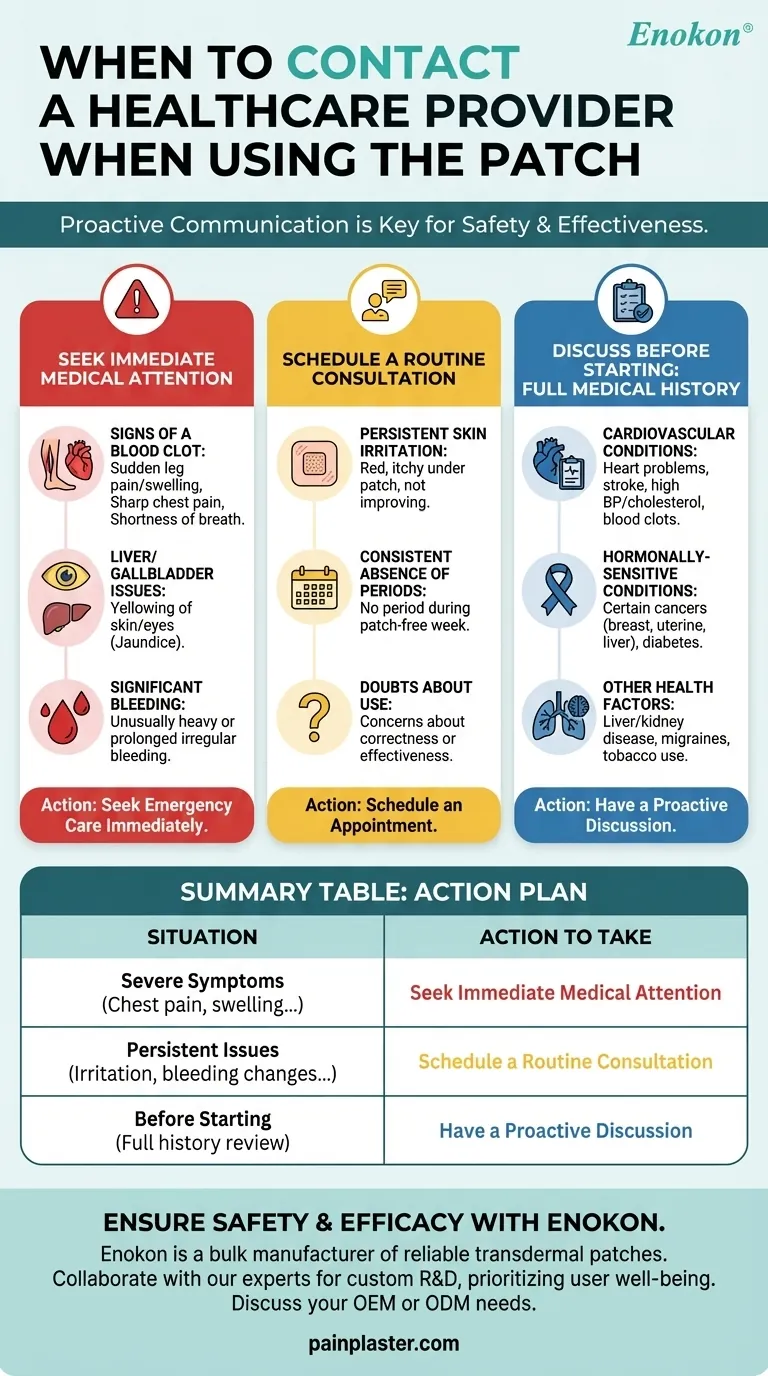
In short, you should contact your healthcare provider immediately if you experience any signs of a serious medical issue, such as sudden leg pain or swelling, severe chest pain, shortness of breath, or yellowing of the skin or eyes. For less urgent issues like persistent skin irritation or consistent changes in your bleeding pattern, scheduling a routine appointment is the correct course of action.
The core principle is proactive communication. While you must seek immediate help for severe symptoms, establishing a clear line of communication with your provider before and during patch use is the most effective way to ensure your safety and the method's effectiveness.

When to Seek Immediate Medical Attention
Certain side effects can indicate a serious underlying condition that requires urgent evaluation. Do not wait for these symptoms to resolve on their own.
Signs of a Potential Blood Clot
A known risk of hormonal contraceptives is the formation of blood clots. Contact a provider immediately if you experience sudden leg pain, tenderness, or swelling (usually in one leg), sharp chest pain, coughing up blood, or sudden shortness of breath.
Liver or Gallbladder Issues
Problems with the liver or gallbladder can be serious. Seek prompt medical care if you notice a yellowing of your skin or the whites of your eyes (jaundice), which can signal liver distress.
Significant Bleeding Irregularities
While some spotting is common, unusually heavy or prolonged irregular bleeding is not. This change requires a medical consultation to rule out underlying issues.
When to Schedule a Routine Consultation
Not every issue is an emergency, but some conditions warrant a discussion with your doctor to ensure the patch remains the right choice for you.
Persistent Skin Irritation
If the skin under or around your patch becomes consistently red, itchy, or irritated and does not improve after moving the patch to a new location, contact your provider.
Consistent Absence of Periods
If you consistently do not get your period during the patch-free week, you should speak with your provider. They may want to rule out pregnancy or other medical reasons.
Doubts About Use or Effectiveness
If you have any doubts about whether you are using the patch correctly or are concerned it is not working, it is always best to consult your provider for clarification and peace of mind.
The Importance of Your Full Medical History
The safest time to communicate is before you even start. Your provider needs a complete picture of your health to determine if the patch is a suitable and safe option for you.
Pre-existing Cardiovascular Conditions
Be sure to disclose any personal or family history of heart problems, stroke, high blood pressure, high cholesterol or triglycerides, or blood clots. These conditions can significantly increase the risks associated with hormonal contraception.
Hormonally-Sensitive Conditions
Inform your provider if you have a history of certain cancers (such as breast, uterine, or liver), diabetes, or high prolactin levels. Hormones in the patch can affect these conditions.
Other Significant Health Factors
Your full health profile is critical. Discuss any history of liver or kidney disease, migraine headaches, seizures, or systemic lupus erythematosus (SLE). Lifestyle factors, especially tobacco use, dramatically increase certain health risks and must be disclosed.
Upcoming Medical Procedures
Inform your provider about any scheduled surgeries or laboratory tests, as you may be advised to stop using the patch temporarily.
Making the Right Call for Your Health
Use your symptoms and circumstances to guide your next step.
- If your primary focus is addressing a sudden, severe symptom like chest pain or leg swelling: Seek emergency medical care immediately.
- If your primary focus is a persistent but non-urgent issue like skin irritation or spotting: Schedule a routine appointment with your provider.
- If your primary focus is ensuring the patch is safe for you from the start: Have a thorough and honest discussion about your entire medical history with your provider before your first prescription.
Ultimately, taking an active and communicative role in your healthcare is the most reliable way to stay safe and healthy.
Summary Table:
| Situation | Action to Take |
|---|---|
| Severe Symptoms (e.g., chest pain, leg swelling, shortness of breath) | Seek Immediate Medical Attention |
| Persistent Issues (e.g., skin irritation, bleeding changes, missed periods) | Schedule a Routine Consultation |
| Before Starting (e.g., full medical history review) | Have a Proactive Discussion |
Ensure the Safety and Efficacy of Your Transdermal Products
Navigating patient safety and proper usage is paramount. At Enokon, we are a bulk manufacturer of reliable transdermal patches and pain plasters for healthcare and pharmaceutical distributors and brands. Our technical expertise supports custom R&D and development, ensuring your products meet the highest standards of safety and performance.
Let's collaborate to develop a patch that prioritizes user well-being. Contact our experts today to discuss your OEM or ODM needs.
Visual Guide
Related Products
- Far Infrared Heat Pain Relief Patches Transdermal Patches
- Silicone Scar Sheets Patch Transdermal Drug Patch
- Icy Hot Menthol Medicine Pain Relief Patch
- Menthol Gel Pain Relief Patch
- Mugwort Wormwood Pain Relief Patch for Neck Pain
People Also Ask
- Why is the selection of matrix materials critical when developing customized transdermal patches? Optimize Efficacy
- What are the physical impacts of external heat exposure on the performance and safety of transdermal patches? - Guide
- What role does a skin tolerance scoring system play in the safety evaluation of transdermal patches? Key Safety Metrics
- What are the clinical advantages of local transdermal delivery systems? Unlock Safer, More Effective Pain Relief Solutions
- How does high-purity far-infrared ceramic powder contribute to the efficacy of far-infrared physical therapy patches?



















