
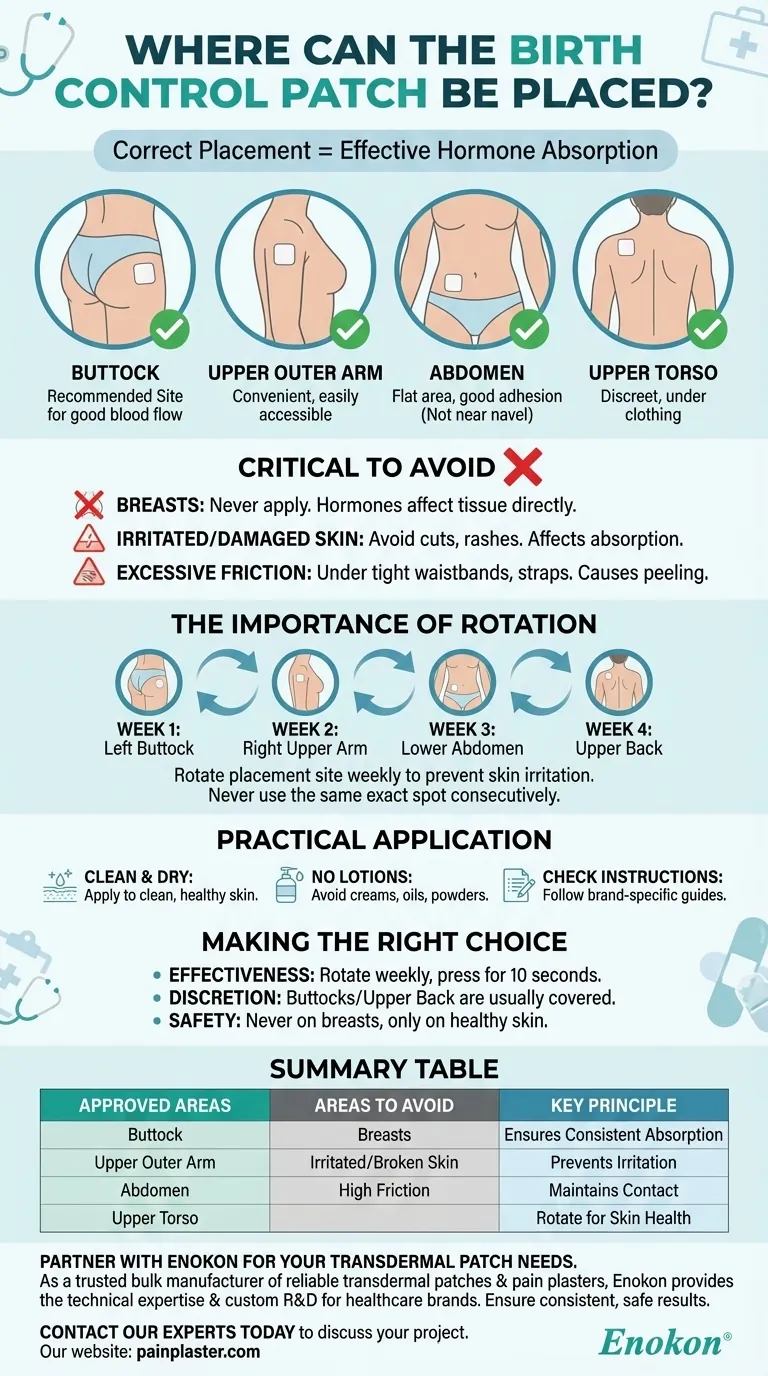
The birth control patch can be placed on one of four main areas of the body: the buttock, the upper outer arm, the abdomen (but not near the bellybutton), or the upper torso (such as the upper back or shoulder). Critically, it must never be placed on the breasts.
The goal of proper patch placement is to ensure consistent and effective hormone absorption into the bloodstream. Choosing an approved location is not arbitrary; it is essential for both the contraceptive's effectiveness and your personal safety.
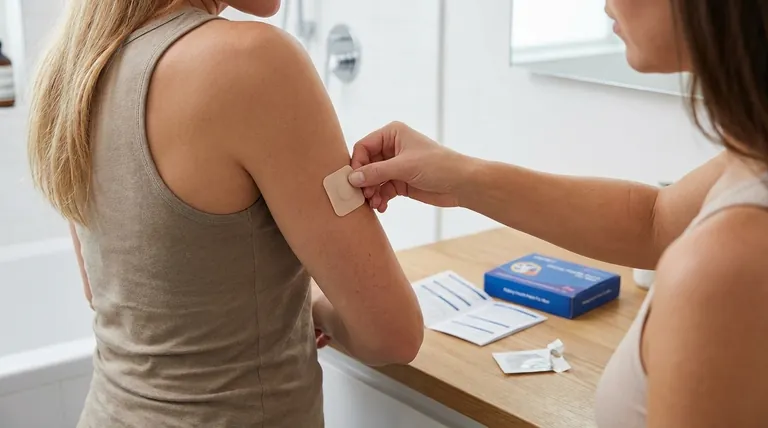
The Principles of Proper Placement
Understanding why certain locations are recommended helps ensure you use the patch correctly and safely. The entire system relies on the patch making firm, uninterrupted contact with your skin for a full week.
Why These Specific Locations?
The approved sites—buttocks, abdomen, upper arm, and upper back—are chosen because they generally have good blood flow beneath the skin. They also tend to be areas where the patch can adhere flatly and are less likely to be rubbed off by tight clothing.
Ensuring Consistent Hormone Delivery
For the hormones to be absorbed correctly, the patch must be applied to skin that is clean, dry, and healthy. Do not apply the patch over any cuts, rashes, or irritated skin, as this can affect absorption and cause further irritation.
The Importance of Rotation
To prevent skin irritation, it is crucial to rotate the placement site each time you apply a new patch. For example, if you used your left buttock one week, use your right buttock or left shoulder the next week. Never apply a new patch to the exact same spot of skin you just used.
Critical Areas to Avoid and Why
The list of places to avoid is just as important as the list of approved locations. These restrictions are in place for clear safety and efficacy reasons.
The Breast Tissue Prohibition
You must never apply the patch to your breasts. The hormones in the patch (estrogen and progestin) can affect breast tissue directly. Prolonged, direct exposure from a patch is thought to potentially increase the risk of adverse cellular changes.
Irritated or Damaged Skin
Applying a patch over broken or irritated skin can lead to two problems. First, the medication may not be absorbed properly, potentially reducing its effectiveness. Second, it can worsen the skin irritation or even lead to infection.
Areas with Excessive Friction
Avoid placing the patch where it will be constantly rubbed, such as under the waistband of your pants or a tight bra strap. Constant friction can cause the edges of the patch to peel up, compromising the adhesive and interrupting hormone delivery.
Practical Considerations for Application
Beyond location, a few simple steps ensure the patch works as intended. These details can make a significant difference in its effectiveness.
Always Check Brand-Specific Instructions
While the general placement areas are consistent, different brands (like Xulane or Twirla) may have slightly different instructions or illustrations. Always refer to the patient information leaflet that comes with your specific prescription.
Avoid Creams and Lotions
Do not use any lotions, oils, creams, or powders on the area of skin where you plan to apply the patch. These substances can interfere with the adhesive and prevent the patch from sticking properly for the entire week.
Making the Right Choice for Your Routine
Your choice of where to place the patch can be guided by your daily activities and personal comfort.
- If your primary focus is effectiveness: Always rotate placement sites weekly and press down firmly for 10 seconds during application to ensure the edges are sealed.
- If your primary focus is discretion: The buttocks and upper back are excellent locations that are almost always covered by clothing.
- If your primary focus is safety: Strictly adhere to the rule of never placing the patch on your breasts and always using clean, healthy skin.
Following these placement guidelines ensures you receive the full contraceptive benefit of the patch safely and effectively.
Summary Table:
| Approved Placement Areas | Areas to Strictly Avoid | Key Principle |
|---|---|---|
| Buttock | Breasts | Ensures consistent hormone absorption. |
| Upper Outer Arm | Irritated or broken skin | Prevents skin irritation and infection. |
| Abdomen (away from bellybutton) | Areas with excessive friction | Maintains proper adhesive contact. |
| Upper Torso (e.g., upper back) | Rotate sites weekly to protect skin. |
Partner with Enokon for Your Transdermal Patch Needs
As a trusted bulk manufacturer of reliable transdermal patches and pain plasters, Enokon provides the technical expertise and custom R&D necessary for healthcare and pharmaceutical distributors and brands to develop effective products. Ensure your patches deliver consistent, safe results for end-users.
Contact our experts today to discuss your custom transdermal patch development project.
Visual Guide
Related Products
- Prostate Pain Kidney Health Care Patch for Men
- Heating Pain Relief Patches for Menstrual Cramps
- Silicone Scar Sheets Patch Transdermal Drug Patch
- Menthol Gel Pain Relief Patch
- Icy Hot Menthol Medicine Pain Relief Patch
People Also Ask
- What are the key components of Chinese herbal pain patches? Discover the Science Behind Natural Pain Relief
- What complementary practices enhance the effectiveness of Chinese pain patches? Boost Relief with Holistic Care
- How can Chinese pain patches help with back pain? Natural Relief & Healing Benefits
- What should be avoided when using Chinese pain patches? Key Safety Tips for Effective Relief
- Are there any side effects associated with Chinese pain patches? Risks & Safety Tips








