
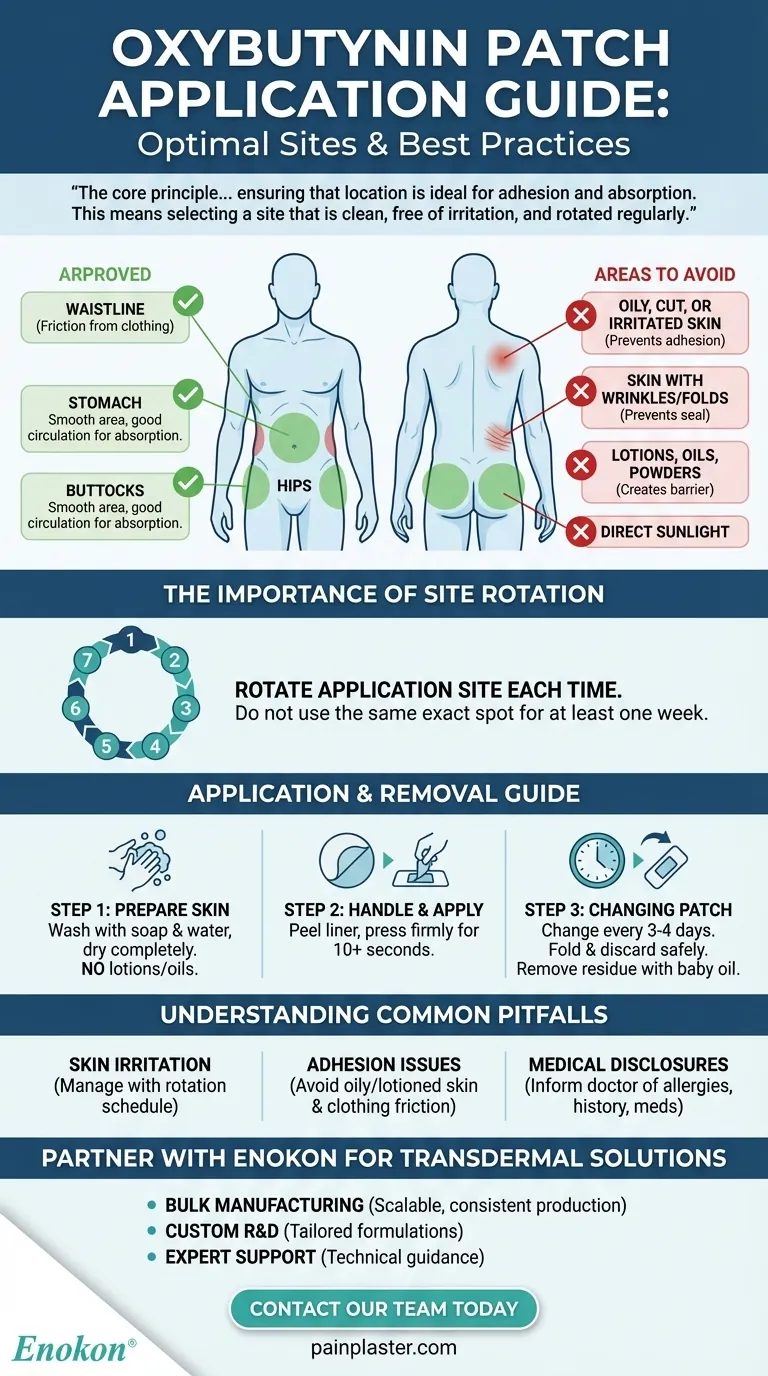
To ensure effectiveness and safety, the oxybutynin patch should be applied to a clean, dry, and smooth area of skin on the stomach (abdomen), hips, or buttocks. You must avoid the waistline, as tight clothing can rub against the patch and dislodge it. Proper site selection and preparation are critical for consistent medication delivery.
The core principle of using an oxybutynin patch is not just choosing an approved location, but ensuring that location is ideal for adhesion and absorption. This means selecting a site that is clean, free of irritation, and rotated regularly to maintain skin health.
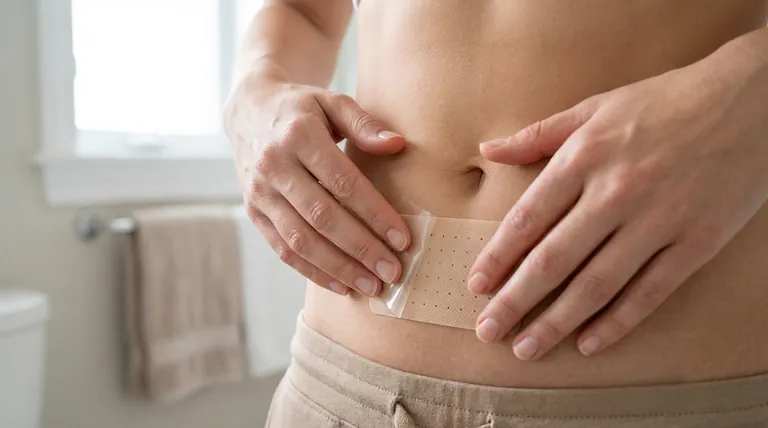
Choosing the Optimal Application Site
Proper placement is the first step in ensuring your medication works as intended. It involves knowing both where to apply the patch and which areas to avoid.
Approved Locations: Stomach, Hips, and Buttocks
These three areas are recommended because they generally have good circulation for medication absorption and are less prone to movement or friction that could detach the patch. The skin in these locations is typically smooth and easy to access.
Key Areas and Skin Conditions to Avoid
To ensure the patch adheres correctly and delivers a steady dose, never apply it to:
- The waistline, where belts or waistbands can rub against it.
- Skin that is oily, cut, scraped, or irritated.
- Skin with wrinkles or folds that would prevent a flat, secure seal.
- Any area that was recently treated with lotions, oils, or powders, as these create a barrier.
- Skin that will be exposed to direct sunlight.
The Importance of Site Rotation
You must rotate the application site each time you apply a new patch. Do not use the same exact spot for at least one week. This practice is essential for preventing skin irritation, redness, or itching that can occur from prolonged contact with the patch's adhesive.
A Step-by-Step Application and Removal Guide
Following a consistent process ensures the patch is applied correctly every time, maximizing its effectiveness.
Step 1: Prepare the Skin
Before application, wash the chosen area with plain soap and water, then rinse thoroughly. Pat the skin completely dry with a clean towel. Do not use any lotions, oils, or powders on the area before applying the patch.
Step 2: Handle and Apply the Patch
First, wash and dry your hands. When you open the pouch, you will find the patch has a protective liner. Peel off the first part of the liner and press the sticky side of the patch firmly onto your prepared skin.
Bend the patch slightly and roll the remaining part onto your skin, allowing the second piece of the liner to come off. Press the entire patch firmly with your fingers for at least 10 seconds to ensure the edges are sealed.
Step 3: Changing the Patch
Each patch is typically worn for 3 to 4 days. When it's time to change it, peel the old one off slowly. To dispose of it, fold it in half with the sticky sides together and discard it safely away from children and pets.
If any adhesive residue remains on your skin, you can gently remove it with baby oil or mild soap and water.
Understanding Common Pitfalls
Being aware of potential issues can help you prevent them and manage the treatment more effectively.
Skin Irritation
The most common issue is localized skin irritation under the patch. This is almost always managed by strictly following the site rotation schedule. If irritation persists or becomes severe, consult your healthcare provider.
Patch Adhesion Issues
If your patch comes loose, it will not deliver the correct dose of medication. This is most often caused by applying it to oily or lotioned skin, or to an area where clothing creates constant friction. Re-confirming that your skin is clean and dry before application is the best prevention.
Essential Medical Disclosures
For your safety, it is critical that your doctor is fully aware of your health status. Before using oxybutynin, inform your provider about any:
- Allergies to oxybutynin, other medications, medical tape, or skin patches.
- Medical history, especially glaucoma, bladder or stomach emptying issues, liver or kidney disease, or neurological disorders.
- All other medications, vitamins, and supplements you are currently taking.
Making the Right Choice for Your Treatment
Your goal determines which aspect of the application process requires the most attention.
- If your primary focus is effectiveness: Ensure the application site is perfectly clean, completely dry, and smooth to guarantee a secure seal for consistent medication delivery.
- If your primary focus is minimizing skin irritation: Be diligent about rotating application sites and never reuse the same spot within a seven-day period.
- If your primary focus is overall safety: Maintain an open dialogue with your healthcare provider, disclosing your full medical history and all medications you take.
Proper application is the key to managing your condition effectively while minimizing potential side effects.
Summary Table:
| Application Site | Key Consideration |
|---|---|
| Stomach (Abdomen) | Avoid the waistline to prevent friction. |
| Hips | Choose a smooth, flat area. |
| Buttocks | Ideal for consistent absorption. |
| Areas to AVOID | Reason to Avoid |
| Waistline | Friction from clothing can dislodge the patch. |
| Oily, cut, or irritated skin | Prevents proper adhesion and absorption. |
| Skin with lotions/oils/powders | Creates a barrier, reducing effectiveness. |
Need a reliable supplier for oxybutynin patches or other transdermal solutions?
As Enokon, a leading bulk manufacturer of transdermal patches and pain plasters, we provide pharmaceutical distributors and healthcare brands with high-quality, consistent products. Our technical expertise supports custom R&D and development to meet your specific requirements.
Partner with us for:
- Bulk Manufacturing: Scalable production of reliable transdermal patches.
- Custom R&D: Tailored formulations to meet unique product needs.
- Expert Support: Technical guidance from development to delivery.
Contact our team today to discuss how we can support your product line and enhance patient care.
Visual Guide
Related Products
- Menthol Gel Pain Relief Patch
- Asthma Cough and Pain Relief Patch for Adults and Kids
- Herbal Medicated Anti Diarrhea Patch for Digestive Relief
- Lidocaine Hydrogel Pain Relief Patch for Pain Relief
- Icy Hot Menthol Medicine Pain Relief Patch
People Also Ask
- How effective are pain relief patches for muscle pain? Target Localized Pain with Transdermal Delivery
- How do pain relief patches compare to other pain relief methods? Discover Targeted, Long-Lasting Relief
- Who should consult a healthcare professional before using pain relief patches? Ensure Your Safety with Medical Advice
- What are the potential side effects of pain relief patches? A Guide to Safe Use & Key Risks
- What are pain relief patches and how do they work? Discover Non-Invasive Pain Management



















