
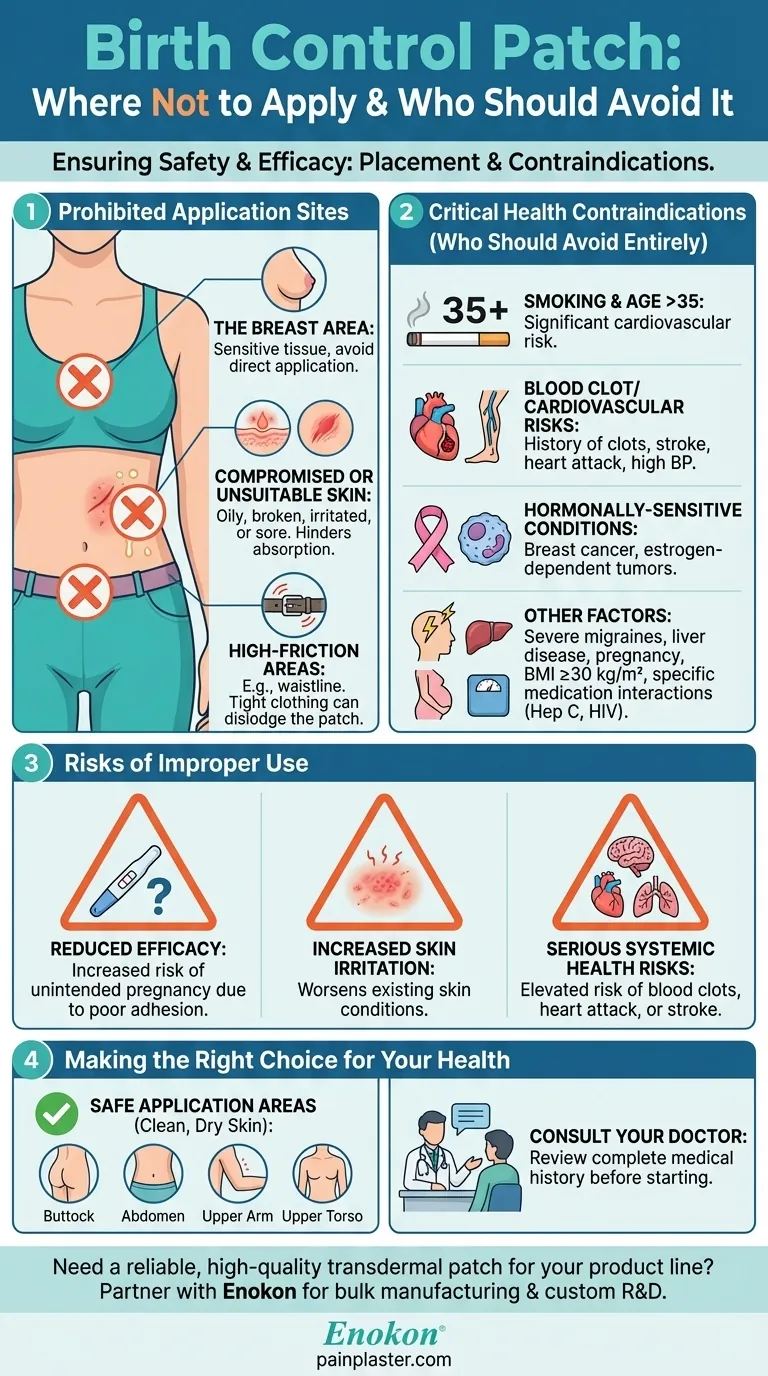
To ensure safety and effectiveness, the birth control patch must not be applied to the breasts or to any skin that is oily, broken, irritated, or sore. You should also avoid areas where tight clothing might rub against it, such as along the waistline, as this can cause the patch to become loose or fall off.
The core principle is twofold: The patch requires clean, stable, and intact skin for proper hormone absorption, and its use is strictly contraindicated for individuals with specific pre-existing health conditions that increase medical risk.
Prohibited Application Sites on the Body
Proper placement is critical for the patch to work correctly and to prevent local irritation. Certain areas must always be avoided.
The Breast Area
Never apply the patch to your breasts. The breast tissue is sensitive to the hormones (estrogen and progestin) delivered by the patch, and direct application is not advised.
Compromised or Unsuitable Skin
The patch should only be applied to healthy skin. Avoid any area that is oily, red, irritated, or broken, including skin with cuts, scrapes, or rashes. Applying the patch to compromised skin can hinder hormone absorption and may worsen the irritation.
High-Friction Areas
Avoid placing the patch where it can be easily rubbed off. The most common example is the waistline, where the elastic from pants or skirts can dislodge it. A patch that isn't fully adhered will not deliver the correct dose of medication, reducing its contraceptive effectiveness.
Critical Health Contraindications: Who Should Avoid the Patch Entirely?
Beyond where you place it, it's crucial to understand who should not use the patch at all. The hormones can pose significant health risks for individuals with certain medical histories or conditions.
Smoking and Age
The risk of serious cardiovascular side effects is significantly increased in this group. You should not use the patch if you are over 35 and smoke.
Cardiovascular and Blood Clot Risks
A history of blood clotting or cardiovascular disease is a major contraindication. This includes anyone with:
- A personal history of blood clots (in the legs or lungs), stroke, or heart attack
- Certain heart conditions or coronary artery disease
- Uncontrolled high blood pressure
- Active phlebitis (vein inflammation)
Hormonally-Sensitive Conditions
Because the patch releases estrogen, it is unsafe for individuals with certain hormone-sensitive cancers or related conditions. This includes a personal history of breast cancer or any estrogen-dependent tumor.
Other Significant Medical Factors
Several other conditions make the patch an unsafe option, including:
- Pregnancy or breastfeeding
- Severe migraine headaches, particularly migraine with aura
- Liver disease, liver dysfunction, or liver tumors
- Diabetes with complications affecting your circulation or vision
- Unexplained vaginal bleeding
- A Body Mass Index (BMI) of 30 kg/m² or higher
Specific Medication Interactions
The patch can interact with other drugs. It should not be used if you are taking certain medications for Hepatitis C or HIV.
Understanding the Risks of Improper Use
Failing to follow placement guidelines or using the patch despite contraindications can lead to serious consequences.
Reduced Contraceptive Efficacy
If the patch is placed on oily skin or in a high-friction area, it may not adhere properly. This poor contact can prevent the full, consistent dose of hormones from being absorbed, increasing the risk of an unintended pregnancy.
Increased Skin Irritation
Placing the patch on already irritated or broken skin will almost certainly make the condition worse. It can lead to more severe redness, itching, or rashes at the application site.
Serious Systemic Health Risks
For individuals with the health conditions listed above, using the patch elevates the risk of life-threatening events. The estrogen in the patch can increase the likelihood of developing blood clots, heart attack, or stroke, especially in those already predisposed to these conditions.
Making the Right Choice for Your Health
To use the patch safely, you must consider both placement and your personal health profile.
- If your primary focus is correct application: Always choose a clean, dry, and healthy patch of skin on the buttock, abdomen, upper arm, or upper torso, but never on the breasts or waistline.
- If your primary focus is overall safety: You must have an open conversation with your healthcare provider about your complete medical history before starting the patch.
Ultimately, a discussion with your doctor is the only way to ensure this birth control method is a safe and effective choice for you.
Summary Table:
| Aspect | Key Information |
|---|---|
| Prohibited Body Sites | Breasts, oily/irritated/broken skin, waistline (high friction) |
| Key Health Contraindications | Smoking if over 35, history of blood clots/stroke, breast cancer, severe migraines, BMI ≥30, certain medications |
| Risks of Improper Use | Unintended pregnancy, severe skin irritation, increased risk of blood clots, heart attack, or stroke |
| Safe Application Areas | Clean, dry skin on the buttock, abdomen, upper arm, or upper torso (excluding breasts) |
Need a reliable, high-quality transdermal patch for your product line?
At Enokon, we are a bulk manufacturer of trusted transdermal patches and pain plasters. We partner with healthcare and pharmaceutical distributors and brands to deliver superior products. Our technical expertise ensures custom R&D and development to meet your specific needs, from formulation to final product.
Let's discuss how we can support your next project. Contact our experts today for a consultation.
Visual Guide
Related Products
- Prostate Pain Kidney Health Care Patch for Men
- Heating Pain Relief Patches for Menstrual Cramps
- Silicone Scar Sheets Patch Transdermal Drug Patch
- Menthol Gel Pain Relief Patch
- Icy Hot Menthol Medicine Pain Relief Patch
People Also Ask
- What are the key components of Chinese herbal pain patches? Discover the Science Behind Natural Pain Relief
- What role do Chinese pain patches play in arthritis relief? Discover Natural Pain Management Solutions
- What complementary practices enhance the effectiveness of Chinese pain patches? Boost Relief with Holistic Care
- What should be avoided when using Chinese pain patches? Key Safety Tips for Effective Relief
- What are some popular Chinese pain patches and their uses? Discover Top Herbal Solutions for Pain Relief








