
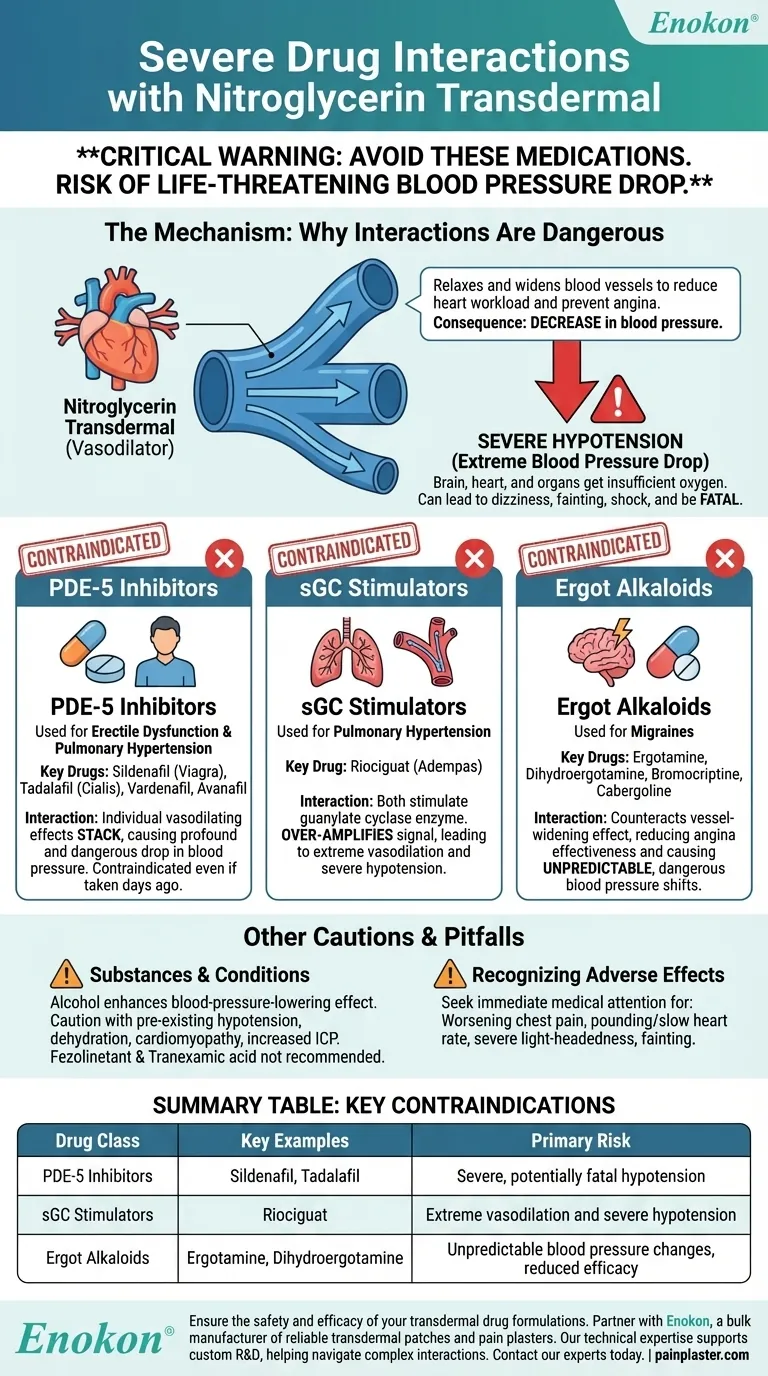
Critically, you must avoid using nitroglycerin transdermal with two specific classes of medications due to the risk of a life-threatening drop in blood pressure. These include PDE-5 inhibitors used for erectile dysfunction (like sildenafil and tadalafil) and a specific drug for pulmonary hypertension called riociguat. A third class, ergot alkaloids used for migraines, also poses a severe risk.
The central issue with nitroglycerin interactions is not that other drugs stop it from working, but that they can amplify its blood-pressure-lowering effect to a dangerous and potentially fatal degree. Understanding this mechanism is the key to using nitroglycerin safely.

The Mechanism: Why These Interactions Are Dangerous
To understand the risk, you first need to understand how nitroglycerin functions and why combining it with certain other drugs creates a hazardous synergistic effect.
How Nitroglycerin Works
Nitroglycerin is a vasodilator. Its primary job is to relax and widen blood vessels throughout your body.
This action reduces the workload on your heart and improves blood flow to the heart muscle itself, which is how it prevents angina (chest pain). A direct consequence of this vasodilation is a decrease in blood pressure.
The Primary Risk: Severe Hypotension
The most dangerous interactions with nitroglycerin lead to severe hypotension, which is an extreme and sudden drop in blood pressure.
When blood pressure falls too low, your brain, heart, and other vital organs do not receive enough oxygen-rich blood. This can quickly lead to dizziness, fainting, shock, and can be fatal.
Drug Classes with Severe Interactions
The following drug classes are contraindicated, meaning they should never be used concurrently with nitroglycerin due to the high risk of severe adverse events.
PDE-5 Inhibitors
These drugs are most commonly prescribed for erectile dysfunction (ED) but are also used for pulmonary arterial hypertension (PAH). They work by increasing vasodilation in specific areas of the body.
- Key Drugs: sildenafil (Viagra), tadalafil (Cialis), vardenafil (Levitra), and avanafil (Stendra).
- The Interaction: When a PDE-5 inhibitor is combined with nitroglycerin, their individual vasodilating effects stack, causing a profound and dangerous drop in overall blood pressure. This contraindication includes recent use, often within several days.
Soluble Guanylate Cyclase (sGC) Stimulators
This class of medication is used to treat pulmonary hypertension. It works on a chemical pathway directly related to how nitroglycerin functions.
- Key Drug: riociguat (Adempas).
- The Interaction: Nitroglycerin works by stimulating an enzyme called guanylate cyclase. Riociguat also stimulates this same enzyme. Using them together massively over-amplifies the signal, leading to extreme vasodilation and severe hypotension.
Ergot Alkaloids
This older class of medication is primarily used to treat migraine headaches. Their effects on blood vessels are complex and can be unpredictable.
- Key Drugs: ergotamine, dihydroergotamine, bromocriptine, cabergoline, and methylergonovine.
- The Interaction: Ergot alkaloids can counteract the beneficial, vessel-widening effect of nitroglycerin. This can reduce the effectiveness of your angina treatment while also causing unpredictable and dangerous shifts in blood pressure.
Understanding Other Cautions and Pitfalls
Beyond the most severe interactions, you must be aware of other substances, conditions, and potential side effects to ensure your safety.
It's Not Just About Severe Interactions
Other medications can have significant interactions that may require dose adjustments or careful monitoring. Drugs like fezolinetant and tranexamic acid are not recommended for concurrent use.
Substances like alcohol can also enhance the blood-pressure-lowering effect of nitroglycerin, increasing your risk of dizziness and light-headedness.
Pre-existing Conditions Matter
Your underlying health status significantly impacts how you tolerate nitroglycerin. Use extreme caution if you have conditions like:
- Pre-existing low blood pressure (hypotension)
- Dehydration or volume depletion
- Hypertrophic cardiomyopathy
- Increased intracranial pressure (ICP)
Recognizing Adverse Effects
Be vigilant for signs of a serious reaction. Worsening chest pain, a pounding or slow heart rate, severe light-headedness, or fainting are signs that require immediate medical attention. The most common side effects are headache and mild light-headedness.
Making the Right Choice for Your Safety
Proactive communication with your healthcare team is the most effective way to prevent a dangerous drug interaction.
- If your primary focus is safe angina management: You must provide your doctor and pharmacist with a complete list of all medications you take, including over-the-counter drugs and supplements.
- If you take any medication for erectile dysfunction or pulmonary hypertension: You must understand that using nitroglycerin is absolutely contraindicated, as the combination can be fatal.
- If you suffer from migraines: You must discuss your specific migraine treatments with your cardiologist to ensure they do not conflict with your angina medication.
Ultimately, your safety depends on a transparent and ongoing conversation with the professionals managing your care.
Summary Table:
| Drug Class | Key Examples | Primary Risk |
|---|---|---|
| PDE-5 Inhibitors | Sildenafil (Viagra), Tadalafil (Cialis) | Severe, potentially fatal hypotension |
| sGC Stimulators | Riociguat (Adempas) | Extreme vasodilation and severe hypotension |
| Ergot Alkaloids | Ergotamine, Dihydroergotamine | Unpredictable blood pressure changes, reduced efficacy |
Ensure the safety and efficacy of your transdermal drug formulations. Partner with Enokon, a bulk manufacturer of reliable transdermal patches and pain plasters for healthcare and pharma distributors and brands. Our technical expertise supports custom R&D and development, helping you navigate complex drug interactions and deliver trusted products to market. Contact our experts today to discuss your project requirements.
Visual Guide
Related Products
- Far Infrared Heat Pain Relief Patches Transdermal Patches
- Icy Hot Menthol Medicine Pain Relief Patch
- Menthol Gel Pain Relief Patch
- Silicone Scar Sheets Patch Transdermal Drug Patch
- Mugwort Wormwood Pain Relief Patch for Neck Pain
People Also Ask
- Why is the selection of matrix materials critical when developing customized transdermal patches? Optimize Efficacy
- What are the clinical advantages of local transdermal delivery systems? Unlock Safer, More Effective Pain Relief Solutions
- What role does a skin tolerance scoring system play in the safety evaluation of transdermal patches? Key Safety Metrics
- What are the physical impacts of external heat exposure on the performance and safety of transdermal patches? - Guide
- How does high-purity far-infrared ceramic powder contribute to the efficacy of far-infrared physical therapy patches?


















