
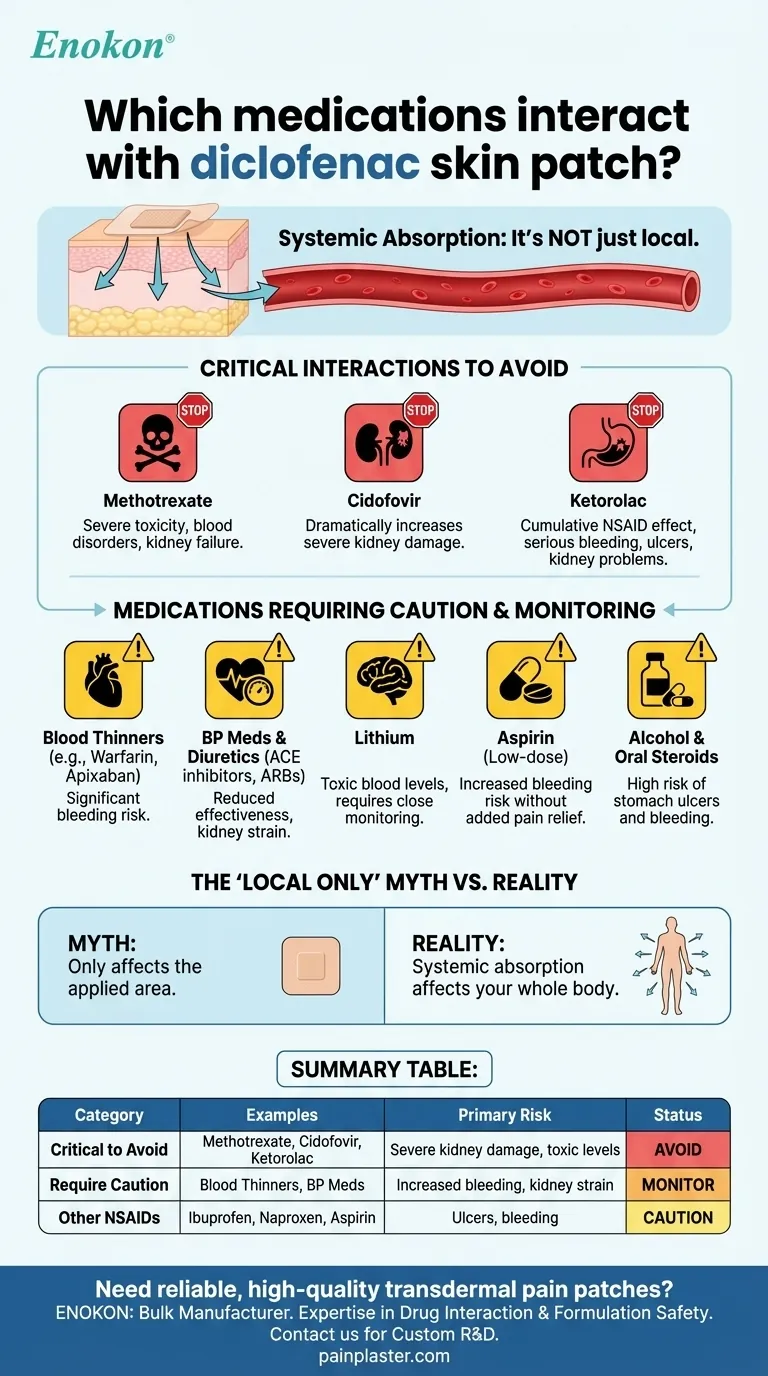
The most serious drug interactions with the diclofenac skin patch involve methotrexate, cidofovir, and ketorolac. However, because a small amount of the drug is absorbed into your bloodstream, it can also interact with a wider range of common medications, including blood thinners, blood pressure drugs, and even other over-the-counter pain relievers.
While the diclofenac patch is applied topically, it is not just a local treatment. Enough medication enters your system to create a risk of serious interactions, primarily related to increased bleeding, kidney damage, and interference with the effectiveness of other drugs.
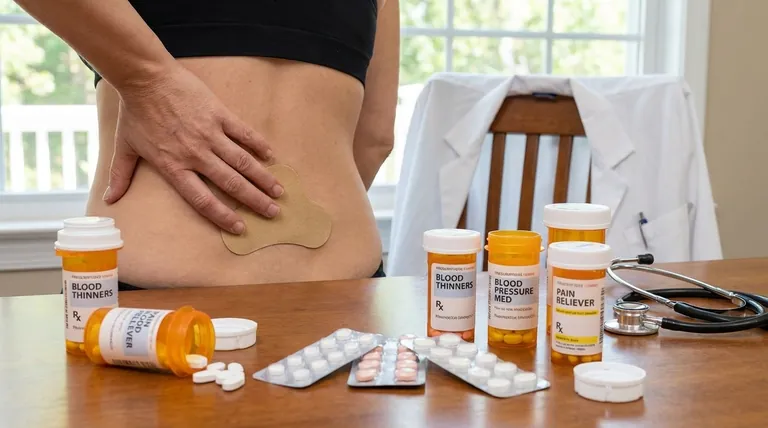
How a Skin Patch Can Cause Systemic Interactions
Diclofenac is a nonsteroidal anti-inflammatory drug (NSAID). It works by blocking substances in your body that cause pain and inflammation.
Absorption Through the Skin
When you apply the patch, the diclofenac is absorbed through your skin and into your bloodstream. While the concentration is lower than with an oral pill, it is still sufficient to affect your entire body and interact with other medications you are taking.
The Cumulative Effect of NSAIDs
Many drug interactions with diclofenac involve other NSAIDs, like ibuprofen, naproxen, or aspirin. Taking multiple NSAIDs at the same time—even in different forms—significantly increases the risk of side effects like stomach bleeding and kidney damage.
Critical Interactions to Avoid
Certain medications should not be used with the diclofenac patch due to the high risk of severe adverse effects.
Methotrexate
Combining diclofenac with high-dose methotrexate can be extremely dangerous. NSAIDs can reduce the body's ability to clear methotrexate, leading to toxic levels that can cause severe blood disorders and kidney failure.
Cidofovir
Using cidofovir, an antiviral medication, with any NSAID is contraindicated. The combination dramatically increases the risk of severe, potentially irreversible kidney damage.
Ketorolac
Ketorolac is another potent NSAID. Using it with a diclofenac patch creates a cumulative effect, substantially raising the risk of serious stomach ulcers, bleeding, and kidney problems.
Medications Requiring Caution and Monitoring
For the following medications, your doctor may need to adjust your dosage or monitor you more closely if you use a diclofenac patch.
Blood Thinners
Medications like warfarin, apixaban, and rivaroxaban prevent blood clots. Combining them with diclofenac can enhance their effect, significantly increasing your risk of dangerous bleeding.
Blood Pressure Medications & Diuretics
Diclofenac can reduce the effectiveness of many blood pressure medications, including ACE inhibitors, ARBs, and diuretics ("water pills"). This combination can also put additional strain on the kidneys.
Lithium
Diclofenac can increase the levels of lithium in your blood to a toxic concentration. If you take lithium for a mood disorder, using a diclofenac patch requires careful monitoring by your physician.
Aspirin
While often used for pain relief, low-dose aspirin is also an NSAID used to prevent heart attacks. Using it with diclofenac increases the risk of gastrointestinal bleeding without adding significant pain-relief benefits.
Alcohol and Steroids
Combining regular alcohol use or oral steroids (like prednisone) with diclofenac increases your risk of developing stomach ulcers and bleeding.
Understanding the Primary Pitfall
The most common mistake is assuming that a "topical" medication is entirely local and therefore free from the risks associated with oral pills.
The Myth of "Local Only"
While a patch delivers the medication directly to the area of pain, systemic absorption is an unavoidable part of how it works. The warnings that apply to oral NSAIDs also apply, to a lesser degree, to the diclofenac patch.
The Importance of a Complete Medication List
Your doctor and pharmacist cannot screen for interactions if they don't know you are using the patch. Always include topical medications, over-the-counter drugs, and supplements when discussing your health.
How to Apply This to Your Health
Your safety depends on clear communication with your healthcare providers about all the medications you take.
- If your primary focus is managing pain while taking blood thinners: You must speak with your doctor before using a diclofenac patch, as the bleeding risk is significant.
- If your primary focus is managing pain with a history of heart or kidney disease: Diclofenac can worsen these conditions and interfere with your medications, making a doctor's consultation essential.
- If your primary focus is short-term relief for a minor injury: Be sure to check all other pain relievers you might take to ensure you are not accidentally combining multiple NSAIDs.
Proactively discussing all your medications with your doctor is the most effective way to use diclofenac patches safely and effectively.
Summary Table:
| Medication Category | Examples | Primary Risk |
|---|---|---|
| Critical to Avoid | Methotrexate, Cidofovir, Ketorolac | Severe kidney damage, toxic blood levels |
| Require Caution | Warfarin, Apixaban, ACE Inhibitors | Increased bleeding, reduced effectiveness, kidney strain |
| Other NSAIDs | Ibuprofen, Naproxen, Aspirin | Increased risk of stomach ulcers and bleeding |
Need a reliable, high-quality transdermal pain patch for your brand or distributors?
At Enokon, we are a bulk manufacturer of reliable transdermal patches and pain plasters. We understand the critical importance of drug interaction profiles and precise formulation for patient safety.
Partner with us to benefit from our technical expertise for custom R&D and development, ensuring your product meets the highest standards of efficacy and safety.
Contact our experts today to discuss your custom transdermal patch needs.
Visual Guide
Related Products
- Menthol Gel Pain Relief Patch
- Lidocaine Hydrogel Pain Relief Patch for Pain Relief
- Icy Hot Menthol Medicine Pain Relief Patch
- Capsaicin Chili Medicated Pain Relief Patches
- Cooling Fever Patches Color Change Cold Fever Patch
People Also Ask
- How effective are pain relief patches for muscle pain? Target Localized Pain with Transdermal Delivery
- How do pain relief patches compare to other pain relief methods? Discover Targeted, Long-Lasting Relief
- Who should consult a healthcare professional before using pain relief patches? Ensure Your Safety with Medical Advice
- Can pregnant women use pain relief patches? Your Essential Guide to Safe Pain Management
- What are some common applications of pain relief patches? Effective Relief for Muscle & Joint Pain













