
The ideal candidate for the birth control patch is someone who values convenience, prefers a non-invasive and reversible contraceptive, and may have trouble remembering a daily pill. However, the patch is not suitable for everyone. It should be strictly avoided by individuals with specific health risks, particularly those related to blood clots, cardiovascular health, certain cancers, and those who weigh over 198 pounds.
The decision to use the birth control patch comes down to a fundamental trade-off: its weekly convenience versus a set of very specific health contraindications driven by its estrogen delivery method. Understanding your personal health profile is not just recommended; it is critical.

The Profile of an Ideal Candidate
For the right person, the birth control patch offers a highly effective and simple method of contraception. The ideal user typically aligns with the following characteristics.
Valuing "Set-It-and-Forget-It" Convenience
The primary appeal of the patch is its weekly application schedule. This is a significant advantage for anyone who finds it difficult to remember to take a pill at the same time every day.
Seeking a Non-Invasive, Short-Acting Method
Unlike an IUD or implant, the patch is non-invasive. It is also easily reversible; fertility typically returns quickly after you stop using it, making it a good option for those who are planning a family in the future.
Having a Low-Risk Health Profile
Crucially, an ideal candidate has no underlying health conditions that are worsened by hormonal birth control containing estrogen. This means no personal or family history of the critical risk factors discussed below.
Critical Health Factors: Who Must Avoid the Patch
The patch delivers a continuous dose of estrogen and progestin, which can increase the risk of certain health complications. For this reason, it is not safe for individuals with the following conditions.
Cardiovascular and Clotting Risks
This is the most serious category of contraindications. The patch is not an option if you have a history of blood clots, stroke, or heart attack.
It should also be avoided by anyone who is 35 or older and smokes. The combination of age, smoking, and estrogen significantly elevates the risk of serious cardiovascular events. High blood pressure is another key disqualifier.
Hormonally-Sensitive Cancers and Conditions
If you have a history of breast cancer, the patch is not recommended. The hormones can potentially stimulate the growth of certain cancer cells.
Other conditions, such as certain forms of lupus or unexplained vaginal bleeding, also preclude the use of the patch until they are fully evaluated by a doctor.
Liver and Metabolic Health
Active liver disease is a contraindication, as the liver is responsible for processing hormones.
Additionally, individuals with diabetes that has led to complications in the kidneys, eyes, or nerves should not use the patch due to potential metabolic and vascular effects.
Neurological Conditions
If you experience migraines with aura, you have a higher baseline risk of stroke. The estrogen in the patch can increase this risk further, making it an unsafe choice.
Body Weight and Efficacy
The patch has been shown to be less effective in women who weigh more than 198 pounds (90 kg). Some guidelines also recommend against its use for individuals with a Body Mass Index (BMI) of 30 or higher due to a combination of reduced efficacy and increased health risks.
Understanding the Trade-offs
Choosing a contraceptive method requires weighing the benefits against the potential downsides. The patch is no exception.
The Pro: Simplicity and Effectiveness
When used correctly, the patch is over 99% effective at preventing pregnancy. It simplifies a daily routine into a weekly one and, unlike an injection, places the user in full control of starting and stopping the method.
The Con: Increased Estrogen Exposure
A key consideration is that the patch may expose you to higher total levels of estrogen than typical combination birth control pills. This elevated exposure is the primary driver behind the significant cardiovascular risks and other contraindications.
The Con: No Protection Against STIs
Like most hormonal contraceptives, the patch offers zero protection against sexually transmitted infections (STIs). To protect against STIs, a barrier method like condoms must be used as well.
The Con: Practical Considerations
The patch can cause skin irritation or sensitivity to the adhesive. It must be checked daily to ensure it is sticking properly, as its effectiveness depends on consistent skin contact. It also requires a prescription and can cost up to $150 per month without insurance.
Making an Informed Decision
Your choice should be guided by a clear understanding of your health profile and lifestyle priorities. Have an open conversation with your healthcare provider to review your specific situation.
- If your primary focus is convenience and you have a low-risk health profile: The patch can be an excellent and highly effective contraceptive choice.
- If you have any cardiovascular risk factors (like smoking over 35, high blood pressure, or migraines with aura): You must avoid the patch and explore non-estrogenic options like the progestin-only pill, IUDs, or the implant.
- If you weigh over 198 lbs or have a BMI of 30 or more: The patch's reduced reliability means other contraceptive methods will likely be a more effective and safer choice for you.
Ultimately, the right birth control method is one that is safe for your body and fits seamlessly into your life.
Summary Table:
| Category | Ideal Candidate | Should Avoid |
|---|---|---|
| Lifestyle | Values weekly convenience, struggles with daily pills | N/A |
| Health Profile | No history of blood clots, stroke, heart attack, or breast cancer | History of cardiovascular issues, hormonally-sensitive cancers |
| Age & Habits | Under 35, non-smoker | 35 or older and smokes |
| Weight | Weighs less than 198 lbs (90 kg) | Weighs more than 198 lbs (BMI ≥30 may be at risk) |
| Other Conditions | No migraines with aura, active liver disease, or complicated diabetes | Has migraines with aura, active liver disease, or diabetes with complications |
Need a Reliable, Customizable Contraceptive Solution?
Choosing the right birth control is a critical health decision. At Enokon, we are a bulk manufacturer of reliable transdermal patches, including innovative contraceptive solutions. We partner with healthcare and pharmaceutical distributors and brands to deliver high-quality, effective products.
Benefit from our expertise:
- Custom R&D: We can develop patches tailored to specific dosage and delivery requirements.
- Proven Reliability: Our technical expertise ensures consistent, high-quality manufacturing.
- Scalable Production: We support your needs from development to bulk manufacturing.
If you are a distributor or brand looking to offer a trusted, custom transdermal contraceptive option, our team is ready to assist.
Contact our experts today to discuss how we can support your product development and supply chain needs.
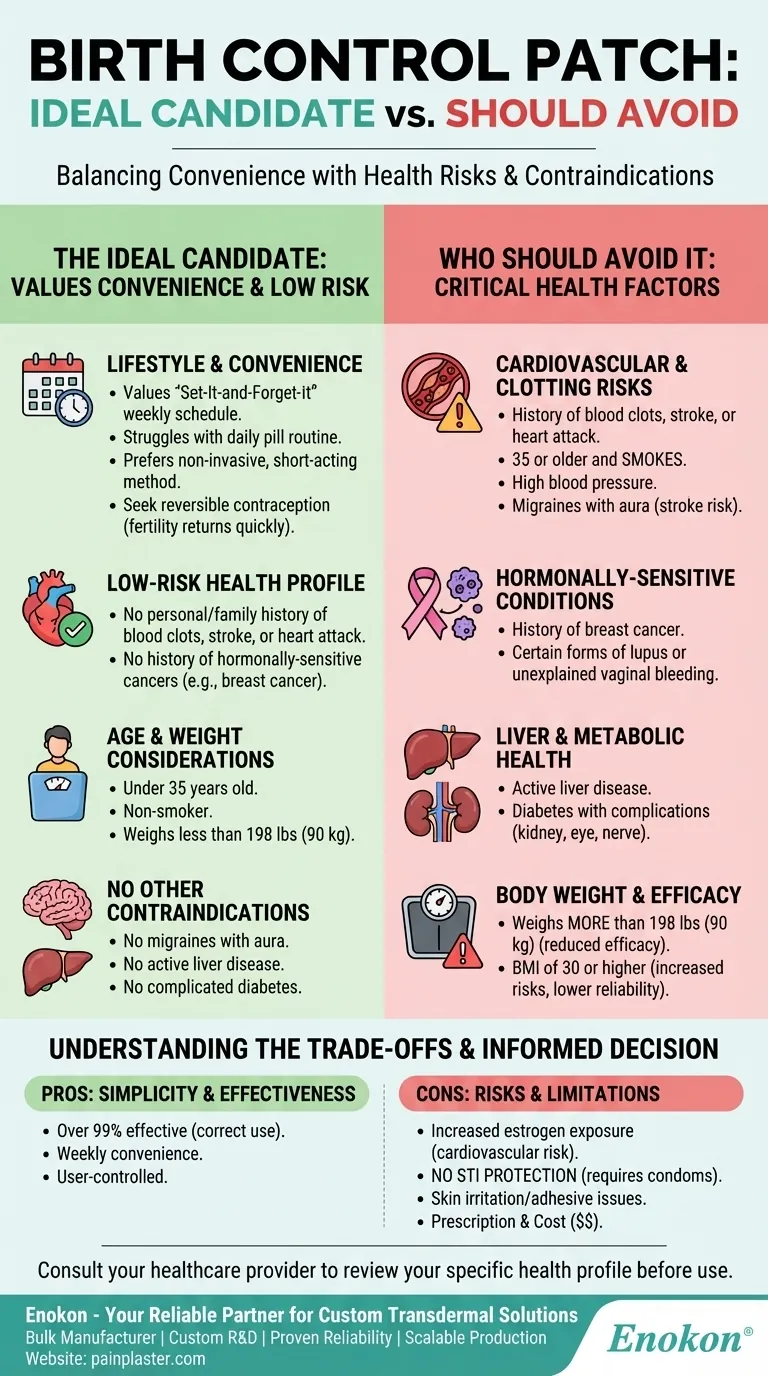
Visual Guide
Related Products
- Heating Pain Relief Patches for Menstrual Cramps
- Prostate Pain Kidney Health Care Patch for Men
- Silicone Scar Sheets Patch Transdermal Drug Patch
- Cooling Fever Patches Color Change Cold Fever Patch
- Mugwort Wormwood Pain Relief Patch for Neck Pain
People Also Ask
- What are the benefits of Period Pain Heat Patches? Drug-Free, On-the-Go Relief
- What are the key benefits of heating patches for elderly individuals? Relieve Pain & Improve Mobility
- What are the different types of heat patches? Find the Right Pain Relief for Your Needs
- What are the key differences between conventional heat patches and deep heat devices? Choosing the Right Pain Relief Solution
- What percentage of people with back pain use heat patches for relief? Discover the Popular Choice for Pain Management




