
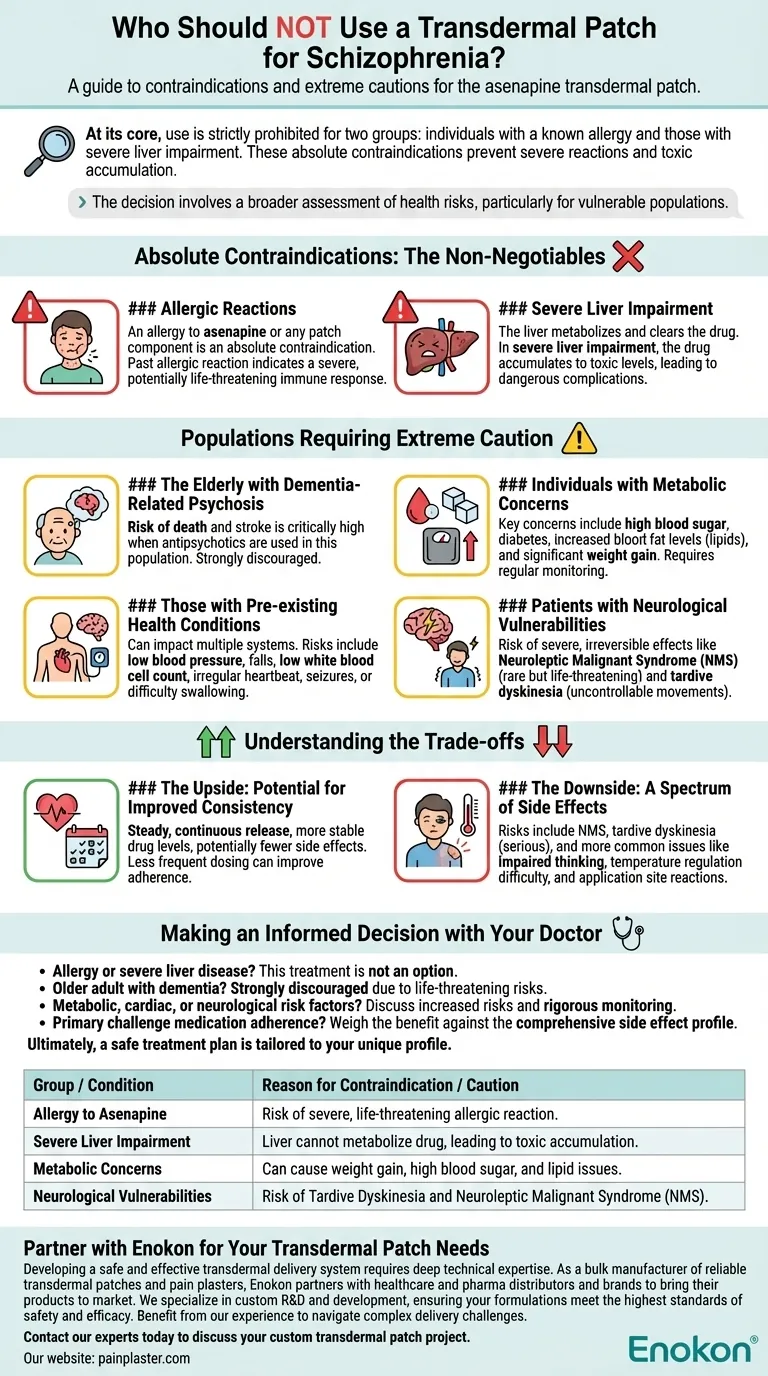
At its core, the asenapine transdermal patch for schizophrenia is strictly prohibited for two groups: individuals with a known allergy to asenapine or any patch components, and those with severe liver impairment. These absolute contraindications are in place because of the risk of severe allergic reactions or the liver's inability to safely process the medication.
While only a few conditions absolutely prevent its use, the decision to use a transdermal patch involves a much broader assessment of significant health risks, particularly for vulnerable populations like the elderly and those with pre-existing metabolic or neurological conditions.

Absolute Contraindications: The Non-Negotiables
Certain conditions create an unacceptable level of risk, making the use of the asenapine patch unsafe. A healthcare provider will not prescribe it if these factors are present.
Allergic Reactions
An allergy to asenapine or any other ingredient in the transdermal patch is an absolute contraindication. A past allergic reaction indicates the body's immune system will have a severe, potentially life-threatening response upon re-exposure.
Severe Liver Impairment
The liver is responsible for metabolizing and clearing the medication from the body. In individuals with severe liver impairment, the drug can accumulate to toxic levels, leading to dangerous complications.
Populations Requiring Extreme Caution
Beyond the absolute contraindications, several groups must approach this treatment with extreme caution. The potential for serious side effects necessitates a careful risk-benefit analysis with a medical professional.
The Elderly with Dementia-Related Psychosis
This is the most serious warning. Antipsychotic medications, including asenapine, carry an increased risk of death when used to treat psychosis in elderly patients with dementia. They also elevate the risk of stroke in this population.
Individuals with Metabolic Concerns
The patch can cause significant metabolic changes. This is a critical consideration for patients with or at risk for these conditions.
Key concerns include high blood sugar and diabetes, increased blood fat levels (lipids), and significant weight gain. Regular monitoring of weight and blood sugar is essential.
Those with Pre-existing Health Conditions
The patch can impact multiple body systems. Patients with certain conditions are at higher risk for complications.
These include a history of low blood pressure, falls, low white blood cell count, irregular heartbeat, seizures, or difficulty swallowing. The medication can worsen these issues.
Patients with Neurological Vulnerabilities
Asenapine can cause severe, sometimes irreversible, neurological side effects.
This includes Neuroleptic Malignant Syndrome (NMS), a rare but life-threatening reaction. Another major risk is tardive dyskinesia, a condition characterized by uncontrollable body and facial movements that may not resolve after stopping the drug.
Understanding the Trade-offs
Choosing a treatment is about balancing effectiveness against potential risks. While the side effects can be serious, the patch also offers distinct advantages over oral medications for some patients.
The Upside: Potential for Improved Consistency
Transdermal patches provide a steady, continuous release of medication. This can lead to more stable drug levels in the blood, potentially reducing certain side effects associated with the peaks and troughs of oral dosing.
This delivery method also requires less frequent dosing, which can improve adherence for individuals who struggle to take a pill every day.
The Downside: A Spectrum of Side Effects
The most severe risks, such as NMS and tardive dyskinesia, are serious but less common. More frequently, patients may experience issues like impaired thinking and motor skills, difficulty regulating body temperature, and reactions at the patch application site.
The decision always comes down to whether the potential benefits of symptom control—such as the reduction of negative symptoms like social withdrawal—outweigh these significant risks.
Making an Informed Decision with Your Doctor
The choice to use a transdermal patch for schizophrenia must be a collaborative one between you and your healthcare provider, based on your unique health profile.
- If you have a known allergy or severe liver disease: This treatment is not an option for you, and alternatives must be explored.
- If you are an older adult with dementia: The risk of life-threatening side effects is critically high, and this treatment is strongly discouraged.
- If you have metabolic, cardiac, or neurological risk factors: You must have a thorough discussion about the increased risks and the necessity of rigorous health monitoring.
- If your primary challenge is medication adherence: The patch may offer a significant benefit, but it must be weighed against its comprehensive side effect profile.
Ultimately, a safe and effective treatment plan is one that is tailored to your individual medical history and treatment goals.
Summary Table:
| Group / Condition | Reason for Contraindication / Caution |
|---|---|
| Allergy to Asenapine | Risk of severe, life-threatening allergic reaction. |
| Severe Liver Impairment | Liver cannot metabolize drug, leading to toxic accumulation. |
| Elderly with Dementia | Increased risk of death and stroke. |
| Metabolic Concerns | Can cause weight gain, high blood sugar, and lipid issues. |
| Neurological Vulnerabilities | Risk of Tardive Dyskinesia and Neuroleptic Malignant Syndrome (NMS). |
Partner with Enokon for Your Transdermal Patch Needs
Developing a safe and effective transdermal delivery system requires deep technical expertise. As a bulk manufacturer of reliable transdermal patches and pain plasters, Enokon partners with healthcare and pharma distributors and brands to bring their products to market.
We specialize in custom R&D and development, ensuring your formulations meet the highest standards of safety and efficacy. Benefit from our experience to navigate complex delivery challenges.
Contact our experts today to discuss your custom transdermal patch project.
Visual Guide
Related Products
- Silicone Scar Sheets Patch Transdermal Drug Patch
- Far Infrared Heat Pain Relief Patches Transdermal Patches
- Menthol Gel Pain Relief Patch
- Icy Hot Menthol Medicine Pain Relief Patch
- Mugwort Wormwood Pain Relief Patch for Neck Pain
People Also Ask
- What role does a silicone-based transdermal delivery system play in Parkinson's? Enhancing Early-Stage Patient Care
- How is the long-term skin tolerance of silicone-based transdermal patches evaluated in clinical settings? R&D and Safety
- Why is a polarizing microscope used to evaluate the long-term stability of transdermal drug patches? Ensure Efficacy.
- What are common adverse effects of transdermal drug delivery? Risks & Prevention Tips
- What are the advantages of transdermal drug patches? Optimize Medication Delivery with Patches











