
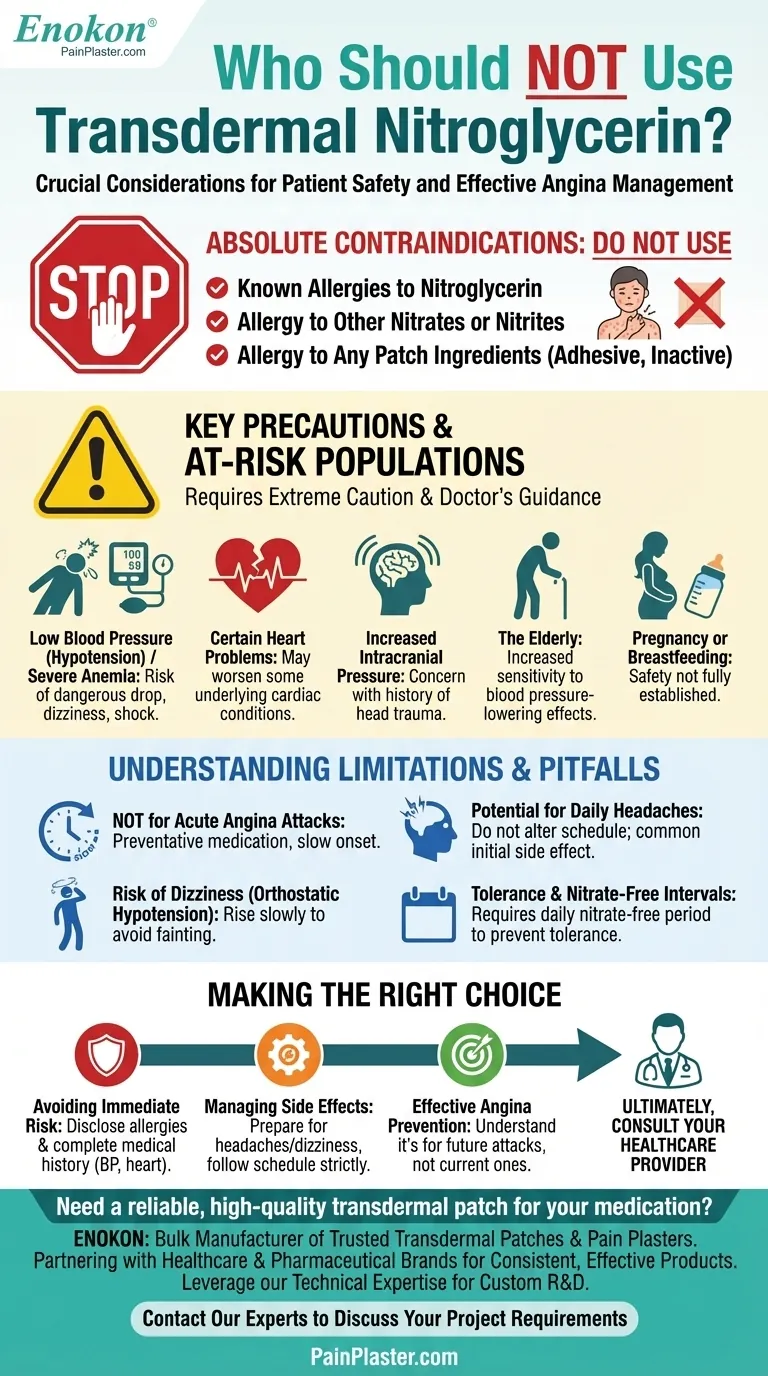
First and foremost, transdermal nitroglycerin should not be used by anyone with a known allergy to nitroglycerin, other nitrates or nitrites, or any of the adhesive or inactive ingredients in the patch. Its use is also contraindicated in individuals with certain pre-existing medical conditions, which must be thoroughly discussed with a healthcare provider.
The decision to use transdermal nitroglycerin hinges on a careful evaluation of your medical history. While a true allergy is an absolute barrier, several other conditions involving blood pressure and heart function require extreme caution to prevent serious adverse effects.

Absolute Contraindications: When Not to Use Nitroglycerin
The clearest reasons to avoid transdermal nitroglycerin are non-negotiable and relate to potential allergic reactions.
Known Allergies
You must not use this medication if you have a history of allergic reactions to nitroglycerin, other nitrates or nitrites, or any of the inactive ingredients contained in the patch itself. An allergic reaction can be severe.
Key Precautions and At-Risk Populations
Beyond absolute allergies, several groups and individuals with specific health conditions must exercise extreme caution. These situations require a detailed risk-benefit analysis with a doctor.
Individuals with Low Blood Pressure (Hypotension)
Nitroglycerin widens blood vessels, which lowers blood pressure. If you already have low blood pressure or severe anemia, using this medication can cause a dangerous drop, leading to dizziness, fainting, or shock.
Patients with Certain Heart Problems
While used to treat angina, some underlying heart problems can be worsened by nitroglycerin. Your doctor needs to be aware of any and all pre-existing cardiac issues before prescribing it.
Those with Increased Intracranial Pressure
Conditions that increase the pressure inside your skull are a significant concern. You must discuss any history of head trauma or related conditions with your healthcare provider.
The Elderly
Elderly patients can be particularly sensitive to the blood pressure-lowering effects of nitroglycerin. This increases the risk of severe hypotension and related falls or complications.
During Pregnancy or Breastfeeding
The safety of transdermal nitroglycerin during pregnancy or while breastfeeding has not been fully established. Its use in these situations requires careful consideration and a doctor's guidance.
Understanding the Limitations and Common Pitfalls
To use this medication safely, you must understand what it is designed for and its common side effects. Misunderstanding its purpose or side effects can lead to poor outcomes.
It Is Not for Acute Angina Attacks
Transdermal nitroglycerin is a preventative medication. Due to its slow onset of action, it is not effective for stopping an angina attack that is already in progress.
The Risk of Dizziness and Lightheadedness
A common side effect is orthostatic hypotension—a sudden drop in blood pressure when you stand up. Always rise slowly from a sitting or lying position to minimize dizziness.
The Potential for Daily Headaches
Headaches are a frequent side effect, especially when starting treatment. It is critical not to alter your treatment schedule to avoid them, as this can reduce the medication's effectiveness.
Tolerance and Nitrate-Free Intervals
The body can build a tolerance to nitroglycerin. To prevent this, a daily "nitrate-free" period is usually prescribed. However, some patients may experience an increase in angina attacks during this interval.
Making the Right Choice for Your Goal
Navigating treatment requires clear communication with your healthcare provider. Your personal health profile dictates the best course of action.
- If your primary focus is avoiding immediate risk: Disclose any known allergies and provide your doctor with a complete medical history, especially concerning blood pressure, anemia, and heart conditions.
- If your primary focus is managing daily side effects: Be prepared for potential headaches and dizziness, and follow your prescribed schedule without deviation to ensure the medication works correctly.
- If your primary focus is effective angina prevention: Understand that this patch is for preventing future attacks, not for treating one that has already started.
Ultimately, a transparent conversation with your doctor is the only way to ensure transdermal nitroglycerin is a safe and effective choice for you.
Summary Table:
| Contraindication / Precaution | Key Reason to Avoid/Caution |
|---|---|
| Known Allergies | Severe allergic reaction to nitroglycerin, nitrates, or patch ingredients. |
| Low Blood Pressure (Hypotension) | Risk of dangerously low blood pressure, leading to fainting or shock. |
| Certain Heart Problems | Can worsen some underlying cardiac conditions. |
| Increased Intracranial Pressure | Risk of complications from head trauma or related conditions. |
| Elderly Patients | Increased sensitivity to blood pressure-lowering effects. |
| Pregnancy/Breastfeeding | Safety not fully established; requires doctor's guidance. |
Need a reliable, high-quality transdermal patch for your medication?
At Enokon, we are a bulk manufacturer of trusted transdermal patches and pain plasters. We partner with healthcare and pharmaceutical distributors and brands to deliver consistent, effective products.
Leverage our technical expertise for custom R&D and development to create a safe and effective transdermal solution for your patients.
Contact our experts today to discuss your project requirements.
Visual Guide
Related Products
- Silicone Scar Sheets Patch Transdermal Drug Patch
- Far Infrared Heat Pain Relief Patches Transdermal Patches
- Icy Hot Menthol Medicine Pain Relief Patch
- Menthol Gel Pain Relief Patch
- Mugwort Wormwood Pain Relief Patch for Neck Pain
People Also Ask
- What role does a silicone-based transdermal delivery system play in Parkinson's? Enhancing Early-Stage Patient Care
- How is the long-term skin tolerance of silicone-based transdermal patches evaluated in clinical settings? R&D and Safety
- Why is a polarizing microscope used to evaluate the long-term stability of transdermal drug patches? Ensure Efficacy.
- What are common adverse effects of transdermal drug delivery? Risks & Prevention Tips
- What are the advantages of transdermal drug patches? Optimize Medication Delivery with Patches



















