The necessity of multiple dosage specifications in transdermal patches is driven by the clinical requirement for individualized titration. This range allows healthcare providers to start with a low dose and scale up precisely, balancing effective pain relief with patient safety to minimize adverse reactions like nausea or respiratory depression.
Offering varied dosage strengths is a clinical necessity for safe titration and a hallmark of a manufacturer's R&D sophistication. It enables precise, individualized treatment while mitigating the risks associated with potent active ingredients.
Solving the Challenge of Patient Variability
Achieving the Minimum Effective Dose
Patients possess varying levels of drug tolerance and sensitivity, particularly when dealing with potent active ingredients like opioids. Starting treatment at a low dosage specification, such as 5 mcg/hour, allows clinicians to identify the minimum effective dose required to manage a condition. This conservative approach is critical for the elderly population, who often exhibit higher sensitivity to medication and its side effects.
Scaling for Individualized Tolerance
As a patient’s condition evolves or their tolerance to a substance increases, higher specifications like 10 or 20 mcg/hour become necessary. These increments allow for precise clinical titration without changing the frequency of patch application, ensuring a seamless transition for the patient. By offering a full spectrum of release rates, manufacturers empower providers to adjust treatment based on real-time pain assessment scores.
The Technical R&D Behind Dosage Precision
Engineering Specific Release Rates
Manufacturing transdermal patches with varied specifications is not merely a matter of size, but of high-precision chemical engineering. Each dosage level requires a specific drug loading capacity and a controlled membrane or matrix release rate to ensure a steady hourly flow. Professional OEM/ODM partners utilize advanced R&D to ensure that a 5 mcg/hour patch and a 20 mcg/hour patch maintain the same delivery profile over 72 hours or more.
Consistency Across Massive Production Scales
For brand owners and distributors, the ability to produce multiple SKUs with stringent quality control is a sign of manufacturing prowess. Reliable delivery of various strengths requires GMP-certified facilities capable of high-volume output while maintaining exact bioavailability across every unit. This technical consistency is what separates enterprise-level manufacturers from smaller operations.
Mitigating High-Risk Side Effects
Preventing Respiratory Depression and Toxicity
High concentrations of certain medications can lead to severe adverse effects, including respiratory depression or extreme dizziness. Multiple dosage specifications allow for a "step-up" protocol that monitors patient response at each level. This safety-first approach is essential for maintaining the therapeutic window, ensuring the drug level in the bloodstream never reaches toxic thresholds.
Improving Long-term Patient Compliance
Gradual titration significantly reduces the incidence of gastrointestinal and psychiatric side effects, such as nausea and vomiting. When patients experience fewer initial side effects, their adherence to the treatment regimen improves. Providing a range of strengths allows for a "fine-tuned" experience that balances the deep need for efficacy with the daily need for comfort.
Understanding the Trade-offs in Production
Increased Complexity in Manufacturing and Inventory
Producing a wide range of dosage strengths increases the complexity of supply chain management and production line transitions. Each specification requires distinct validation, stability testing, and packaging configurations. Brand owners must balance the clinical need for a broad dosage range with the inventory costs associated with managing multiple unique SKUs.
Rigorous Bioequivalence Requirements
Each new dosage strength often requires its own set of data to prove bioequivalence and release accuracy. This places a heavy burden on the manufacturer's R&D and regulatory teams. While a broad range of specifications increases market competitiveness, it demands a higher level of investment in initial formulation and long-term compliance monitoring.
How to Apply This to Your Product Portfolio
When selecting a manufacturing partner for transdermal systems, the ability to offer a full range of dosage specifications is a key indicator of technical reliability.
- If your primary focus is Market Competitiveness: Ensure your manufacturer can provide a full range of strengths (e.g., 5, 10, 15, 20 mcg) to satisfy clinical titration protocols and physician preferences.
- If your primary focus is Patient Safety and Compliance: Prioritize partners with proven R&D expertise in controlled-release technology to ensure dosage accuracy across the entire titration schedule.
- If your primary focus is Scalability and Growth: Partner with a GMP-certified facility that can handle high-volume production across multiple SKUs without compromising on stringent quality control.
The availability of multiple dosage strengths is the cornerstone of safe, effective transdermal therapy, transforming a simple patch into a sophisticated, individualized medical solution.
Summary Table:
| Key Aspect | Clinical Benefit | Manufacturing Requirement |
|---|---|---|
| Individualized Titration | Precise dose escalation based on patient-specific drug tolerance. | High-precision chemical engineering for varied drug loading capacity. |
| Patient Safety | Prevents toxicity and severe risks like respiratory depression. | Stringent quality control to ensure exact bioavailability across units. |
| Patient Compliance | Reduces side effects (nausea/vomiting) for better treatment adherence. | Advanced R&D for consistent, long-term release profiles (72h+). |
| Market Strategy | Meets diverse clinical needs and physician preferences. | GMP-certified facilities capable of managing complex, high-volume SKUs. |
Scale Your Portfolio with Enokon’s Manufacturing Excellence
For brand owners, distributors, and B2B resellers, offering a comprehensive range of dosage specifications is essential for market leadership. Enokon is a trusted brand and manufacturer providing the enterprise-level scale and R&D prowess needed to deliver high-quality transdermal solutions.
Our GMP-certified facilities offer turnkey contract R&D and custom formulations for a wide range of products (excluding microneedle technology), including:
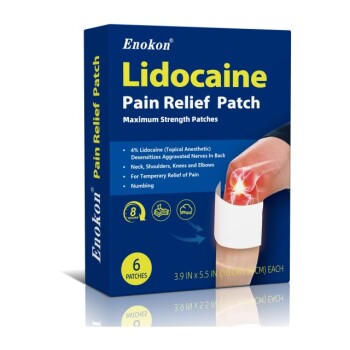
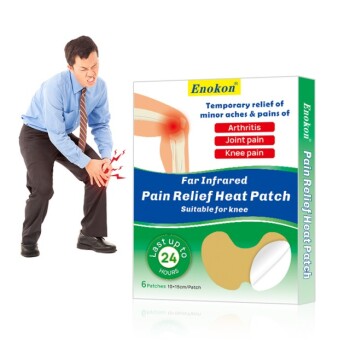
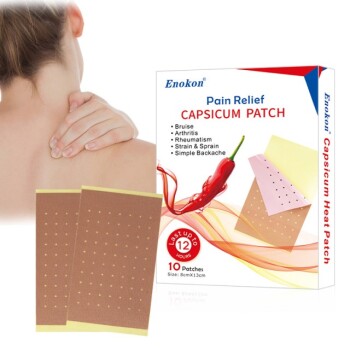
- Advanced Pain Relief: Lidocaine, Menthol, Capsicum, Herbal, and Far Infrared patches.
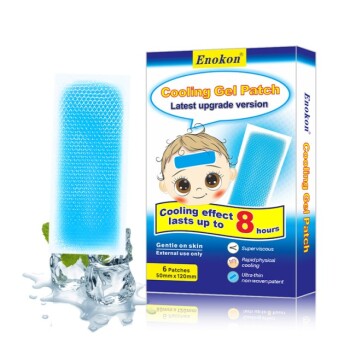
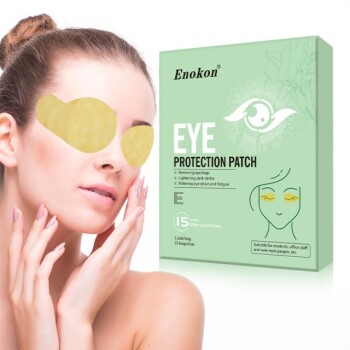
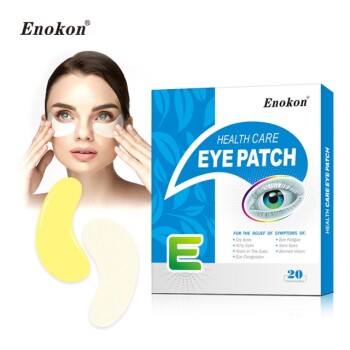
- Specialty Care: Eye Protection, Detox, and Medical Cooling Gel patches.
Leverage our massive production capacity and stringent quality control to ensure reliable, high-volume delivery of your product line. Contact Enokon today to discuss your custom R&D needs and see how we can enhance your competitive edge.
References
- Deborah J. Steiner, Craig Landau. Efficacy and Safety of the Seven-Day Buprenorphine Transdermal System in Opioid-Naïve Patients with Moderate to Severe Chronic Low Back Pain: An Enriched, Randomized, Double-Blind, Placebo-Controlled Study. DOI: 10.1016/j.jpainsymman.2011.04.006
This article is also based on technical information from Enokon Knowledge Base .
Related Products
- Far Infrared Heat Pain Relief Patches Transdermal Patches
- Silicone Scar Sheets Patch Transdermal Drug Patch
- Icy Hot Menthol Medicine Pain Relief Patch
- Menthol Gel Pain Relief Patch
- Mugwort Wormwood Pain Relief Patch for Neck Pain
People Also Ask
- Why is the control of material particle size critical in the development of Far Infrared pain relief patches? Boost Efficacy
- Why is the selection of matrix materials critical when developing customized transdermal patches? Optimize Efficacy
- What are the physical impacts of external heat exposure on the performance and safety of transdermal patches? - Guide
- What are the clinical advantages of local transdermal delivery systems? Unlock Safer, More Effective Pain Relief Solutions
- What role does a skin tolerance scoring system play in the safety evaluation of transdermal patches? Key Safety Metrics