High-sensitivity UV-Vis spectrophotometry is the essential analytical standard for quantifying the release efficacy and concentration of active herbal compounds in transdermal patches. By measuring the light absorbance of a release medium at specific wavelengths—such as 371 nm for flavonoids—this equipment allows manufacturers to calculate the exact amount of medication released over time. This data is critical for establishing reliable kinetic models and ensuring that every patch delivers a consistent, therapeutic dose.
The Central Takeaway: For B2B partners, high-sensitivity UV-Vis analysis is the bridge between a laboratory formula and a commercially viable medical product, providing the empirical proof of dosage accuracy and batch-to-batch uniformity required for global regulatory compliance.
Precision Quantification and Kinetic Modeling
Validating Drug Release Efficacy
A high-sensitivity spectrophotometer captures the unique "fingerprint" of active ingredients as they migrate from the patch matrix into the release medium. This allows technicians to determine the exact percentage of the drug released at various time intervals.
Establishing Reliable Kinetic Models
By applying a standard curve equation to the absorbance data, researchers build precise in vitro release kinetic models. These models are the primary tools used to predict how the herbal compounds will behave once applied to a patient's skin.
Monitoring Specific Characteristic Wavelengths
Different active ingredients require specific detection settings, such as 371 nm for total flavonoids or 277 nm for synthetic components like Terbutaline Sulfate. High-sensitivity equipment ensures that even trace amounts of these substances are detected without interference from the patch's adhesive or backing materials.
Ensuring Batch Consistency and Clinical Safety
Guaranteeing Content Uniformity
For brand owners and wholesalers, consistency is the foundation of brand reputation. UV-Vis analysis verifies that the drug loading is uniform across massive production runs, ensuring that the first patch in a batch is identical to the millionth.
Verifying Mixing and Manufacturing Stability
Stringent quality control protocols use this equipment to detect fluctuations in the manufacturing process. If the active ingredients are not mixed uniformly during the formulation stage, the spectrophotometer will identify these deviations before the product leaves the GMP-certified facility.
Protecting Clinical Dosage Accuracy
Inaccurate dosing in antihypertensive treatments can lead to significant health risks. High-precision analysis ensures that the sustained-release performance meets the intended design specifications, maintaining the drug concentration within the necessary therapeutic window.
Validating Advanced R&D and Custom Formulations
Evaluating Permeation Enhancement
When developing custom formulations, R&D teams use UV-Vis spectrophotometry to test the effectiveness of different permeation enhancers. This allows for the optimization of how quickly or slowly a drug enters the bloodstream, a key selling point for premium transdermal brands.
Utilizing Franz Diffusion Cell Data
During the R&D phase, samples are often collected from Franz Diffusion Cells and analyzed for cumulative release rates. This scientific rigor allows for the rapid iteration of formulas, enabling turnkey contract R&D that meets specific client goals.
Sustained and Controlled Release Performance
The equipment is vital for evaluating how well a nanofiber matrix or a traditional polymer matrix controls the release of molecules like curcumin or propranolol. This ensures that the patch provides a steady flow of medication rather than an initial "spike" followed by a rapid drop-off.
Understanding the Trade-offs and Technical Requirements
The Risk of Low Sensitivity
Using lower-grade analytical equipment can lead to "noise" in the data, making it impossible to distinguish between the active herbal ingredient and the matrix components. This lack of clarity can result in failed regulatory audits or, worse, inconsistent clinical performance that damages the distributor's credibility.
Dependency on Accurate Standard Curves
The reliability of UV-Vis results is entirely dependent on the quality of the standard curve established by the lab. Inaccurate calibration can lead to systemic errors in dosage calculation, which is why working with a trusted OEM/ODM partner with high-level technical expertise is non-negotiable.
Complexities of Herbal Matrices
Herbal extracts are naturally more complex than pure synthetic compounds. High-sensitivity detection is required to isolate the relevant flavonoids or active markers from the hundreds of other botanical compounds present in the release fluid.
Making the Right Choice for Your Goal
How to Apply This to Your Project
- If your primary focus is entering highly regulated markets: Prioritize a manufacturing partner that utilizes high-sensitivity UV-Vis analysis as part of a comprehensive, GMP-certified quality control suite to ensure all documentation meets international standards.
- If your primary focus is product innovation and custom formulations: Look for a partner with deep R&D prowess who can use spectrophotometric data to optimize the release profiles and permeation rates of your unique herbal blends.
- If your primary focus is large-scale distribution and retail: Ensure your supplier can provide verification of drug content uniformity across high-volume production batches to protect your brand from the risks of dosage fluctuations.
The marriage of high-sensitivity analytical science and large-scale manufacturing excellence ensures that every antihypertensive patch is a reliable, safe, and effective medical tool.
Summary Table:
| Feature/Function | Purpose in Patch Analysis | Benefit for B2B Partners |
|---|---|---|
| Quantification | Measures exact active drug release | Ensures dosage accuracy and efficacy |
| Kinetic Modeling | Predicts skin absorption behavior | Reliable data for regulatory approval |
| Wavelength Monitoring | Detects specific herbal markers | Guarantees purity and safety |
| Uniformity Testing | Verifies batch-to-batch consistency | Protects brand reputation and reliability |
Partner with Enokon for Precision Transdermal Solutions
Scale your brand with Enokon, a trusted manufacturer specializing in high-volume production and turnkey contract R&D. We leverage advanced analytical science to ensure every patch—from Lidocaine and Menthol to custom Herbal and Detox formulations—meets the highest clinical standards.
Why Choose Enokon?
- Massive Capacity: Reliable delivery for distributors and wholesalers.
- GMP-Certified Excellence: Stringent quality control and global certifications.
- Custom R&D: Expert formulation of pain relief, eye protection, and medical cooling gel patches (excluding microneedles).
Ready to bring a scientifically-validated product to market? Contact us today to discuss your OEM/ODM needs!
References
- Dian Eka Ermawati, Wisnu Kundarto. STUDY OF KINETICS MODEL OF FLAVONOID TOTAL RELEASE IN PATCH OF ANTIHYPERTENSIVE HERBS. DOI: 10.24071/jpsc.002203
This article is also based on technical information from Enokon Knowledge Base .
Related Products
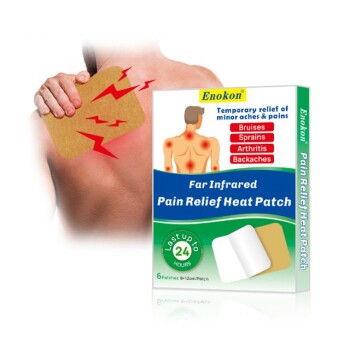
- Far Infrared Heat Pain Relief Patches Transdermal Patches
- Mugwort Wormwood Pain Relief Patch for Neck Pain
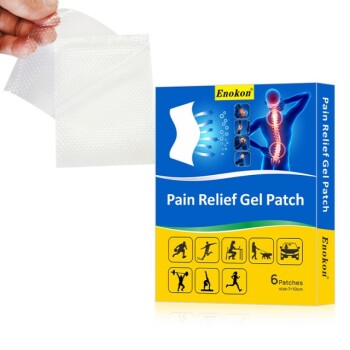
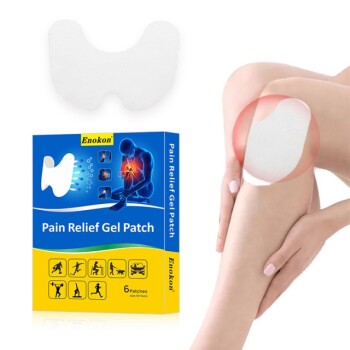
- Menthol Gel Pain Relief Patch
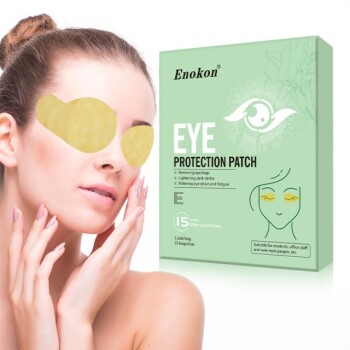
- Herbal Eye Protection Patch Eye Patch
- Icy Hot Menthol Medicine Pain Relief Patch
People Also Ask
- Why is the control of material particle size critical in the development of Far Infrared pain relief patches? Boost Efficacy
- Why is the selection of matrix materials critical when developing customized transdermal patches? Optimize Efficacy
- What are the physical impacts of external heat exposure on the performance and safety of transdermal patches? - Guide
- What are the clinical advantages of local transdermal delivery systems? Unlock Safer, More Effective Pain Relief Solutions
- What role does a skin tolerance scoring system play in the safety evaluation of transdermal patches? Key Safety Metrics