
The natural healing properties of capsicum plaster stem directly from its active ingredient, capsaicin. This is the very same compound found in chili peppers that gives them their characteristic heat. Instead of a synthetic chemical, the plaster leverages this naturally derived substance to create a therapeutic warming effect that helps manage pain.
While capsicum plaster uses a natural ingredient, its primary function is not to "heal" an underlying condition. Instead, it offers a natural method of pain management by using heat to interrupt and block pain signals from reaching the brain.

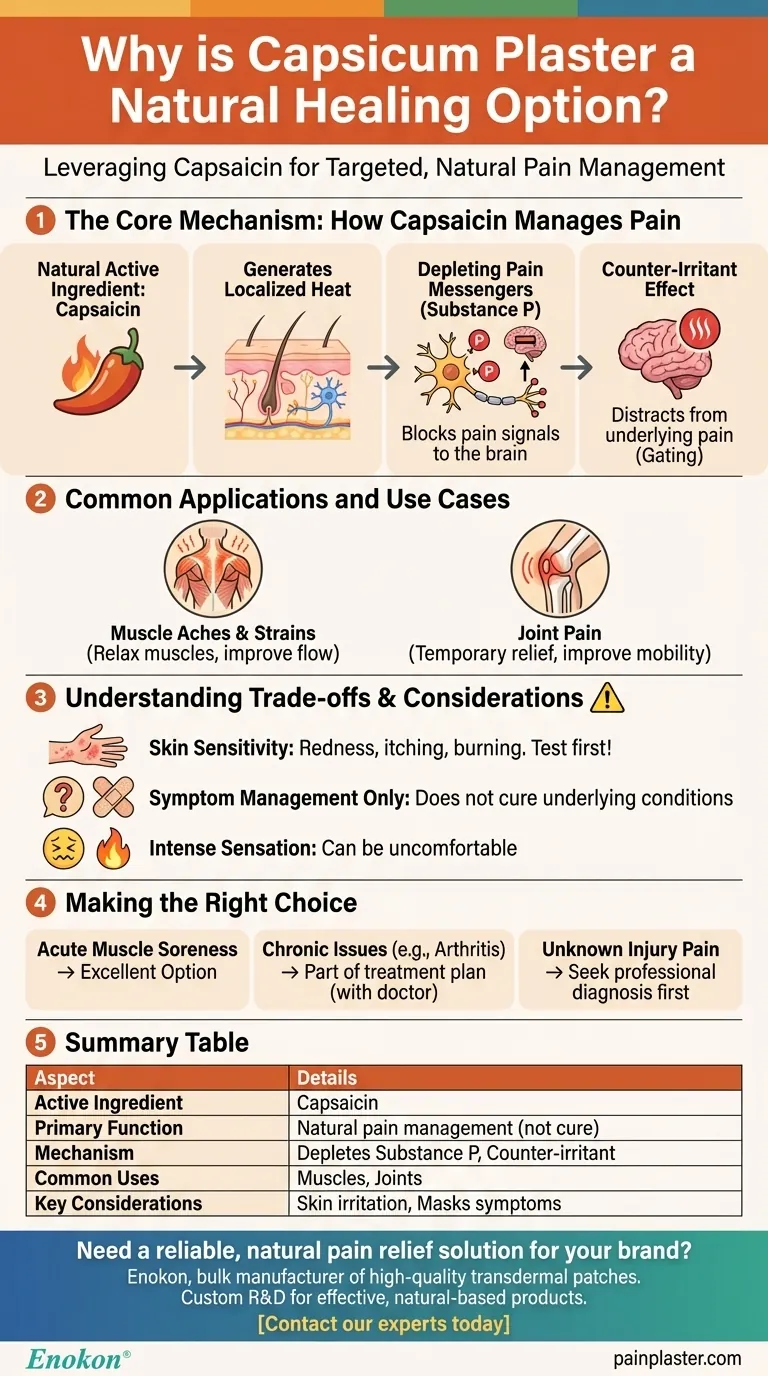
The Core Mechanism: How Capsaicin Manages Pain
To understand why capsicum plaster is effective, you must first understand how its natural active ingredient interacts with your body's nervous system.
The Source of the Heat
The key is capsaicin. This is the bioactive compound in chili peppers responsible for the sensation of heat. When applied to the skin via a plaster, it generates a localized warming effect.
Depleting Pain Messengers
Capsaicin works by targeting a neurotransmitter known as Substance P. The initial application causes nerve cells to release Substance P, which briefly intensifies the sensation of pain and heat.
With continued exposure from the plaster, the nerve cells become depleted of Substance P. Since Substance P's job is to send pain signals to the brain, its depletion effectively reduces or blocks the sensation of pain from that area.
Creating a Counter-Irritant Effect
The warmth generated by the plaster also acts as a counter-irritant. This means it creates a new, mild sensation (heat) that distracts your brain from the original, deeper pain of a sore muscle or aching joint. Your nervous system is focused on the surface-level heat, effectively "gating" or closing the pathway for the underlying pain signals.
Common Applications and Use Cases
Due to its targeted mechanism, capsicum plaster is a common choice for specific types of localized pain.
Muscle Aches and Strains
It is most frequently used to relieve pain from overworked muscles, such as a stiff neck, sore shoulders, or lower back pain. The heat helps relax tense muscle fibers and improve blood flow to the area.
Joint Pain
Individuals with joint pain, including some forms of arthritis, may use the plasters to manage localized discomfort. The pain-blocking effect can provide temporary relief and improve mobility.
Understanding the Trade-offs and Considerations
While derived from a natural source, capsicum plaster is a potent treatment that requires careful use. Understanding its limitations is key to using it safely and effectively.
Skin Sensitivity is Common
The most significant side effect is skin irritation. The intense heat can cause redness, itching, and a burning sensation, especially for those with sensitive skin. It should never be applied to broken, irritated, or damaged skin.
It Manages Symptoms, It Doesn't Cure
It is critical to remember that the plaster only addresses the symptom of pain. It does not heal the underlying cause, such as a torn ligament or a degenerative condition. Masking a serious injury's pain can delay proper diagnosis and treatment.
The Sensation Can Be Intense
For some individuals, the burning sensation produced by the capsaicin can be more uncomfortable than the pain it is meant to treat. It is always wise to test it on a small area first.
Making the Right Choice for Your Goal
Using capsicum plaster effectively means aligning its capabilities with your specific need for pain management.
- If your primary focus is temporary relief from muscle soreness: This is an excellent, naturally-derived option for managing acute aches and stiffness.
- If your primary focus is a chronic issue like arthritis: It can be a valuable tool in your pain management toolkit, but it should be used as part of a broader treatment plan overseen by a doctor.
- If your primary focus is pain from an unknown injury: You must seek a professional medical diagnosis before using any product that could mask the symptoms of a more serious condition.
Ultimately, understanding capsicum plaster as a natural pain management tool, rather than a cure, allows you to use it safely and effectively.
Summary Table:
| Aspect | Details |
|---|---|
| Active Ingredient | Capsaicin (derived from chili peppers) |
| Primary Function | Natural pain management, not a cure |
| Mechanism | Depletes Substance P to block pain signals; acts as a counter-irritant |
| Common Uses | Muscle aches, strains, joint pain (e.g., arthritis) |
| Key Considerations | Can cause skin irritation; masks symptoms, not underlying causes |
Need a reliable, natural pain relief solution for your brand?
As Enokon, a bulk manufacturer of high-quality transdermal patches and pain plasters, we specialize in creating effective, natural-based products like capsicum plasters. We offer custom R&D and development to help healthcare and pharmaceutical distributors and brands bring safe, targeted pain management solutions to market.
Contact our experts today to discuss your custom patch development needs and benefit from our technical expertise.
Visual Guide
Related Products
- Heat Relief Capsicum Patch for Lower Back Pain Relief
- Capsaicin Chili Medicated Pain Relief Patches
- Natural Herbal Wormwood Patch Pain Plaster
People Also Ask
- What were the inclusion criteria for the study on capsicum plaster for back pain? Key Requirements Explained
- What is Capsicum Plaster used for? Targeted Pain Relief for Musculoskeletal Discomfort
- What are some alternatives to lidocaine patches for lower back pain? Explore 5 Effective Options
- How does the active ingredient Capsicum in the Heat Patch work? A Dual-Action Path to Pain Relief
- What conditions can capsicum plasters be used for? Natural Pain Relief for Muscles & Joints


