
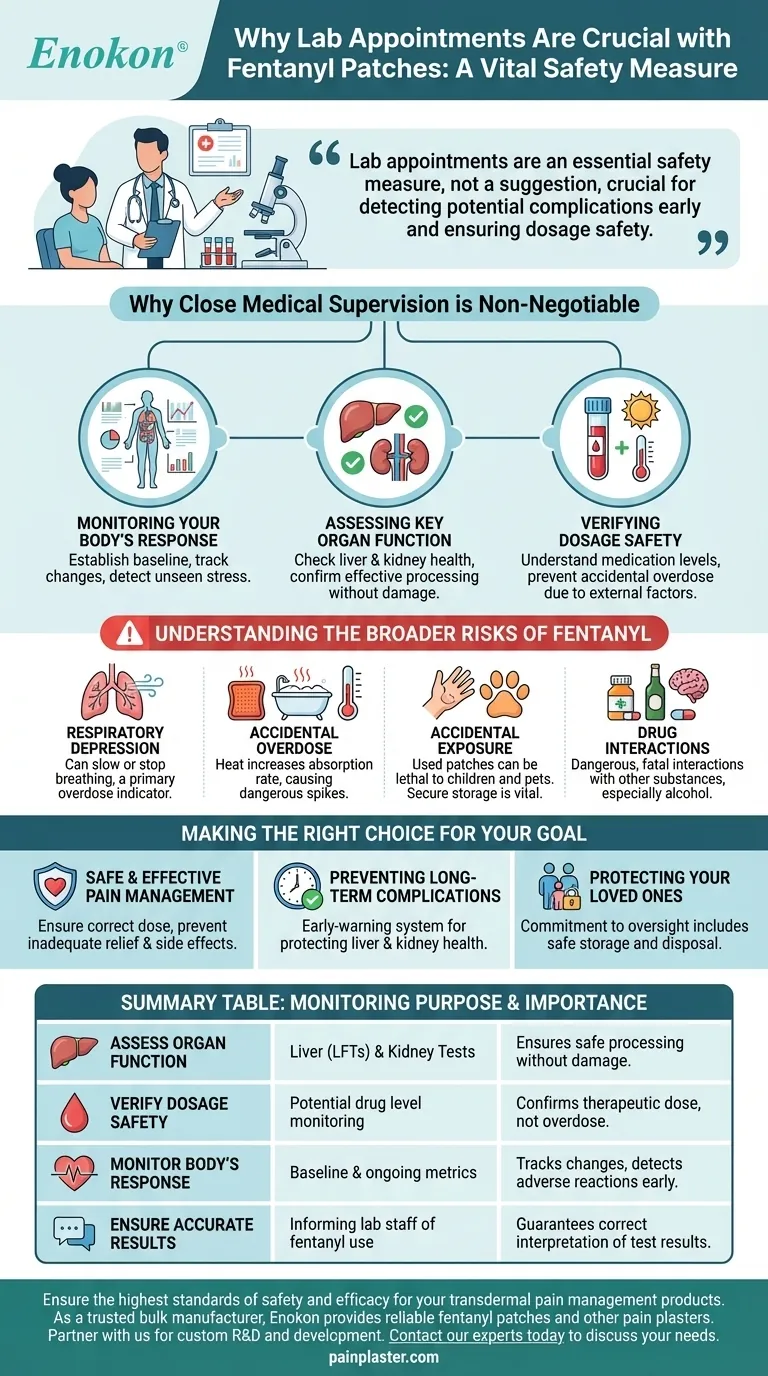
Keeping your scheduled lab appointments is an essential safety measure when using fentanyl patches because your doctor must monitor your body's response to this powerful medication through specific tests. This routine oversight is crucial for detecting potential complications early and ensuring the dosage remains both safe and effective for you.
Fentanyl is a potent medication that requires careful management. Lab appointments are not a suggestion but a critical component of your safety plan, allowing your doctor to proactively assess organ function and your body's tolerance before serious issues arise.
Why Close Medical Supervision is Non-Negotiable
Using a fentanyl patch is not a passive treatment. It introduces a powerful substance into your system that requires constant vigilance from both you and your healthcare provider. Lab tests provide the objective data needed for that vigilance.
Monitoring Your Body's Response
The primary reason for lab work is to get a clear picture of how your internal systems are handling the medication. This goes beyond the pain relief you feel.
Doctors use these tests to establish a baseline and track changes over time, ensuring the drug is not causing unseen stress on your body.
Assessing Key Organ Function
Fentanyl, like many medications, is processed and cleared by your liver and kidneys. Pre-existing conditions in these organs can alter how your body handles the drug.
Lab tests are ordered to check the health of your liver and kidneys, confirming they are functioning properly and can effectively manage the medication load without becoming damaged.
Verifying Dosage Safety
The amount of fentanyl absorbed can be influenced by factors like body temperature or exposure to external heat.
While not always standard, tests can help a doctor understand if the level of medication in your system is within a therapeutic and safe range, helping to prevent accidental overdose.
Ensuring Clear Communication
It is vital to inform the doctor and lab personnel that you are using a fentanyl patch before any tests. Fentanyl can influence the results of certain lab analyses, and this information ensures they can interpret your results accurately.
Understanding the Broader Risks of Fentanyl
Lab appointments are part of a larger safety strategy designed to mitigate the inherent risks of this potent opioid. Understanding these risks clarifies why such strict medical oversight is necessary.
The Danger of Respiratory Depression
The most serious risk of any opioid, including fentanyl, is that it can slow or even stop your breathing. Your doctor monitors for any signs of breathing problems, as this is a primary indicator of an adverse reaction or overdose.
The Risk of Accidental Overdose
Exposing the patch to heat from a heating pad, electric blanket, or even a hot bath can dramatically increase the rate of drug absorption. This can lead to a sudden, dangerous spike in medication levels in your blood, causing an overdose.
The Potential for Accidental Exposure
Even a used fentanyl patch contains enough medication to be lethal to a child or pet. Patches must be kept securely away from others and disposed of immediately and properly according to your pharmacist's instructions.
The Impact of Drug Interactions
Fentanyl can have dangerous, even fatal, interactions with other substances. This includes other prescription medications, over-the-counter drugs, supplements, and especially alcohol, which significantly increases the risk of respiratory depression.
Making the Right Choice for Your Goal
Your active participation in your treatment plan is the most important factor in your safety.
- If your primary focus is safe and effective pain management: View lab appointments as the essential check-ups that ensure your dose is right for you, preventing both inadequate relief and dangerous side effects.
- If your primary focus is preventing long-term complications: Treat these appointments as your early-warning system for protecting the health of your vital organs, like your liver and kidneys.
- If your primary focus is protecting your loved ones: See your commitment to medical oversight, including lab work, as a core part of responsible use, which also includes safe storage and disposal.
By consistently attending your appointments and communicating openly with your doctor, you are taking an active and empowered role in managing your health.
Summary Table:
| Monitoring Purpose | Key Tests & Checks | Why It's Important |
|---|---|---|
| Assess Organ Function | Liver (LFTs) and Kidney Function Tests | Ensures your body can safely process the potent medication without damage. |
| Verify Dosage Safety | Potential drug level monitoring | Confirms the absorbed dose is therapeutic and not in the dangerous overdose range. |
| Monitor Body's Response | Baseline and ongoing health metrics | Tracks changes and detects adverse reactions, like respiratory depression, early. |
| Ensure Accurate Results | Informing lab staff of fentanyl use | Guarantees test results are interpreted correctly, as the drug can influence them. |
Ensure the highest standards of safety and efficacy for your transdermal pain management products.
As a trusted bulk manufacturer, Enokon provides reliable fentanyl patches and other pain plasters for healthcare and pharmaceutical distributors and brands. Partner with us to leverage our technical expertise for custom R&D and development, ensuring your products meet rigorous safety protocols.
Contact our experts today to discuss your specific needs and how we can support your commitment to patient safety.
Visual Guide
Related Products
- Menthol Gel Pain Relief Patch
- Icy Hot Menthol Medicine Pain Relief Patch
- Lidocaine Hydrogel Pain Relief Patch for Pain Relief
- Far Infrared Pain Patch Relief Pain Reliever for Back
- Far Infrared Heat Pain Relief Patches Transdermal Patches
People Also Ask
- How effective are pain relief patches for muscle pain? Target Localized Pain with Transdermal Delivery
- How do pain relief patches compare to other pain relief methods? Discover Targeted, Long-Lasting Relief
- Who should consult a healthcare professional before using pain relief patches? Ensure Your Safety with Medical Advice
- How do drug loading and permeation enhancers ensure patch efficacy? Achieve Superior Clinical-Grade Pain Relief.
- What are some common applications of pain relief patches? Effective Relief for Muscle & Joint Pain



















