
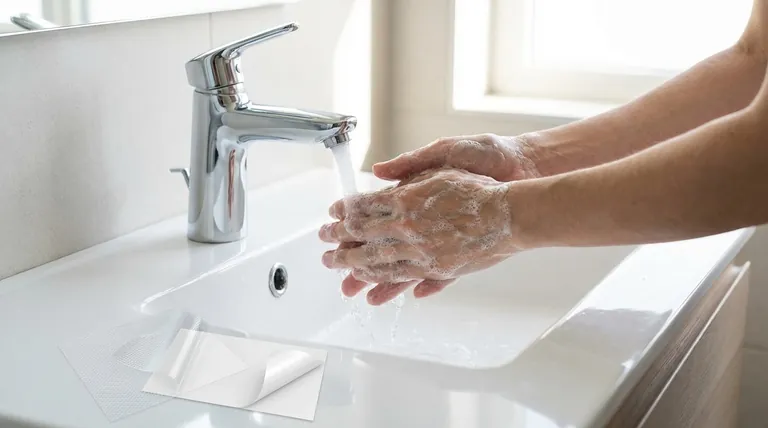
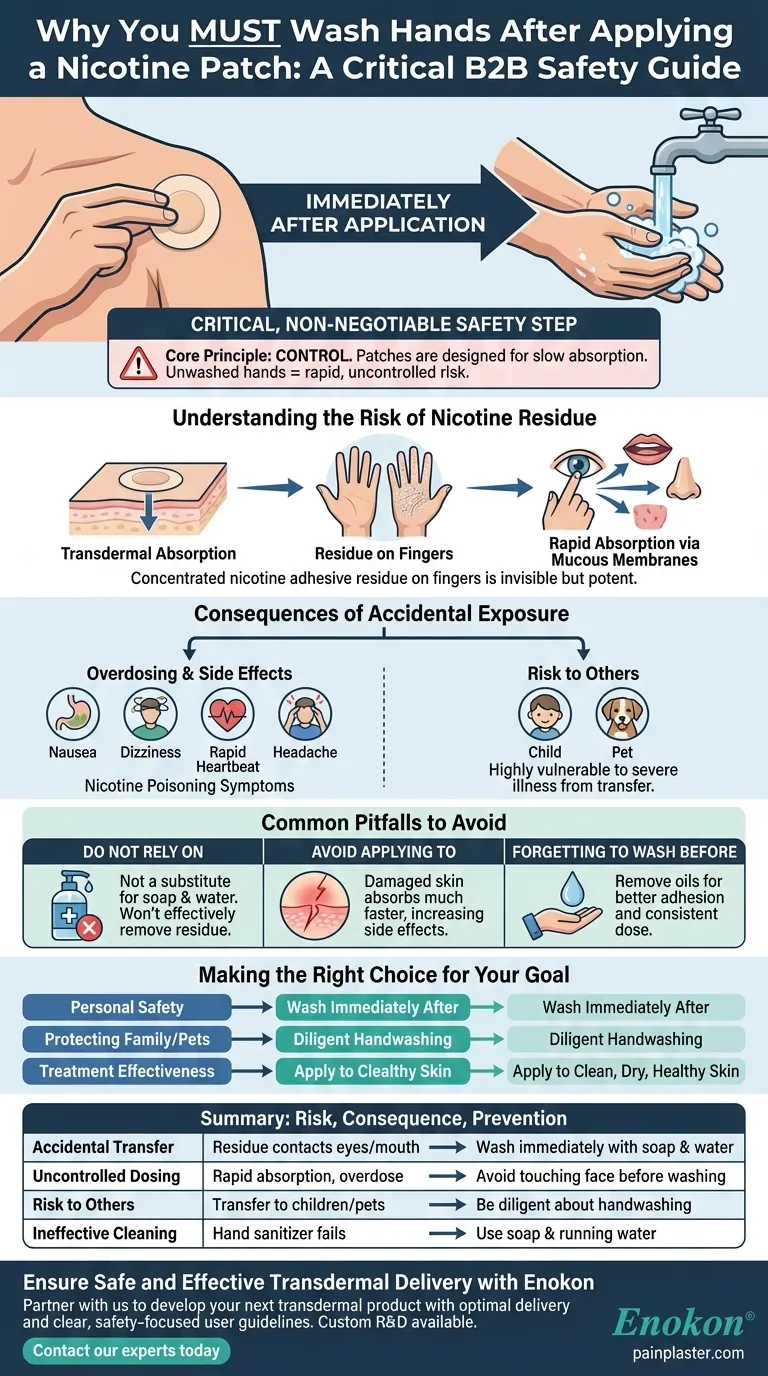
It is a critical, non-negotiable safety step. Washing your hands thoroughly with soap and water immediately after applying a nicotine patch is essential to remove any drug residue from your fingers. This prevents you from accidentally transferring the potent nicotine to sensitive areas of your body, like your eyes or mouth, or to other people.
The core principle is control. A nicotine patch is designed for slow, controlled absorption through the skin. Failing to wash your hands introduces the major risk of rapid, uncontrolled absorption, which can cause nicotine overdose and other harmful side effects.
Understanding the Risk of Nicotine Residue
A nicotine patch works by housing a specific dose of nicotine that is absorbed through the skin over many hours. The adhesive side of the patch that you handle contains a concentrated amount of this drug.
How Nicotine Enters the Body
Nicotine is a substance that can be absorbed directly through the skin, a process known as transdermal absorption.
The drug is even more rapidly absorbed through mucous membranes, which are the moist linings found in your eyes, nose, and mouth.
The Danger of Accidental Transfer
If you do not wash your hands after handling a patch, the invisible nicotine residue on your fingers poses a direct threat.
Touching your eyes can cause severe irritation and stinging, but it also allows nicotine to be absorbed very quickly into your bloodstream.
Likewise, touching your mouth, lips, or food can lead to accidental ingestion, which is not how the patch is designed to work and can upset your system.
The Consequences of Accidental Exposure
Accidental exposure turns a controlled dose into an unpredictable one, creating risks for both yourself and those around you.
Overdosing and Side Effects
Unintended exposure through the eyes or mouth can lead to symptoms of nicotine poisoning. These include nausea, dizziness, headache, or a rapid heartbeat.
You are effectively giving yourself a second, uncontrolled dose on top of what the patch is already delivering.
Risk to Others
The residue on your hands can be easily transferred to other people through touch. This is especially dangerous for children and pets, who have a much lower tolerance for nicotine and can become severely ill from a small amount.
Common Pitfalls to Avoid
Proper handling is key to ensuring the patch is both safe and effective. Avoiding common mistakes is just as important as following the correct procedure.
Relying on Hand Sanitizer
An alcohol-based hand sanitizer is not a substitute for soap and water. It may not effectively break down and remove the nicotine residue. Soap and running water are required to physically wash the substance away.
Applying to Unsuitable Skin
Never apply a patch to skin that is broken, irritated, red, or rashy. Damaged skin can absorb nicotine much faster and more unpredictably than intended, increasing the risk of side effects.
Forgetting to Wash Beforehand
Washing your hands before handling the patch is also a good practice. This removes oils and lotions from your fingers, which helps the patch adhere better to your skin for a more effective, consistent dose.
Making the Right Choice for Your Goal
Following the proper procedure ensures you get the therapeutic benefit of the patch without the avoidable risks.
- If your primary focus is personal safety: Always wash your hands with soap and water immediately after applying or removing a patch to prevent accidental self-dosing.
- If your primary focus is protecting family and pets: Be extremely diligent about handwashing to eliminate the risk of transferring this potent drug to them through casual contact.
- If your primary focus is treatment effectiveness: Ensure you apply the patch to clean, dry, and healthy skin to guarantee a steady, controlled release of medication as intended.
Proper handling is not just a suggestion; it is central to using nicotine replacement therapy safely and successfully.
Summary Table:
| Risk | Consequence | Prevention |
|---|---|---|
| Accidental Transfer | Nicotine residue on fingers can contact eyes or mouth. | Wash hands with soap and water immediately after application. |
| Uncontrolled Dosing | Rapid absorption through mucous membranes can cause overdose. | Avoid touching face before washing hands. |
| Risk to Others | Residue can be transferred to children or pets, who are highly vulnerable. | Be diligent about handwashing to protect family. |
| Ineffective Cleaning | Hand sanitizer may not remove nicotine residue effectively. | Use soap and running water, not sanitizer. |
Ensure Safe and Effective Transdermal Delivery with Enokon
As a bulk manufacturer of reliable transdermal patches and pain plasters for healthcare and pharmaceutical distributors, Enokon understands that patient safety is paramount. Proper handling instructions are a critical component of any transdermal product's success.
Partner with us to develop your next transdermal product. Our technical expertise ensures your patches are designed for optimal, controlled delivery with clear, safety-focused user guidelines. We offer custom R&D and development to meet your specific needs.
Let's create a safer product together. Contact our experts today to discuss your project.
Visual Guide
Related Products
- Menthol Gel Pain Relief Patch
- Capsaicin Chili Medicated Pain Relief Patches
- Icy Hot Menthol Medicine Pain Relief Patch
- Lidocaine Hydrogel Pain Relief Patch for Pain Relief
- Mugwort Wormwood Pain Relief Patch for Neck Pain
People Also Ask
- How do pain relief patches compare to other pain relief methods? Discover Targeted, Long-Lasting Relief
- How effective are pain relief patches for muscle pain? Target Localized Pain with Transdermal Delivery
- Who should consult a healthcare professional before using pain relief patches? Ensure Your Safety with Medical Advice
- What are some common applications of pain relief patches? Effective Relief for Muscle & Joint Pain
- What are pain relief patches and how do they work? Discover Non-Invasive Pain Management

















