The DPPH radical scavenging assay is the definitive laboratory benchmark used to prove that antioxidant active ingredients remain biologically potent after being delivered through the skin. This assay measures the reduction in absorbance of a DPPH solution to provide empirical evidence that delivery systems, such as microneedles, have successfully protected sensitive compounds like Ascorbic Acid (Vitamin C) from oxidation during both the manufacturing process and skin penetration.
For enterprise-level brand owners, the DPPH assay serves as the critical validation point that bridges the gap between a theoretical formulation and a high-performance, shelf-stable product that delivers on its antioxidant claims.
Validating Biological Efficacy Post-Delivery
Proving Functional Integrity
The primary value of the DPPH assay lies in its ability to detect biological activity, not just the presence of a chemical.
In transdermal systems, it is not enough to prove an ingredient reached the dermis; one must prove it is still "alive" and capable of neutralizing free radicals.
Measuring Absorbance Reduction
The assay works by introducing the delivered active ingredient into a DPPH radical solution and observing the change in light absorbance.
A significant drop in absorbance confirms that the antioxidant has successfully donated electrons to the radicals, verifying that its molecular structure remains intact after passing through the skin barrier.
Protecting Oxygen-Sensitive Formulations
The Challenge of Modern Encapsulation
Many high-performance antioxidants, particularly Vitamin C, are notoriously unstable and prone to rapid degradation when exposed to oxygen or heat.
The DPPH assay acts as a diagnostic tool for R&D teams to verify that their encapsulation technology—such as microneedle arrays—effectively shielded the active ingredients from environmental stressors.
Ensuring Manufacturing Stability
For brand owners operating at a massive scale, this assay ensures that the industrial production process does not compromise the active's potency.
By testing batches post-production, manufacturers can guarantee that the "active" label claim is backed by functional performance, reducing the risk of product recalls or ineffective consumer results.
Quality Control at Enterprise Scale
Standardizing Global Shipments
In a B2B context, the DPPH assay provides a standardized metric for Quality Control (QC) that can be audited across global supply chains.
It offers a repeatable, data-driven benchmark that ensures every unit produced in a GMP-certified facility maintains the same efficacy, regardless of production volume.
Building Consumer Trust through Data
Leading brands use DPPH data to substantiate marketing claims regarding anti-aging and skin brightening.
Providing wholesalers and distributors with technical proof of radical scavenging activity elevates a product from a "cosmetic" to a "high-performance dermo-cosmetic" solution.
Understanding the Trade-offs
In Vitro vs. In Vivo Limitations
While the DPPH assay is an excellent indicator of chemical potency, it is an in vitro (laboratory) test that does not fully replicate the complex biological environment of living skin.
It measures the chemical capacity to neutralize radicals in a controlled solution, but it cannot account for how the body’s local metabolism might further alter the active ingredient once absorbed.
Specificity Constraints
The DPPH assay is a general measure of antioxidant capacity and may not distinguish between different types of antioxidants within a complex multi-ingredient formula.
To achieve a comprehensive profile, enterprise R&D often supplements DPPH testing with other assays (like ABTS or FRAP) to ensure a complete understanding of the product's protective spectrum.
Strategic Recommendations for Your Project
How to Apply This to Your Product Development
- If your primary focus is formulation stability: Use DPPH assays during the prototyping phase to compare different encapsulation methods and select the one that best preserves oxygen-sensitive actives.
- If your primary focus is market differentiation: Leverage the DPPH scavenging percentage in your technical dossiers to provide distributors with "proof of efficacy" that outperforms lower-tier competitors.
- If your primary focus is high-volume reliability: Implement DPPH testing as a mandatory QC gate in your GMP production line to ensure consistent potency across every batch of transdermal patches.
By integrating the DPPH assay into your validation protocol, you ensure that your transdermal products provide the actual biological benefits your brand promises to the global market.
Summary Table:
| Key Aspect | Purpose | Benefit for Brand Owners |
|---|---|---|
| Potency Validation | Proves antioxidants remain biologically active post-delivery. | Guarantees high-performance "active" label claims. |
| Stability Testing | Monitors oxidation of sensitive ingredients (e.g., Vitamin C). | Ensures shelf-stable products and long-term efficacy. |
| Quality Control | Standardizes batch performance in GMP-certified facilities. | Minimizes product recalls and ensures batch consistency. |
| Marketing Data | Provides empirical evidence of radical scavenging activity. | Builds consumer trust and supports premium positioning. |
Partner with Enokon for Science-Backed Transdermal Solutions
Elevate your product line with Enokon, a trusted manufacturer and R&D partner specializing in high-performance transdermal patches. We provide brand owners, distributors, and B2B resellers with the manufacturing scale and technical expertise required to lead the market.
Why Global Brands Choose Enokon:
- Turnkey R&D & Custom Formulations: Our team specializes in stabilizing sensitive active ingredients to ensure maximum biological potency.
- Massive Production Capacity: Reliable, high-volume delivery from our GMP-certified facilities with comprehensive global certifications.
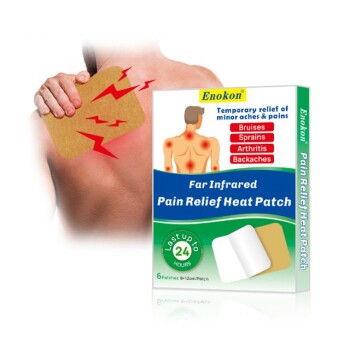
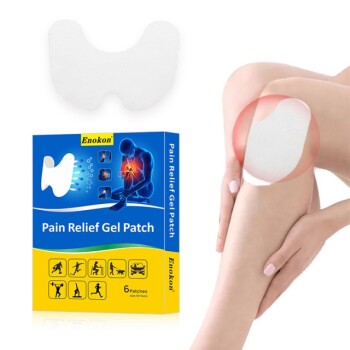
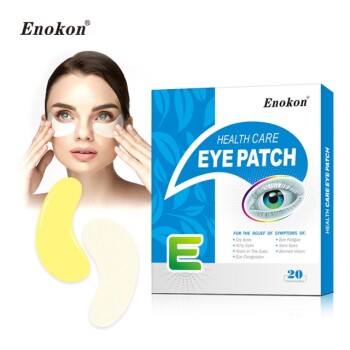
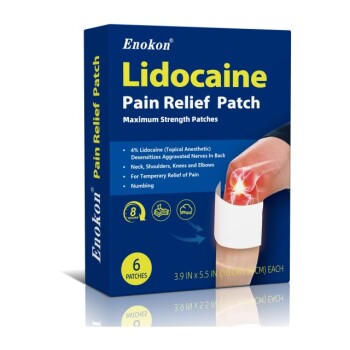
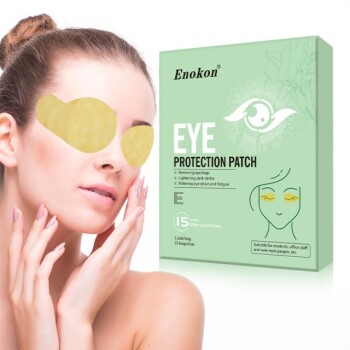
- Diverse Product Portfolio: From Lidocaine and Menthol pain relief to innovative Eye Protection, Detox, and Medical Cooling Gel patches (excluding microneedle technology).
- Stringent Quality Control: We offer data-driven validation to ensure your products meet the highest efficacy standards.
Ready to develop a premium, stable, and effective transdermal solution? Contact Enokon today to discuss your custom project and wholesale needs!
References
- Yong-Hun Park, Jong Hwan Sung. Fabrication of degradable carboxymethyl cellulose (CMC) microneedle with laser writing and replica molding process for enhancement of transdermal drug delivery. DOI: 10.1007/s12257-015-0634-7
This article is also based on technical information from Enokon Knowledge Base .
Related Products
- Silicone Scar Sheets Patch Transdermal Drug Patch
- Far Infrared Heat Pain Relief Patches Transdermal Patches
- Icy Hot Menthol Medicine Pain Relief Patch
- Menthol Gel Pain Relief Patch
- Mugwort Wormwood Pain Relief Patch for Neck Pain
People Also Ask
- What is the function of PDMS-NH2 in silicone patches? Catalyzing Room-Temp Curing for Heat-Sensitive APIs
- What role does a silicone-based transdermal delivery system play in Parkinson's? Enhancing Early-Stage Patient Care
- Why is TEOS used as a cross-linking agent in silicone transdermal patches? Ensure Structural Integrity & Drug Stability
- How do PEG 200 and Glycerol modify silicone transdermal patches? Optimize Drug Release and Patch Flexibility
- How is the long-term skin tolerance of silicone-based transdermal patches evaluated in clinical settings? R&D and Safety