The Unmistakable Scent of Healing
Open a package containing a traditional pain plaster, and you’re met with an immediate, powerful wave of scent. It’s an earthy, medicinal, and complex aroma that feels inseparable from the product itself.
This sensory experience is so potent that it begs a fundamental question: Is this smell merely a side effect of the ingredients, or is it an integral part of how the plaster works? The answer lies at the intersection of chemistry, psychology, and centuries of tradition.
The Chemistry of Aroma: Volatile Messengers
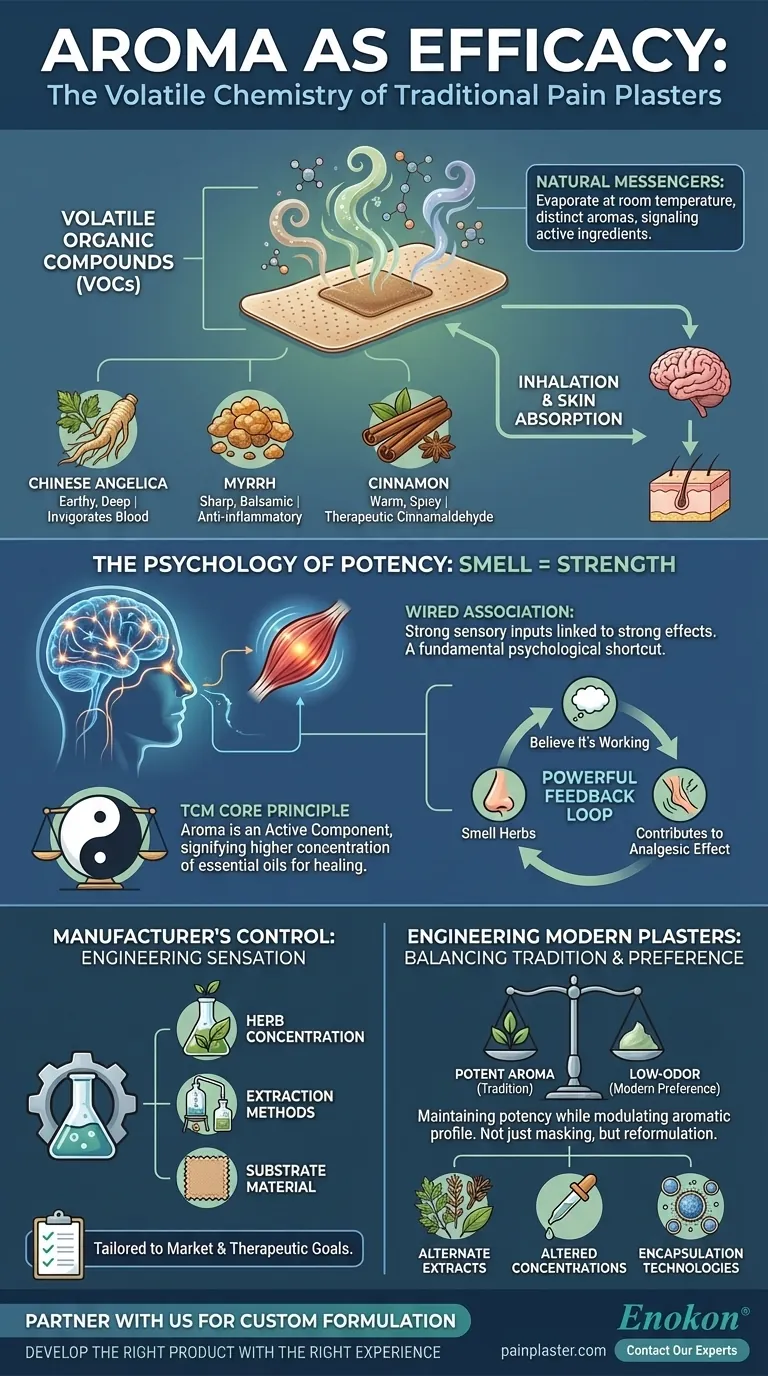
The strong smell isn't an artificial additive. It's the signature of Volatile Organic Compounds (VOCs), naturally occurring molecules within the plaster's herbal ingredients that evaporate at room temperature, releasing their distinct aromas.
These aren't industrial pollutants; they are nature’s own airborne messengers, the same compounds that give forests their scent and flowers their fragrance. In a plaster, they are the ghost of the active ingredients, signaling their presence.
Key herbs in traditional formulations each contribute their own unique aromatic profile:
- Chinese Angelica (Dang Gui): Provides a deep, earthy smell, traditionally used to invigorate blood circulation.
- Myrrh: A resin with a sharp, balsamic odor, valued for its powerful anti-inflammatory properties.
- Cinnamon: Lends a warm, spicy scent from its primary compound, cinnamaldehyde, which also has therapeutic effects.
The plaster doesn't just sit on the skin; it creates a micro-atmosphere of these VOCs, which are absorbed through both the skin and inhalation.
The Psychology of Potency: Why Smell Equals Strength
Our brains are wired to associate strong sensory inputs with strong effects. This is a fundamental psychological shortcut. When a medicine has a powerful taste or smell, we are culturally and intuitively primed to believe it is more potent.
In Traditional Chinese Medicine (TCM), this isn't a coincidence; it's a core principle. The aroma is considered an active component of the therapy, a signal that the plaster is rich in the essential oils and compounds required for healing. A stronger smell often correlates with a higher concentration of active ingredients.
This creates a powerful feedback loop: we smell the herbs, we believe it's working, and this belief itself can contribute to the analgesic effect. The scent is not just a feature; it's a testament to the plaster's heritage and intended efficacy.
From Formulation to Sensation: The Manufacturer's Control
The intensity of a plaster's aroma is not an accident. It is the direct result of deliberate choices made during research, development, and manufacturing. The final sensory experience is a product of precision engineering.
Several factors are at play:
- Herb Concentration: The ratio of active herbal ingredients to the base adhesive.
- Extraction Methods: How the volatile compounds are drawn from the raw herbs.
- Substrate Material: The type of fabric or film used for the patch can affect how quickly the VOCs are released.
This is where the expertise of a specialized manufacturer becomes critical. Controlling these variables allows for the creation of products tailored to specific market expectations and therapeutic goals.
Engineering the Modern Plaster: Balancing Tradition and Preference
While the potent aroma is a sign of efficacy for many, modern consumer preferences are diverse. Some users are sensitive to strong smells or require a more discreet solution for use in public or professional settings.
This presents a fascinating engineering challenge: how do you maintain therapeutic potency while modulating the aromatic profile?
Creating a "low-odor" version isn't as simple as adding a masking fragrance. It requires a deep understanding of the active ingredients to reformulate a plaster that is just as effective but presents a gentler sensory experience. This may involve using different herbal extracts, altering concentrations, or employing advanced encapsulation technologies.
As a bulk manufacturer specializing in transdermal technology, we at Enokon partner with healthcare brands to solve this exact problem. Our R&D capabilities allow us to develop custom formulations that honor traditional potency or innovate for modern sensibilities, ensuring the final product is perfectly aligned with your brand's promise and your customers' needs.
The journey from a plant's chemistry to a person's relief is a complex one. The scent of a plaster is a powerful reminder of this process—a tangible signal of the natural ingredients working to ease pain. Whether your goal is to harness that traditional potency or refine it for a new generation, the solution starts with expert formulation.
To create a transdermal patch that delivers the right results with the right experience, Contact Our Experts.
Visual Guide
Related Products
- Natural Herbal Wormwood Patch Pain Plaster
- Heat Relief Capsicum Patch for Lower Back Pain Relief
- Capsaicin Chili Medicated Pain Relief Patches
- Mugwort Wormwood Pain Relief Patch for Neck Pain
- Herbal Pain Relief Cream Pain Relieving Creams
Related Articles
- More Than Skin Deep: The Critical Difference Between a Pain Plaster and a Wound Dressing
- The Silent Geography of Healing: Decoding the Global Demand for Transdermal Herbal Patches
- More Than a Sticker: The Hidden Engineering of a Safe Pain Patch
- The Unseen Calculus of a Simple Pain Patch
- The Architecture of Relief: Deconstructing the Modern Pain Patch