The First Moment of Pain
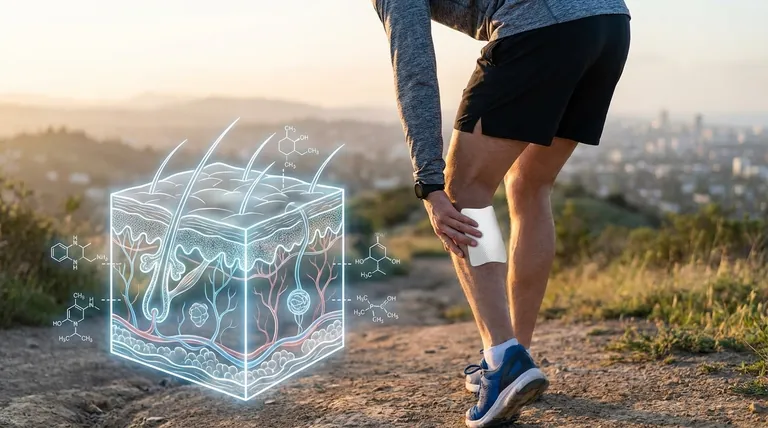
Imagine a runner, miles past their limit, feeling a sharp twinge in their calf. Or an office worker, neck stiff from hours at a desk, unable to turn their head without a jolt of pain.
In that moment, the search isn't just for relief. It's for control.
The simple act of applying a patch is deeply psychological. It’s a targeted, tangible action against an invisible discomfort. But beneath that adhesive layer lies a sophisticated feat of chemical engineering, a carefully orchestrated system designed to intercept pain before it dominates our attention.
The Primary Mechanisms of Action
A pain patch is not a one-size-fits-all solution. Its effectiveness is rooted in its active ingredients, each chosen for a specific strategy to combat pain. They generally fall into three distinct philosophical camps.
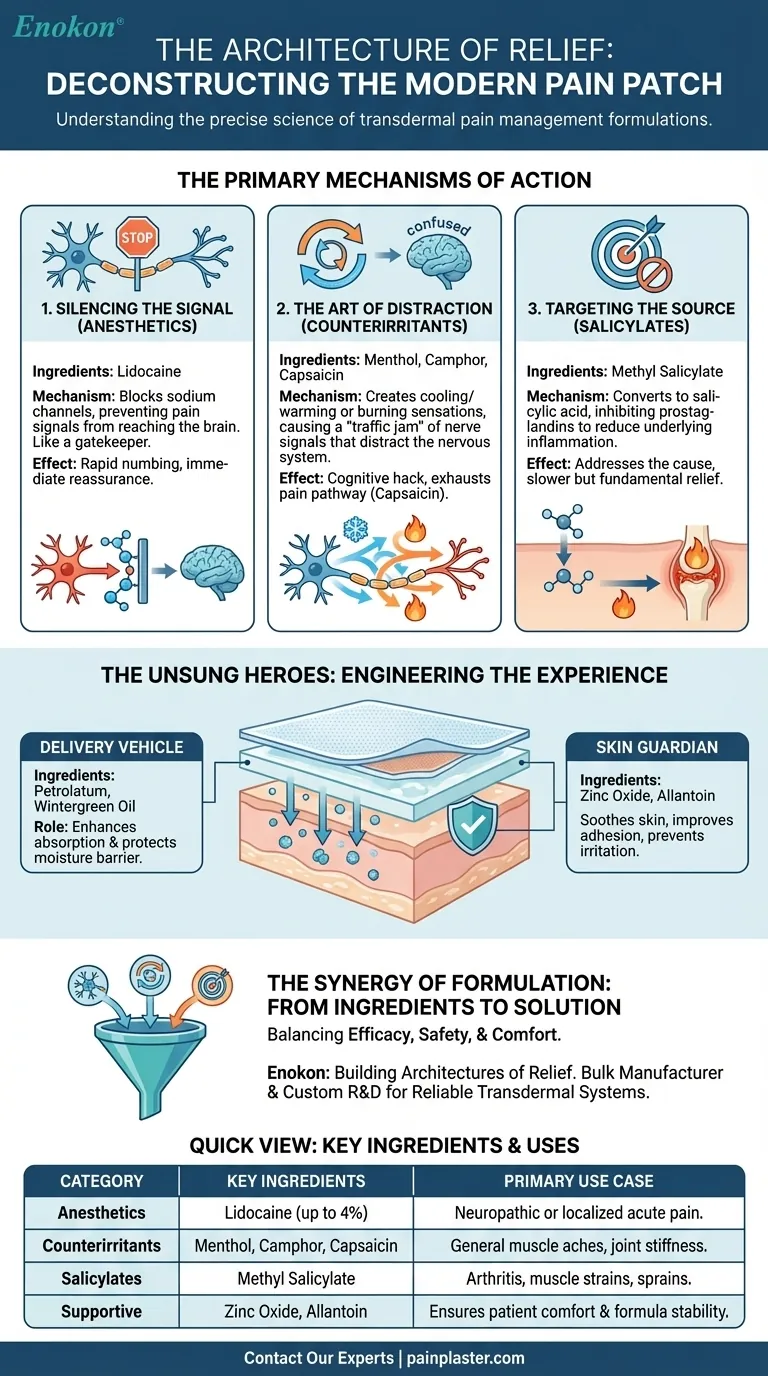
Silencing the Signal: Anesthetics
The most direct approach is to simply stop the pain signal from ever reaching the brain. This is the work of anesthetics like Lidocaine.
- Mechanism: Lidocaine blocks sodium channels in the nerve endings at the site of pain. Think of it as a gatekeeper that prevents the electrical "pain message" from starting its journey.
- Psychological Impact: The numbing sensation is rapid and reassuring. It provides immediate proof that the treatment is working, offering a powerful sense of calm and control over the pain.
The Art of Distraction: Counterirritants
If you can't silence the signal, the next best thing is to confuse it. Counterirritants introduce a new, non-painful sensation to the skin, effectively distracting the nervous system.
- Menthol & Camphor: These ingredients create a cooling or warming sensation. This new input travels along the same nerve pathways as the pain, creating a "traffic jam" that makes it harder for the original pain signal to get through. It's a brilliant cognitive hack.
- Capsaicin: Derived from chili peppers, capsaicin works differently. It initially causes a burning sensation, but with continued use, it depletes "Substance P," a neurotransmitter essential for transmitting pain signals. It uses a controlled irritant to exhaust the pain pathway itself.
Targeting the Source: Salicylates
While anesthetics and counterirritants manage the perception of pain, salicylates go deeper to address a common cause: inflammation.
- Mechanism: Ingredients like Methyl Salicylate are absorbed into the skin and converted to salicylic acid, a relative of aspirin. This compound inhibits the production of prostaglandins—inflammatory mediators that sensitize nerve endings and create pain.
- Therapeutic Goal: This approach isn't about distraction; it's about reducing the underlying fire. It offers a more fundamental, albeit slower, form of relief for conditions like arthritis or muscle strains.
The Unsung Heroes: Engineering the Experience
The effectiveness of a patch isn't just about the active ingredients. The "inactive" components are critical to its success, ensuring the drug is delivered safely and comfortably.
- The Delivery Vehicle: Ingredients like Petrolatum and Wintergreen Oil do more than just hold the formula together. They protect the skin's moisture barrier and can enhance the absorption of the active compounds, ensuring they reach their target.
- The Skin Guardian: Compounds like Zinc Oxide and Allantoin are included to protect and soothe the skin. They improve adhesion while preventing the irritation that could make a patient stop using the product.
This holistic design acknowledges that the patient experience is paramount. A patch that irritates is a patch that fails, no matter how potent its active ingredient.
The Synergy of Formulation: From Ingredients to Solution
The true art of patch development lies in the synergy between these components. A single patch might combine the immediate signal-blocking of Lidocaine with the sensory distraction of Menthol. Another might pair the anti-inflammatory action of a Salicylate with the soothing properties of Eucalyptus Oil.
For healthcare brands and pharmaceutical distributors, creating a patch that balances these elements—efficacy, safety, patient comfort, and regulatory compliance—is a significant engineering challenge. The precise concentration of each ingredient matters immensely.
This is where specialized manufacturing partners become essential. At Enokon, we focus on the precise science of transdermal formulation. As a bulk manufacturer of reliable pain plasters and transdermal systems, our expertise in custom R&D allows us to engineer solutions that meet specific therapeutic goals and market needs. We don't just mix ingredients; we build architectures of relief.
Developing the right formulation requires more than a recipe; it demands a deep understanding of these molecular interactions and patient needs. If you're looking to develop a custom transdermal patch that delivers reliable, targeted relief for your brand, let's build it together.
| Category | Key Ingredients | Mechanism of Action | Primary Use Case |
|---|---|---|---|
| Anesthetics | Lidocaine (up to 4%) | Blocks sodium channels to stop pain signals. | Neuropathic or localized acute pain. |
| Counterirritants | Menthol, Camphor, Capsaicin | Creates sensory distraction or depletes pain transmitters. | General muscle aches, joint stiffness. |
| Salicylates | Methyl Salicylate | Inhibits prostaglandins to reduce inflammation. | Arthritis, muscle strains, sprains. |
| Supportive | Zinc Oxide, Allantoin | Enhance delivery, improve adhesion, and protect skin. | Ensures patient comfort and formula stability. |
Visual Guide
Related Products
- Far Infrared Pain Patch Relief Pain Reliever for Back
- Mugwort Wormwood Pain Relief Patch for Neck Pain
- Far Infrared Knee Pain Patch Heat Patches for Pain Relief
- Icy Hot Menthol Medicine Pain Relief Patch
- Far Infrared Deep Heat Relief Patches Medicated Pain Relief Patches
Related Articles
- Beyond Efficacy: The Psychology of Adherence in Topical Pain Relief
- More Than a Sticker: The Hidden Engineering of a Safe Pain Patch
- The Unseen Calculus of a Simple Pain Patch
- Beyond the Molecule: The Behavioral Science of the Simple Pain Patch
- Beyond Pain Relief: The Compounding Returns of Restored Mobility