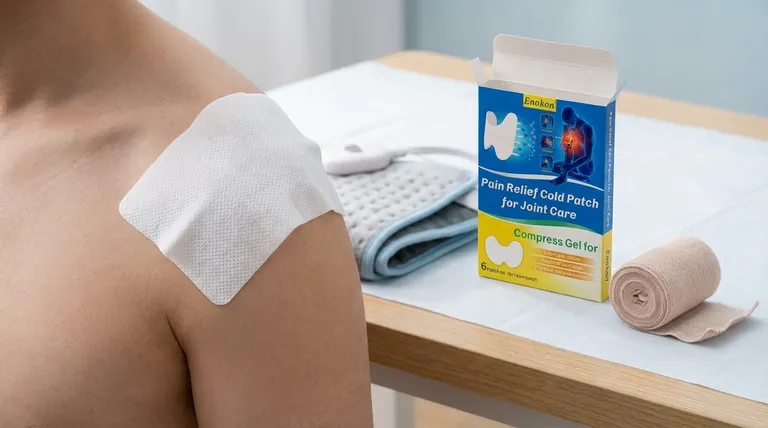
The Illusion of Simplicity
A transdermal patch is a marvel of quiet engineering. A simple square you place on your skin delivers a precise, localized dose of medicine, bypassing the digestive system entirely. It feels passive, almost like a temporary tattoo.
But this simplicity is an illusion. The patch is not an isolated object; it's one half of a complex system. The other half is you—your skin, your environment, and your behavior. The effectiveness and, more importantly, the safety of that simple patch depend entirely on understanding the delicate physics and psychology at play.
Heat, Thermodynamics, and the Unseen Overdose
Pain instinctively makes us seek warmth. A heating pad over a sore muscle feels like a solution. It’s a deeply ingrained psychological comfort.
However, when this instinct meets the pharmacology of a lidocaine patch, a safe therapy can become a risk.
The Skin as a Thermodynamic Gateway
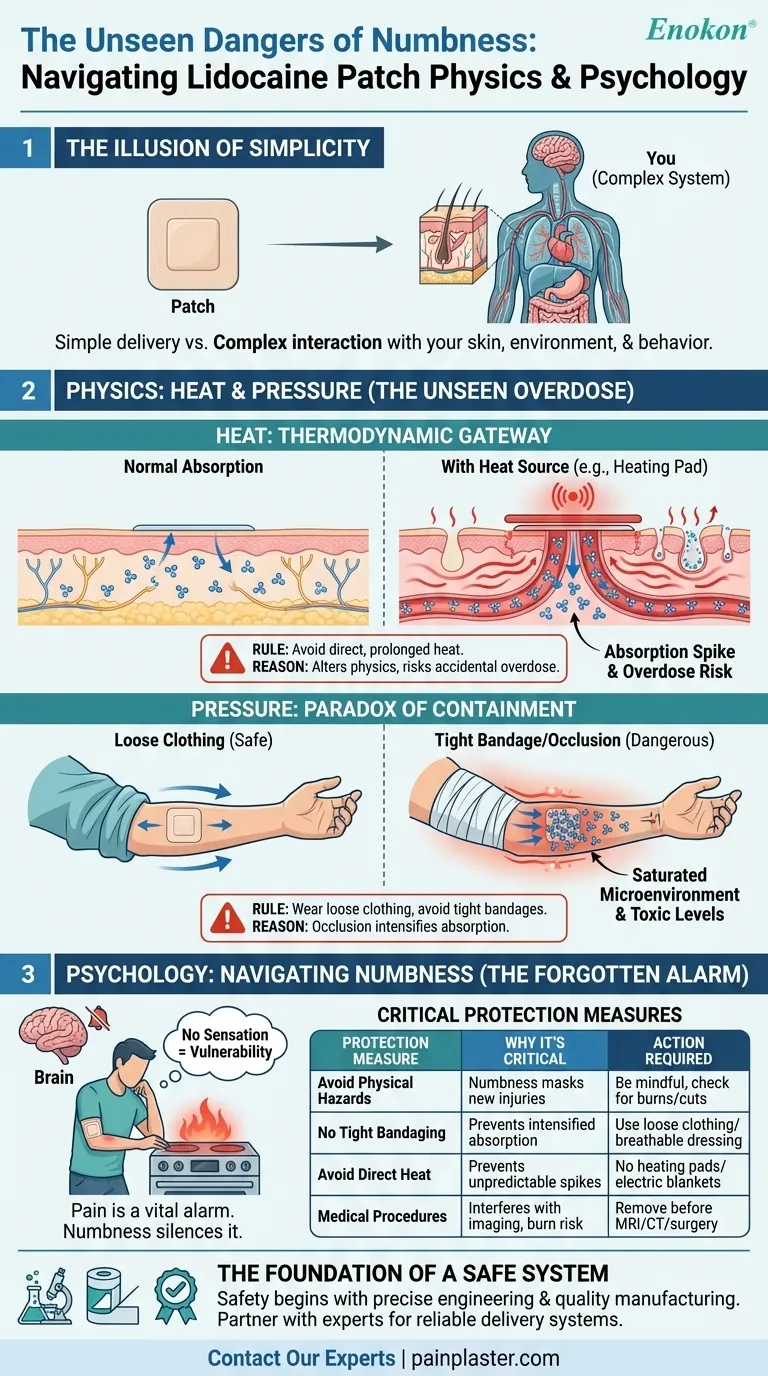
Your skin is a semi-permeable barrier. A lidocaine patch works by creating a concentration gradient, allowing the drug to slowly diffuse through the epidermis to the nerve endings below. This process is governed by the laws of thermodynamics.
Adding an external heat source—like a heating pad or an electric blanket—supercharges this process. Heat increases blood flow and skin permeability. Molecules move faster. The carefully engineered slow-release mechanism is hijacked, and the rate of lidocaine absorption can spike unpredictably.
This isn't just less effective; it's dangerous. A therapeutic local dose can become a systemic one, leading to side effects ranging from dizziness to serious cardiac complications.
- Rule: Avoid direct, prolonged heat on the patch.
- Reason: Heat alters the physics of absorption, risking an accidental overdose.
The Paradox of Pressure and Containment
Another common instinct is to "seal it in." If a patch is providing relief, surely a tight wrap or bandage over it will hold it in place and make it work better.
This well-intentioned act introduces a principle known as occlusion.
When "Secure" Becomes "Saturated"
By trapping heat and moisture, a tight bandage creates a microenvironment that dramatically increases drug absorption. It’s the same reason a greenhouse is warmer than the air outside. The skin becomes more hydrated and permeable, and the drug has nowhere to go but in.
Like adding heat, this turns a controlled dose into an unpredictable flood. The goal is not to force the drug into the body, but to allow the patch's own carefully calibrated system to do its job.
- Rule: Wear loose clothing over the patch. Avoid tight bandages.
- Reason: Occlusion creates an uncontrolled environment that can intensify drug absorption to toxic levels.
Navigating a World Without Sensation
Perhaps the most profound challenge is psychological. The entire purpose of a lidocaine patch is to block sensation—specifically, pain. But pain, for all its unpleasantness, is a vital communication system. It’s your body’s alarm.
The Brain's Forgotten Warning System
When you turn off that alarm in one area, you become vulnerable in ways you don't anticipate. Your brain, accustomed to receiving warning signals, is now flying blind.
The numbness that brings relief from chronic pain also silences the warning of a fresh injury. You might lean against a hot stove, handle a sharp object, or scrape your arm and not realize the severity of the injury until you see the physical evidence.
This requires a conscious, deliberate shift in behavior. You have to become your own external alarm system, actively protecting the numbed area from the everyday hazards your body would normally handle automatically.
| Protection Measure | Why It's Critical | Action Required |
|---|---|---|
| Avoid Physical Hazards | Numbness masks new injuries like burns or cuts. | Be mindful when handling hot, sharp, or abrasive objects. |
| No Tight Bandaging | Prevents intensified absorption and toxicity risk. | Wear loose clothing; use a breathable dressing if needed. |
| Avoid Direct Heat | Prevents unpredictable absorption spikes. | No heating pads or electric blankets on the patch. |
| Medical Procedures | Patches can interfere with imaging or cause burns. | Always remove the patch before an MRI, CT scan, or surgery. |
The Foundation of a Safe System
A transdermal patch is more than a drug; it’s a delivery system. Its safety and reliability begin long before it reaches the patient. It begins with the design of the adhesive, the consistency of the drug matrix, and the quality control of the manufacturing process.
When these elements are precisely engineered, the system is inherently safer. The variables are controlled, allowing clinicians and patients to focus on the behavioral side of the equation—managing heat, pressure, and the psychological adjustment to numbness. This is why partnering with a manufacturer that understands the deep science of transdermal delivery is not just a supply chain decision; it's a patient safety imperative.
For a delivery system engineered with this level of attention to safety and reliability, it’s crucial to partner with an expert manufacturer. Contact Our Experts
Visual Guide
Related Products
- Lidocaine Hydrogel Pain Relief Patch for Pain Relief
- Herbal Medicated Anti Diarrhea Patch for Digestive Relief
- Menthol Gel Pain Relief Patch
- Icy Hot Menthol Medicine Pain Relief Patch
- Asthma Cough and Pain Relief Patch for Adults and Kids
Related Articles
- Beyond the Adhesive: The Precarious Balance of Transdermal Drug Delivery
- The Efficacy Paradox: Why Lower-Dose Lidocaine Patches Are Redefining Pain Management
- Beyond the Patch: The Hidden Dialogue Between Lidocaine, Your Body, and Your Lifestyle
- Beyond Efficacy: The Psychology of Adherence in Topical Pain Relief
- The Elegant Thermodynamics of Relief: How Hydrogel Patches Master Fever and Pain



















