The Intuitive Error in Our Medicine Cabinet
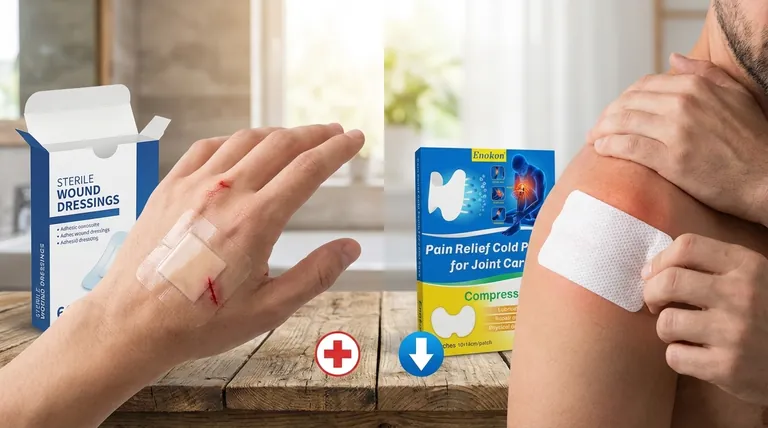
Imagine a simple scenario: a scrape from gardening, a minor cut while cooking. You open the medicine cabinet and see an adhesive patch. Your brain, wired for efficiency, makes a quick association: cut needs cover, this is a cover, apply it.
This cognitive shortcut is often harmless. But if that patch is a medicated pain plaster, this simple mistake highlights a fundamental misunderstanding of its technology. We wrongly categorize two vastly different tools—a delivery system and a protective barrier—as the same thing. This is where good intentions can lead to poor outcomes.
A Tale of Two Technologies: Delivery vs. Defense
The core of the issue lies not in the adhesive, but in the purpose. A pain plaster and a wound dressing operate on opposing principles.
The Plaster as a Delivery System
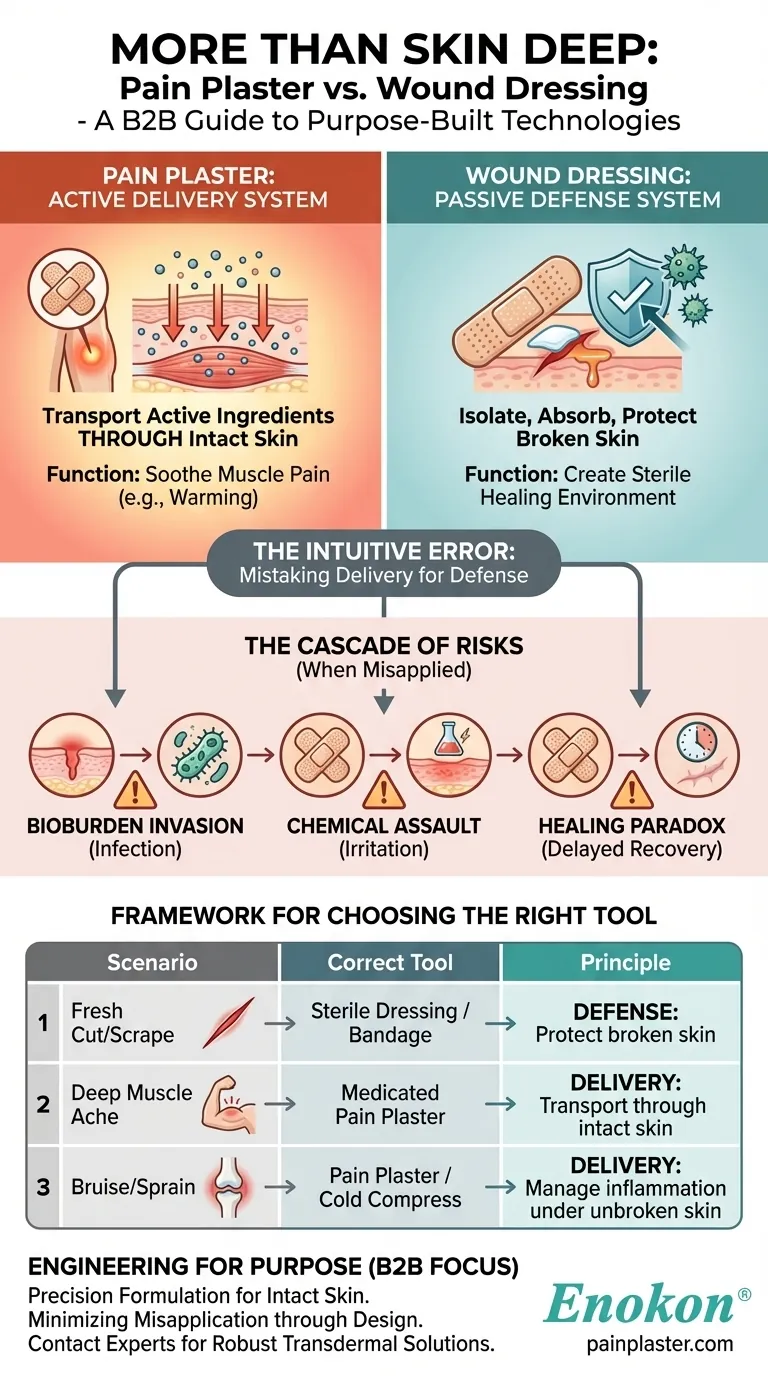
A transdermal patch or medicated plaster is an active delivery system. Its primary job is to transport active ingredients—like herbal extracts for pain relief—through the skin's protective outer layer (the stratum corneum) and into the tissue below.
For this to work safely, that barrier must be intact. The formulation is designed to interact with healthy, unbroken skin. Many plasters, for example, induce a warming sensation to soothe muscle pain. On an open wound, this active chemical process becomes an aggressive irritant, not a therapeutic agent.
The Dressing as a Fortress
A wound dressing, like a sterile bandage or hydrocolloid patch, is a passive defense system. Its purpose is to be a fortress.
It is designed to:
- Isolate: Create a sterile barrier against external contaminants and bacteria.
- Absorb: Manage wound exudate to maintain a clean healing environment.
- Protect: Shield the delicate, newly forming tissue from physical damage and irritation.
Its technology is about keeping things out and creating a safe, neutral space for the body to heal itself.
The Cascade of Risks: When Good Intentions Go Wrong
Applying a pain plaster to an open wound is like sending a shipment of goods to a city with its walls breached. Instead of reaching its intended destination, the cargo creates chaos.
- The Bioburden Invasion: The plaster itself is not sterile. Applying it to broken skin directly introduces bacteria, dramatically increasing the risk of a localized, or even systemic, infection.
- The Chemical Assault: The active ingredients, designed to permeate intact skin, become caustic irritants to exposed subcutaneous tissue. This can cause inflammation, chemical burns, and intense pain.
- The Healing Paradox: The adhesive and chemical formulation can interfere with the body's natural healing cascade—clotting, cell migration, and tissue regeneration. The very tool applied to help ends up delaying recovery.
A Framework for Choosing the Right Tool
The principle is simple: match the technology to the biological state of the skin. Efficacy and safety depend entirely on this choice.
| Scenario | The Correct Tool | Underlying Principle |
|---|---|---|
| A fresh cut or scrape | Sterile Dressing / Bandage | Defense: Protect broken skin from infection. |
| A deep muscle ache | Medicated Pain Plaster | Delivery: Transport active ingredients through intact skin. |
| A bruise or sprain | Pain Plaster / Cold Compress | Delivery: Manage inflammation under unbroken skin. |
Engineering for Purpose: The Manufacturer's Responsibility
This distinction between delivery and defense isn't just user knowledge; it's a manufacturer's core responsibility. A truly reliable product is engineered with a precise purpose, minimizing the potential for misapplication through clear design and high-quality, indication-specific formulation.
This is where technical expertise in transdermal technology becomes paramount. Developing an effective pain plaster requires deep knowledge of skin permeability, adhesive biocompatibility, and the stable delivery of active ingredients. At Enokon, our R&D is centered on creating robust, reliable transdermal systems specifically for pain management on intact skin. By focusing on superior formulation and manufacturing, we provide healthcare distributors and brands with products that are not only effective but are fundamentally safe for their intended use.
Understanding this foundational science is the first step toward better outcomes. For brands committed to providing purpose-built transdermal solutions, our expertise is at your disposal. Contact Our Experts
Visual Guide
Related Products
- Natural Herbal Wormwood Patch Pain Plaster
- Heat Relief Capsicum Patch for Lower Back Pain Relief
- Capsaicin Chili Medicated Pain Relief Patches
- Mugwort Wormwood Pain Relief Patch for Neck Pain
- Menthol Gel Pain Relief Patch
Related Articles
- Aroma as Efficacy: The Volatile Chemistry Behind Traditional Pain Plasters
- The Silent Geography of Healing: Decoding the Global Demand for Transdermal Herbal Patches
- More Than a Sticker: The Hidden Engineering of a Safe Pain Patch
- The Unseen Calculus of a Simple Pain Patch
- The Architecture of Relief: Deconstructing the Modern Pain Patch