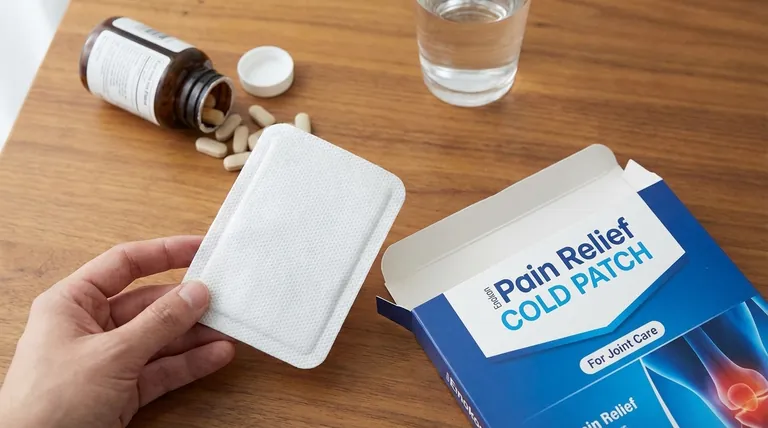
The Old Dilemma: Efficacy at a Hidden Cost
When you sprain an ankle or feel the familiar ache of arthritis, instinct drives a simple solution: swallow a pill. It's a transaction we've accepted for decades. We trade a small, coated tablet for relief.
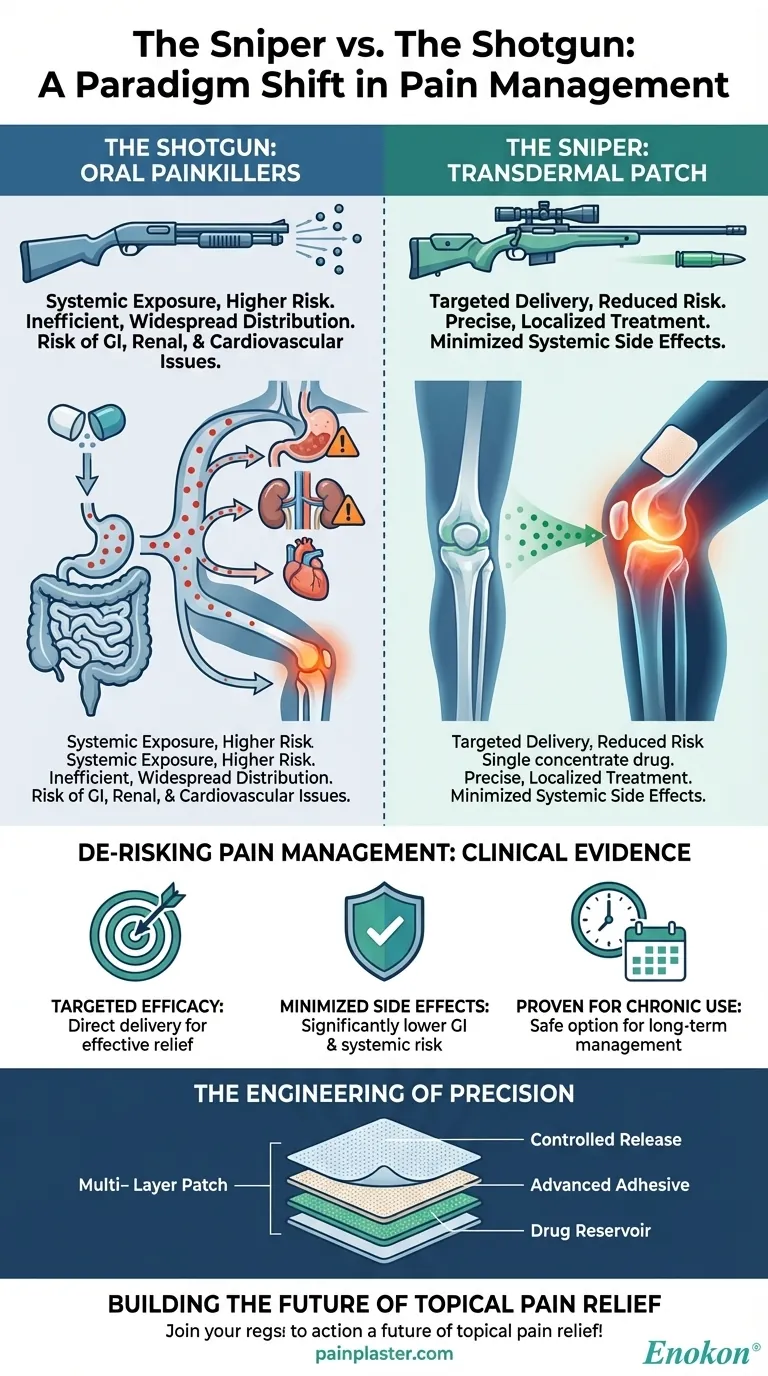
But this transaction has hidden terms. Oral painkillers, particularly Non-Steroidal Anti-Inflammatory Drugs (NSAIDs), are a "shotgun" approach to a "sniper" problem. To soothe a single aching joint, we flood our entire system with a powerful chemical compound.
We feel the relief, but we don't feel the collateral effects—the subtle but cumulative strain on our stomach lining, kidneys, and cardiovascular system. It's a brilliant solution for its time, but it's a systemically expensive one.
The Systemic Flaw of a Simple Pill
The core issue is the delivery route. An oral NSAID must survive the digestive tract, get absorbed into the bloodstream, and circulate throughout the entire body to eventually reach the inflamed tissue.
A significant portion of the drug never reaches its target. Instead, it interacts with organs and systems that have nothing to do with the pain. This inefficient, widespread distribution is precisely what creates the risk profile we see in long-term users:
- Gastrointestinal Risk: Increased potential for ulcers and bleeding.
- Renal Risk: Potential strain on kidney function over time.
- Cardiovascular Risk: Documented links to cardiovascular events.
The problem isn’t the drug itself; it’s the indiscriminate way we deliver it.
A More Elegant Solution: The Precision of Transdermal Delivery
What if we could bypass the system entirely? What if we could deliver the medicine directly where it's needed, and only where it's needed?
This is the engineering elegance of the transdermal patch.
A diclofenac patch is the sniper rifle. It adheres directly over the site of pain, delivering the active ingredient—a potent NSAID—through the skin into the localized tissue below. The drug gets to work on inflammation and pain receptors without first taking a tour of your entire body.
The result is a radical reduction in systemic exposure. Less drug in the bloodstream means less risk for your stomach, your kidneys, and your heart.
De-Risking Pain Management: The Clinical Evidence
This isn't just a theoretical benefit. The safety and efficacy of diclofenac patches are supported by a wide body of clinical research.
Key Findings from Clinical Data
Systematic reviews and trials involving over 800 patients consistently point to two conclusions: the patches work, and they are remarkably well-tolerated.
- Targeted Efficacy: By delivering a dose like 180 mg of diclofenac directly to the source, the patches provide effective pain and inflammation relief for acute conditions like muscle sprains, strains, and contusions.
- Minimized Systemic Side Effects: Compared to their oral counterparts, topical NSAIDs demonstrate a significantly lower incidence of gastrointestinal and other systemic adverse events.
- Proven for Chronic Use: Studies in conditions like osteoarthritis show that patches are a safe option for long-term management, a critical consideration where oral NSAIDs often become problematic.
| Evidence Source | Core Finding |
|---|---|
| Clinical Trials | Effective and well-tolerated in studies with over 800 patients. |
| Systematic Reviews | Topical NSAIDs have a superior safety profile to oral forms. |
| Mechanism | Local delivery bypasses systemic circulation, reducing GI and cardiac risk. |
| Real-World Use | High patient satisfaction for sports injuries and osteoarthritis. |
The Engineering Behind a Simple Patch
A transdermal patch seems deceptively simple. Yet creating one that delivers a precise, consistent dose over hours, adheres comfortably to moving skin, and avoids irritation is a significant feat of pharmaceutical and materials science engineering.
The adhesive must be strong but gentle. The drug reservoir must release its payload at a controlled rate. The entire system must be stable, sterile, and reliable. This isn't something that can be assembled casually; it requires deep technical expertise and rigorous quality control.
This is where the architecture of modern medicine becomes clear. Breakthroughs in patient care rely not just on the discovery of a molecule, but on the engineering that perfects its delivery.
Building the Future of Topical Pain Relief
For healthcare distributors and pharmaceutical brands, embracing this paradigm shift from systemic to localized treatment is more than a product line extension—it's an alignment with a safer, more patient-centric future.
At Enokon, we provide the specialized R&D and bulk manufacturing capabilities to make this possible. We engineer and produce reliable, clinically-backed transdermal patches and pain plasters, empowering brands to offer superior pain management solutions. Our technical expertise becomes your competitive advantage, ensuring your products are built on a foundation of safety, precision, and quality.
The future of pain management is less about brute force and more about precision. It's about achieving better outcomes with fewer risks. To explore how targeted transdermal technology can elevate your product portfolio, Contact Our Experts.
Visual Guide
Related Products
- Menthol Gel Pain Relief Patch
- Lidocaine Hydrogel Pain Relief Patch for Pain Relief
- Herbal Medicated Anti Diarrhea Patch for Digestive Relief
- Cooling Fever Patches Color Change Cold Fever Patch
- Icy Hot Menthol Medicine Pain Relief Patch
Related Articles
- Beyond Efficacy: The Psychology of Adherence in Topical Pain Relief
- The 60-Minute Architecture: Engineering Predictability in Topical Pain Relief
- More Than a Feeling: The Precise Engineering of Cold vs. Hot Pain Relief
- Beyond the Molecule: The Behavioral Science of the Simple Pain Patch
- The Human Interface of Pain Relief: Why Delivery Systems Define Success



















