
For the majority of appropriate candidates, estrogen patches are considered a very safe method for delivering hormone therapy. Their primary safety advantage over oral estrogen tablets is a significantly lower risk of developing blood clots. However, like any medication, their use must be guided by a healthcare professional to weigh individual benefits against potential risks.
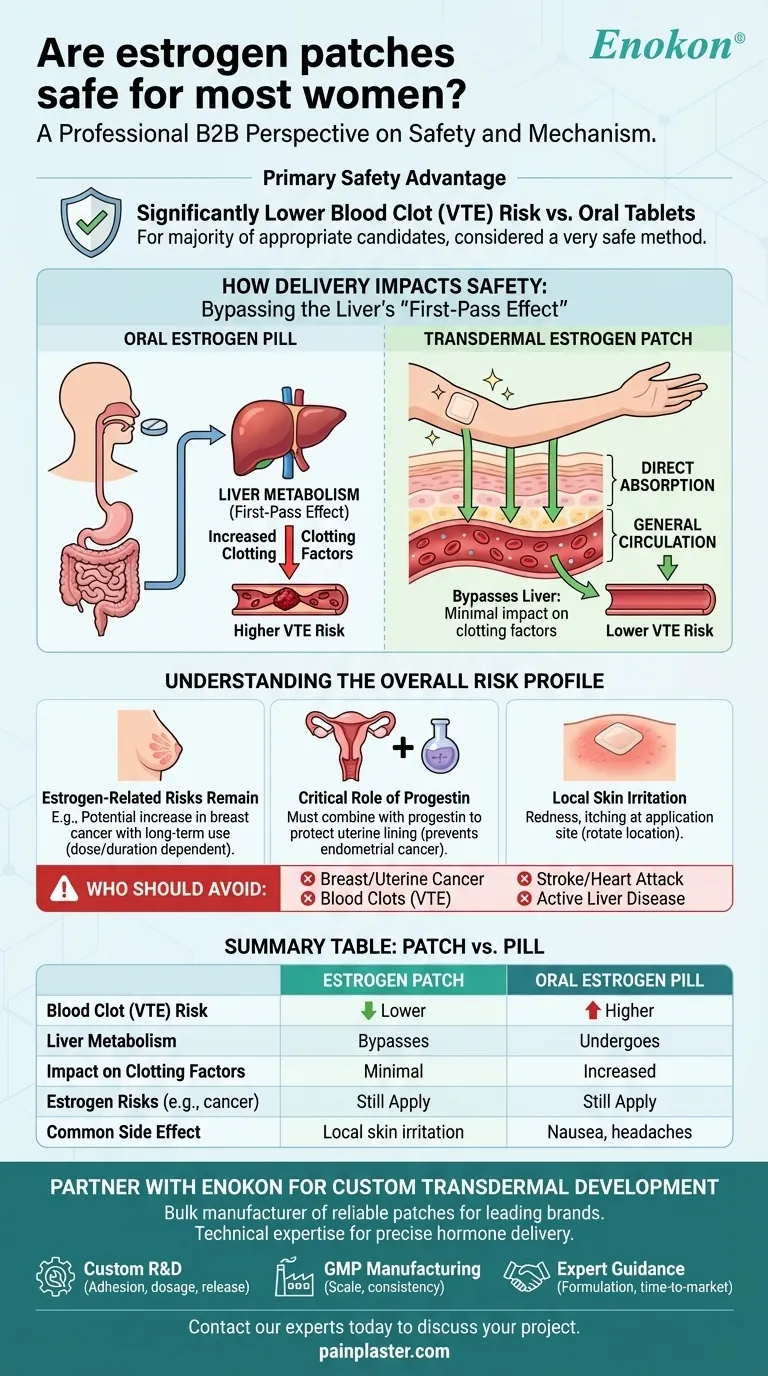
The key to the estrogen patch's safety profile lies in its delivery method. By absorbing estrogen directly through the skin, it bypasses the liver, which avoids the metabolic process that increases clotting factors associated with oral estrogen.

How Delivery Method Impacts Safety
The difference between a patch and a pill may seem small, but it has significant biochemical consequences that are central to understanding its safety.
Bypassing the Liver's "First-Pass Effect"
When you take an estrogen pill, it is absorbed through your digestive system and sent directly to your liver for processing before it enters your general circulation. This is known as the "first-pass effect."
The estrogen patch avoids this entirely. Hormones are absorbed through the skin (transdermally) and go straight into the bloodstream, reaching target tissues without being metabolized by the liver first.
The Connection to Blood Clots
The liver's processing of oral estrogen can increase the production of certain proteins that are responsible for blood clotting. This metabolic change is the primary reason oral estrogen is linked to a higher risk of venous thromboembolism (VTE), which includes deep vein thrombosis and pulmonary embolism.
Because transdermal estrogen from a patch does not undergo this first-pass metabolism, it does not have the same impact on clotting factors. This makes it a safer option for many women, particularly those with other risk factors for VTE.
Understanding the Overall Risk Profile
While the patch mitigates the risk of blood clots, it is not free of all risks associated with estrogen therapy. A comprehensive understanding is crucial.
Estrogen-Related Risks Remain
The patch delivers the same hormone as other methods. Therefore, risks inherent to estrogen itself, such as a potential increase in the risk of breast cancer with long-term use, still apply. These risks are complex and depend on dosage, duration of use, and individual genetics.
The Critical Role of Progestin
For any woman who still has her uterus, taking estrogen alone (unopposed estrogen) significantly increases the risk of endometrial cancer. To mitigate this risk, estrogen therapy must be combined with a form of progestin, which protects the uterine lining. This is a non-negotiable safety requirement.
Local Skin Irritation
A common but less serious side effect specific to the patch is skin irritation. Redness, itching, or a rash can develop at the application site. Rotating the location of the patch can often help manage this issue.
Who Should Avoid Estrogen Therapy
Estrogen therapy in any form is not safe for everyone. It is typically contraindicated for individuals with a history of:
- Breast or uterine cancer
- Blood clots (VTE)
- Stroke or heart attack
- Active liver disease
Making the Right Choice for Your Goal
Navigating hormone therapy requires a clear understanding of your personal health profile and a collaborative relationship with your doctor.
- If your primary concern is minimizing blood clot risk: The estrogen patch is generally considered the safer starting point compared to oral tablets.
- If you have a uterus: A critical safety measure is to ensure your estrogen therapy is combined with progestin to protect your uterine lining.
- If you have risk factors for heart disease or stroke: The transdermal patch is often preferred, but any hormone therapy requires careful consideration with your healthcare provider.
Ultimately, understanding how the patch works empowers you to have a more informed conversation about the safest path to manage your symptoms.
Summary Table:
| Safety Factor | Estrogen Patch | Oral Estrogen Pill |
|---|---|---|
| Blood Clot (VTE) Risk | Lower | Higher |
| Liver Metabolism (First-Pass Effect) | Bypasses | Undergoes |
| Impact on Clotting Factors | Minimal | Increased |
| Risks Inherent to Estrogen (e.g., breast cancer) | Still Apply | Still Apply |
| Common Side Effect | Local skin irritation | Nausea, headaches |
Ready to develop a safer, reliable transdermal hormone therapy patch?
As Enokon, a bulk manufacturer of reliable transdermal patches for leading healthcare and pharmaceutical brands, we provide more than just production. Our technical expertise ensures precise, consistent hormone delivery for optimal patient safety and efficacy.
Partner with us to benefit from:
- Custom R&D: Tailor patch adhesion, dosage, and release profiles to your specific therapeutic needs.
- GMP Manufacturing: Scale your production with consistent, high-quality transdermal systems.
- Expert Guidance: Leverage our experience to navigate formulation challenges and accelerate your product's time-to-market.
Contact our experts today to discuss your custom transdermal patch development project.
Visual Guide
Related Products
- Heating Pain Relief Patches for Menstrual Cramps
- Menthol Gel Pain Relief Patch
- Prostate Pain Kidney Health Care Patch for Men
- Icy Hot Menthol Medicine Pain Relief Patch
- Lidocaine Hydrogel Pain Relief Patch for Pain Relief
People Also Ask
- What are the benefits of Period Pain Heat Patches? Drug-Free, On-the-Go Relief
- What are the key benefits of heating patches for elderly individuals? Relieve Pain & Improve Mobility
- What are the different types of heat patches? Find the Right Pain Relief for Your Needs
- What are the key differences between conventional heat patches and deep heat devices? Choosing the Right Pain Relief Solution
- What percentage of people with back pain use heat patches for relief? Discover the Popular Choice for Pain Management

















