
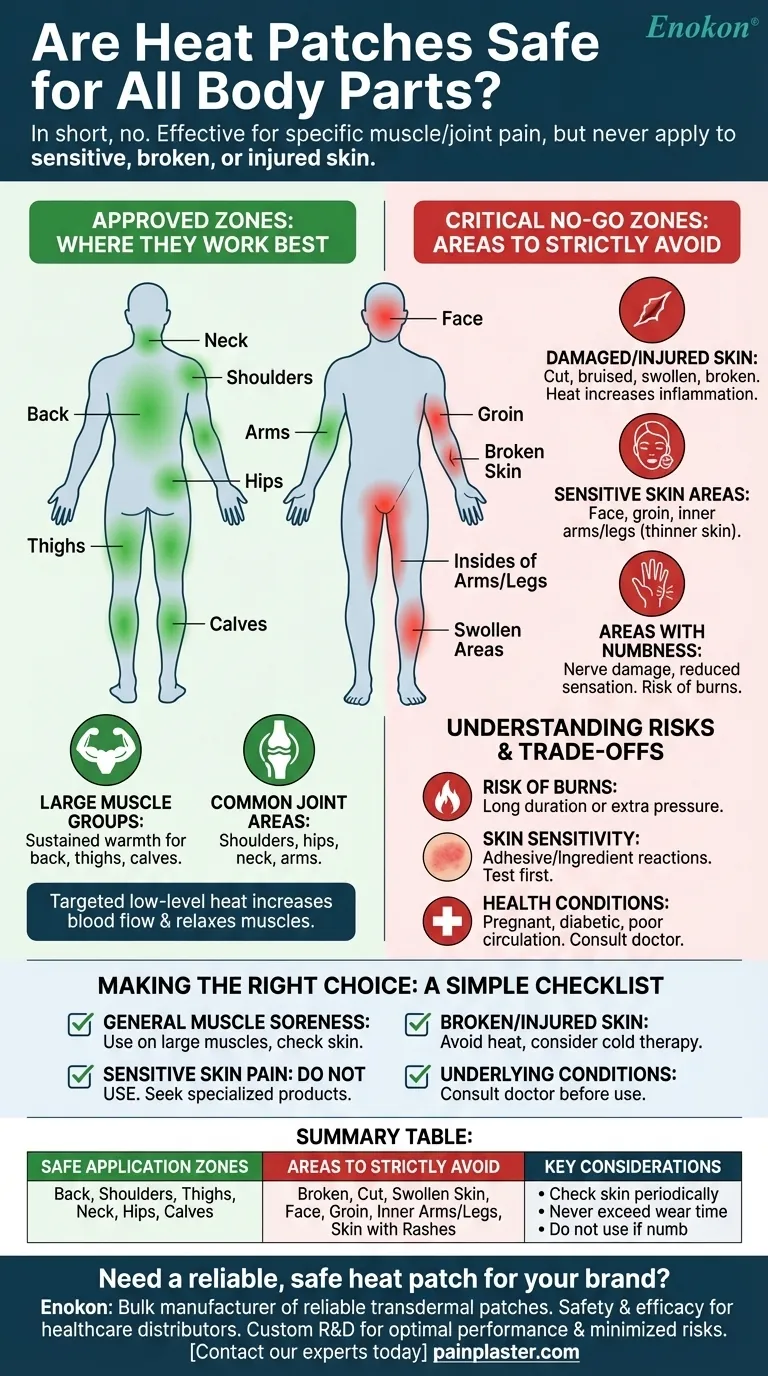
In short, no. Heat patches are not safe for all body parts. While highly effective for muscle and joint pain in specific areas, they should never be applied to sensitive, broken, or injured skin.
The core principle is simple: heat patches are designed for deep, muscular relief on durable areas of the body. Their safe use hinges on understanding where to apply them and, more importantly, which areas to strictly avoid.
Approved Zones: Where Heat Patches Work Best
Heat patches deliver targeted, low-level heat to increase blood flow and relax muscles. This makes them ideal for common aches and pains.
Large Muscle Groups
Patches are most effective and safely used on large muscle groups that can handle sustained warmth. This includes the back, thighs, and calves.
Common Joint Areas
Areas around major joints also respond well. The most common application sites are the shoulders, hips, neck, and arms.
Critical No-Go Zones: Areas to Strictly Avoid
Applying heat to the wrong area can cause burns, irritation, or worsen an existing injury.
Damaged or Injured Skin
Never apply a heat patch to skin that is cut, bruised, swollen, or broken. Heat can increase inflammation and delay healing in these areas.
Sensitive Skin Areas
Avoid naturally sensitive parts of your body. This includes the face, groin, or the insides of your arms and legs where the skin is thinner.
Areas with Numbness
If you have nerve damage or reduced sensation in an area, do not apply a heat patch. You may not be able to feel if the patch is becoming too hot, leading to a serious burn.
Understanding the Risks and Trade-offs
While generally safe when used as directed, heat patches are not without risks. Understanding these trade-offs is key to preventing adverse effects.
The Risk of Burns
The most significant risk is a low-temperature burn. This can happen if a patch is left on for longer than the recommended duration or if you apply extra pressure to it (like lying on it in bed).
Skin Sensitivity and Reactions
Some individuals may have a sensitivity to the adhesive or the ingredients in the patch. It is always wise to test the patch on a small area of skin first.
Special Considerations for Health Conditions
Certain individuals must exercise extreme caution. If you are pregnant, diabetic, or have poor circulation or a known skin condition, you must consult a healthcare professional before using a heat patch.
Making the Right Choice for Your Goal
Use this simple checklist to ensure you are applying your heat patch safely and effectively.
- If your primary focus is general muscle soreness: Use the patch on large, intact muscle groups like the back, shoulders, or thighs, and check your skin periodically for redness.
- If your primary focus is pain on sensitive skin (like the face): Do not use a heat patch; instead, look for specialized products, such as hydrating under-eye patches, that are formulated specifically for delicate skin.
- If the skin is broken, recently injured, or swollen: Avoid heat entirely and consider cold therapy instead, as heat can worsen acute inflammation.
- If you have an underlying health condition: Always consult your doctor before using any form of heat therapy to ensure it is safe for you.
Used correctly, heat patches are an excellent tool for managing targeted aches and pains.
Summary Table:
| Safe Application Zones | Areas to Strictly Avoid | Key Considerations |
|---|---|---|
| Back, Shoulders, Thighs | Broken, Cut, or Swollen Skin | Check skin periodically for redness. |
| Neck, Hips, Calves | Face, Groin, Inner Arms/Legs | Do not use if you have numbness. |
| Large Muscle Groups | Skin with Rashes or Sensitivity | Never exceed the recommended wear time. |
Need a reliable, safe heat patch for your brand?
As Enokon, a bulk manufacturer of reliable transdermal patches and pain plasters, we understand that safety and efficacy are paramount for healthcare and pharma distributors. Our technical expertise ensures your custom heat patch formulations are designed for optimal performance on approved body zones, minimizing risks for end-users.
Let's develop your next safe and effective pain relief product. Contact our experts today to discuss custom R&D and development.
Visual Guide
Related Products
- Far Infrared Heat Pain Relief Patches Transdermal Patches
- Heating Pain Relief Patches for Menstrual Cramps
- Far Infrared Deep Heat Relief Patches Medicated Pain Relief Patches
- Far Infrared Knee Pain Patch Heat Patches for Pain Relief
- Heat Relief Capsicum Patch for Lower Back Pain Relief
People Also Ask
- Why is the selection of matrix materials critical when developing customized transdermal patches? Optimize Efficacy
- What role does a skin tolerance scoring system play in the safety evaluation of transdermal patches? Key Safety Metrics
- How does high-purity far-infrared ceramic powder contribute to the efficacy of far-infrared physical therapy patches?
- Why is an optical microscope used for the quality assessment of transdermal patches? Ensure Safety & Matrix Integrity
- What is the purpose of vacuum filtration for polymer solutions? Ensuring Quality in Transdermal Patch Manufacturing



















