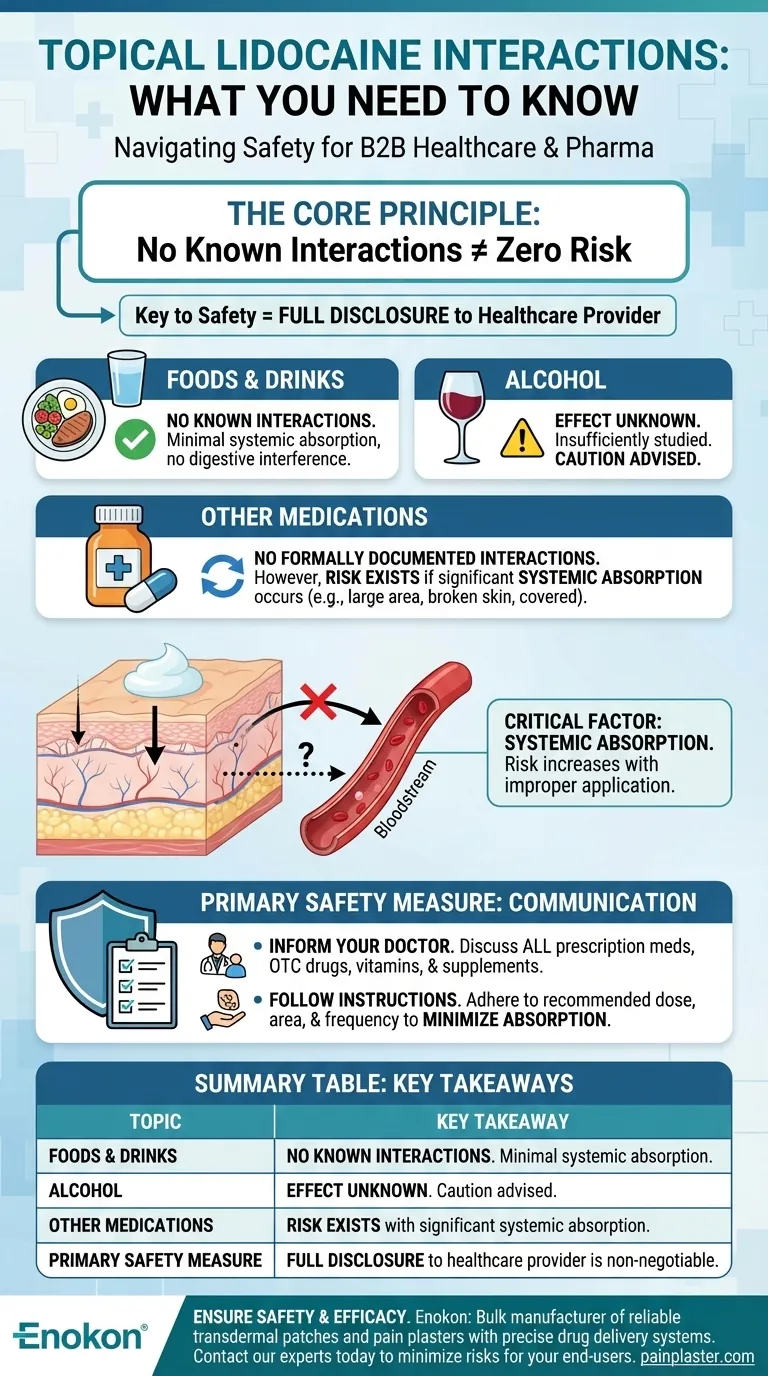
In short, there are no known interactions between topical lidocaine and any specific foods, drinks, or other medications. However, the lack of documented interactions does not eliminate all potential risk, making full disclosure to your healthcare provider the most critical safety measure. The effects of alcohol use with topical lidocaine remain unknown.
The core principle to understand is that while topical lidocaine is generally safe from interactions, its potential to be absorbed into the bloodstream means that communicating openly with your doctor about all substances you take is non-negotiable for ensuring your safety.
A Deeper Look at Potential Interactions
While the official guidance is straightforward, understanding the context behind it helps you use these products more safely and effectively.
Foods, Drinks, and Alcohol
Topical lidocaine is applied to the skin, and only a very small amount is typically absorbed into your system. Because of this localized application and minimal systemic absorption, it does not interact with substances in your digestive system like food or drinks.
The effect of alcohol, however, is listed as unknown. This doesn't mean it's safe; it means it has not been sufficiently studied. Given this uncertainty, it is wise to be cautious.
The Nuance of Medication Interactions
The statement "no known drug interactions" can be misleading if taken as a guarantee of absolute safety. It simply means no specific interactions have been formally documented in clinical studies.
The real consideration is systemic absorption. If topical lidocaine is applied over a large area, on broken or irritated skin, or covered after application, more of the drug can enter your bloodstream.
If enough lidocaine is absorbed, it could theoretically interact with other medications, particularly those affecting heart rhythm or other local anesthetics. This is why transparency with your doctor is paramount.
The Critical Factor: Proper Application and Communication
The risk of any adverse effect, including a potential interaction, is directly related to how the product is used and the information your healthcare provider has.
Why Full Disclosure is Essential
Your healthcare provider needs a complete picture of everything you are taking. This includes prescription medications, over-the-counter drugs, vitamins, and herbal supplements.
Only with this full context can they assess any potential, even if undocumented, risks based on the mechanisms of each substance.
Following Instructions Minimizes Risk
Using topical lidocaine exactly as directed is your primary tool for safety. Adhering to the recommended dose, application area, and frequency ensures that systemic absorption is kept to an absolute minimum.
Never apply it to broken skin or open wounds unless specifically instructed to do so by a medical professional, as this significantly increases absorption.
Making the Right Choice for Your Safety
Your approach should be guided by open communication and adherence to medical advice.
- If your primary focus is short-term use for a minor condition: The risk of a significant interaction is extremely low, but informing your pharmacist or doctor is still the best practice.
- If your primary focus is regular use or application on a large skin area: It is absolutely critical to provide your doctor with a complete list of all medications and supplements you take.
- If you are considering consuming alcohol: Due to the unknown effects, the safest course of action is to avoid it or to first discuss its use with your healthcare provider.
By prioritizing clear communication with your healthcare team, you can use topical lidocaine effectively and with confidence.
Summary Table:
| Topic | Key Takeaway |
|---|---|
| Foods & Drinks | No known interactions. Minimal systemic absorption means it doesn't interact with digestive system contents. |
| Alcohol | Effect is unknown. Caution is advised due to lack of sufficient study. |
| Other Medications | No formally documented interactions, but risk exists if significant systemic absorption occurs. |
| Primary Safety Measure | Full disclosure of all medications and supplements to your healthcare provider is non-negotiable. |
Ensure the safety and efficacy of your topical pain relief products. At Enokon, we are a bulk manufacturer of reliable transdermal patches and pain plasters for healthcare/pharma distributors and brands. Our technical expertise in custom R&D and development ensures precise drug delivery systems, helping you minimize risks like systemic absorption for your end-users. Let's collaborate to create safe, effective solutions.
Contact our experts today to discuss your project needs.
Visual Guide
Related Products
- Lidocaine Hydrogel Pain Relief Patch for Pain Relief
- Menthol Gel Pain Relief Patch
- Herbal Pain Relief Cream Pain Relieving Creams
- Capsaicin Chili Medicated Pain Relief Patches
- Icy Hot Menthol Medicine Pain Relief Patch
People Also Ask
- How does the aqueous base in a lidocaine patch contribute to drug delivery? Unlocking Sustained Pain Relief Technology
- What are the advantages of topical anesthetics over invasive Lidocaine infiltration? Discover Safer, Scalable Relief
- Which pain patch is most effective for arthritis? Find the Best Relief for Your Joint Pain
- Why are lidocaine patches preferred over oral medications? Targeted Relief & Scale Your Brand with OEM R&D Solutions
- How should lidocaine patches be applied for optimal use? Maximize Pain Relief with Proper Application