
Yes, you can safely skip the withdrawal bleed (the "period" you get on contraception) when using the contraceptive patch. This is achieved by forgoing the "patch-free" week and immediately applying a new patch after finishing your third one.
The core principle is simple: by maintaining a continuous supply of hormones and skipping the scheduled break, you prevent the signal that triggers your withdrawal bleed. However, you should anticipate the possibility of unscheduled spotting, known as breakthrough bleeding, as your body adjusts.

How the Standard Patch Cycle Works
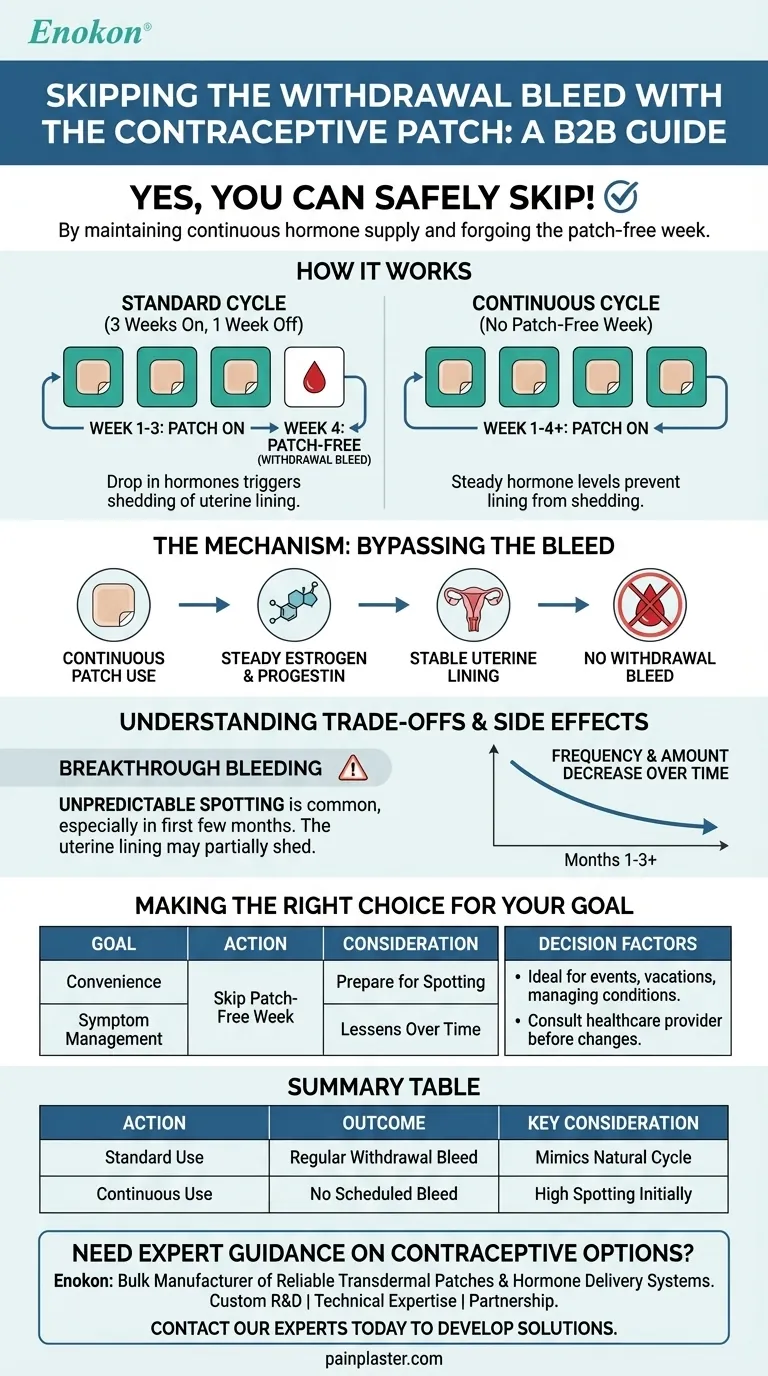
The 3-Weeks-On, 1-Week-Off Schedule
The contraceptive patch is typically used on a 28-day (or 4-week) cycle. You apply a new patch once a week for three consecutive weeks.
The fourth week is the patch-free week. You do not wear a patch during this time, which is when you will experience a withdrawal bleed.
Understanding a "Withdrawal Bleed"
The bleeding you experience during the patch-free week is not a true menstrual period. It's a withdrawal bleed caused by the drop in hormone levels when you remove the patch.
This drop signals the uterine lining to shed, mimicking a period but without the hormonal fluctuations of a natural menstrual cycle.
The Mechanism for Skipping Your Bleed
Maintaining Continuous Hormone Levels
The key to skipping your withdrawal bleed is to prevent the drop in hormones.
By applying a new patch immediately after your third week (skipping the patch-free interval), you maintain a steady level of estrogen and progestin in your body.
Preventing the Uterine Lining from Shedding
This continuous hormone supply keeps the lining of your uterus stable. Without the hormonal trigger to shed, the lining remains in place, and the withdrawal bleed is bypassed.
Understanding the Trade-offs and Side Effects
The High Likelihood of Breakthrough Bleeding
The most common side effect of skipping your patch-free week is breakthrough bleeding, which is unpredictable spotting or bleeding between your expected periods.
This is especially common during the first few months of continuous use as your body adapts to the new hormone pattern.
Why Spotting Occurs
Breakthrough bleeding happens because, despite the continuous hormone supply, the uterine lining can sometimes become unstable and shed partially. This is not a sign that the patch is less effective at preventing pregnancy.
For many users, the frequency and amount of spotting decrease significantly after the first two or three cycles of continuous use.
Making the Right Choice for Your Goal
Deciding to use the patch continuously is a personal choice based on your lifestyle and health needs.
- If your primary focus is convenience or managing symptoms: Skipping your bleed can be ideal for special events, vacations, or for managing conditions like endometriosis or painful periods.
- If you are concerned about unscheduled spotting: Be prepared for potential breakthrough bleeding, especially in the beginning, and know that it typically lessens over time.
- If you have any health concerns or are unsure: Always consult with your healthcare provider before changing the way you use your prescribed contraception to ensure it's the right choice for you.
Understanding how to adjust your patch schedule gives you the flexibility to manage your cycle effectively.
Summary Table:
| Action | Outcome | Key Consideration |
|---|---|---|
| Standard Use (3 weeks on, 1 week off) | Regular withdrawal bleed | Mimics a natural cycle |
| Skipping the Bleed (Continuous use) | No scheduled bleed | High likelihood of breakthrough spotting initially |
Need Expert Guidance on Contraceptive Options?
Navigating contraceptive choices can be complex. At Enokon, we are a bulk manufacturer of reliable transdermal patches, including contraceptive and hormone delivery systems, for healthcare and pharmaceutical distributors and brands. Our technical expertise supports custom R&D and development to meet your specific product needs.
Let us help you develop a solution that provides comfort and reliability for end-users.
Contact our experts today to discuss how we can partner on your next project.
Visual Guide
Related Products
- Heating Pain Relief Patches for Menstrual Cramps
- Prostate Pain Kidney Health Care Patch for Men
- Silicone Scar Sheets Patch Transdermal Drug Patch
- Lidocaine Hydrogel Pain Relief Patch for Pain Relief
- Menthol Gel Pain Relief Patch
People Also Ask
- What are the benefits of Period Pain Heat Patches? Drug-Free, On-the-Go Relief
- What are the key benefits of heating patches for elderly individuals? Relieve Pain & Improve Mobility
- What are the different types of heat patches? Find the Right Pain Relief for Your Needs
- What are the key differences between conventional heat patches and deep heat devices? Choosing the Right Pain Relief Solution
- What percentage of people with back pain use heat patches for relief? Discover the Popular Choice for Pain Management












