
Yes, several types of medication can interfere with the contraceptive patch, reducing its effectiveness and increasing your risk of an unintended pregnancy. The most common culprits include certain antibiotics, epilepsy medications, treatments for HIV, and the herbal supplement St. John's Wort.
The core issue is that some substances accelerate how your body metabolizes the hormones released by the patch. This lowers the hormone levels in your bloodstream, potentially compromising the patch's ability to prevent ovulation.
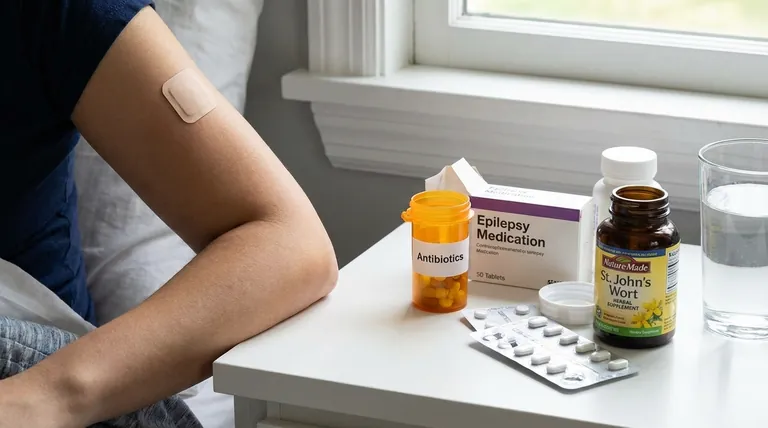
How Drug Interactions Compromise the Patch
The contraceptive patch works by consistently releasing a specific dose of estrogen and progestin into your body. Its effectiveness depends entirely on maintaining these hormone levels within a therapeutic range.
The Role of Liver Enzymes
Your liver is responsible for breaking down substances in your blood, including hormones and medications. Certain drugs are known as enzyme inducers, meaning they speed up the activity of specific liver enzymes.
When you take an enzyme-inducing medication, your liver metabolizes the contraceptive hormones much faster than usual. This rapid breakdown can cause the hormone levels in your blood to drop below the threshold needed to prevent pregnancy.
Key Medications Known for Interactions
The following categories contain drugs that are well-documented to interfere with hormonal contraceptives like the patch.
Epilepsy Drugs (Anticonvulsants)
Many medications used to control seizures are strong enzyme inducers. This is one of the most well-known and significant interactions.
Certain Antibiotics
While most common antibiotics do not affect the patch, specific types, such as rifampin and rifabutin (used to treat tuberculosis), are potent enzyme inducers that significantly reduce contraceptive effectiveness.
HIV Medications
Some antiretroviral drugs used in the treatment of HIV, particularly certain protease inhibitors and non-nucleoside reverse transcriptase inhibitors, can interfere with hormone levels.
St. John's Wort
This over-the-counter herbal supplement, often used for mood support, is a known enzyme inducer. People often overlook it because it isn't a prescription drug, making it a particularly risky source of interaction.
Common Pitfalls to Avoid
Understanding the risks is the first step toward preventing a lapse in contraceptive coverage. The primary danger is unknowingly rendering your birth control ineffective.
The Risk of Assumed Safety
Never assume a new medication is safe to take with your patch. This includes short-term prescriptions, over-the-counter drugs, and herbal or dietary supplements.
The Problem of Incomplete Disclosure
Your healthcare provider can only protect you from drug interactions if they have a complete picture of your health. Failing to mention a supplement like St. John's Wort or a medication prescribed by another specialist can lead to contraceptive failure.
Relying on Outdated Information
Drug formularies and medical guidance change over time. Always confirm potential interactions with a pharmacist or your prescribing doctor for any new medication you start.
Making the Right Choice for Your Goal
Proactive communication is the only guaranteed way to ensure your contraceptive patch remains effective. Your actions should change depending on your situation.
- If you are starting the patch for the first time: Provide your doctor with a complete list of every prescription medication, over-the-counter drug, and herbal supplement you currently take.
- If you are already using the patch and need a new medication: Remind the prescribing doctor that you use the contraceptive patch and ask them to confirm there are no interactions.
- If you must take an interacting medication: Speak with your provider about using a reliable backup method of contraception, such as condoms, for the entire duration of treatment and for a period after it ends.
Ultimately, safeguarding the effectiveness of your contraception is a partnership between you and your healthcare team.
Summary Table:
| Medication Type | Common Examples | Effect on Patch |
|---|---|---|
| Epilepsy Drugs | Carbamazepine, Phenytoin | Speeds up hormone metabolism, reducing effectiveness |
| Certain Antibiotics | Rifampin, Rifabutin | Potent enzyme inducers that lower hormone levels |
| HIV Medications | Some protease inhibitors | Can interfere with contraceptive hormone levels |
| St. John's Wort | Herbal supplement | Significant enzyme inducer; major risk for interaction |
Ensure the reliability of your transdermal medication delivery. As Enokon, a bulk manufacturer of reliable transdermal patches and pain plasters for healthcare and pharma distributors and brands, we understand that drug efficacy is paramount. Our technical expertise in custom R&D and development ensures your products are designed with safety and reliability in mind. Let's discuss your project — contact our experts today to develop a trusted solution.
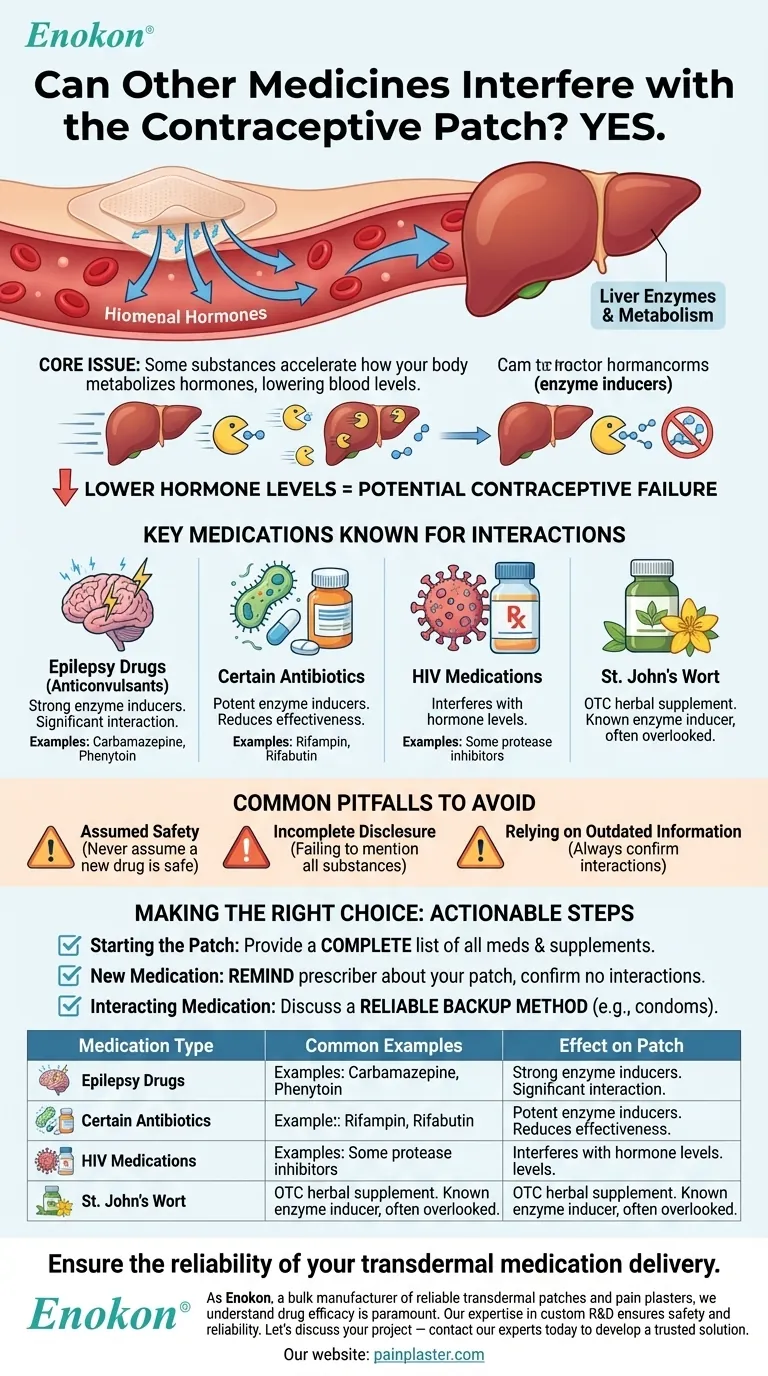
Visual Guide
Related Products
- Heating Pain Relief Patches for Menstrual Cramps
- Prostate Pain Kidney Health Care Patch for Men
- Silicone Scar Sheets Patch Transdermal Drug Patch
- Lidocaine Hydrogel Pain Relief Patch for Pain Relief
- Menthol Gel Pain Relief Patch
People Also Ask
- What are the benefits of Period Pain Heat Patches? Drug-Free, On-the-Go Relief
- What are the key benefits of heating patches for elderly individuals? Relieve Pain & Improve Mobility
- What are the different types of heat patches? Find the Right Pain Relief for Your Needs
- What are the key differences between conventional heat patches and deep heat devices? Choosing the Right Pain Relief Solution
- What percentage of people with back pain use heat patches for relief? Discover the Popular Choice for Pain Management













