
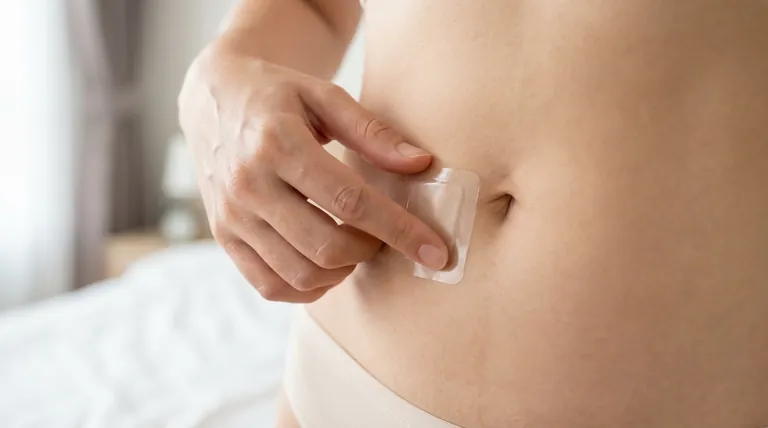
To apply an estradiol transdermal patch, you must place it on a clean, dry, and cool area of skin on the lower abdomen or upper buttocks. After removing the protective liner, press the patch firmly in place for at least 10 seconds, ensuring the edges are sealed, and always rotate the application site with each new patch.
The goal of proper application is not just to make the patch stick, but to ensure a consistent, predictable delivery of medication. Correct site selection and skin preparation are as critical as the application itself for achieving the intended therapeutic effect while minimizing skin irritation.
Preparing for Application
Before you even open the patch pouch, proper preparation is essential for both effectiveness and safety. Taking these preliminary steps will prevent the most common application issues.
Choosing the Right Location
The patch is designed to be worn on the lower abdomen or the upper buttocks. This placement provides a large, stable surface area for consistent absorption.
Critically, you must avoid certain areas. Never apply the patch to your breasts. You should also avoid the waistline, where tight clothing can rub against the patch and cause it to loosen or fall off.
Preparing Your Skin
The selected area must be clean, dry, and cool. If you need to clean the skin, use only plain water and pat it completely dry with a clean towel.
Do not use soaps, oils, lotions, alcohol, or powders on the area where you intend to apply the patch. These substances can create a barrier or residue that severely interferes with the patch's adhesive. Also, ensure the skin is not oily, damaged, irritated, or broken.
Washing Your Hands
Always wash and dry your hands thoroughly before handling the patch. This prevents the transfer of dirt or oils to the adhesive surface.
The Step-by-Step Application Process
Follow these steps precisely each time you apply a new patch to ensure a secure seal and proper function.
Open the Pouch Carefully
Tear open the protective pouch at the notch. Do not use scissors, as you might accidentally cut the patch itself.
Remove the Protective Liner
Peel off the protective liner to expose the sticky, adhesive side of the patch. Be careful to avoid touching the adhesive with your fingers, as this can reduce its ability to stick to your skin.
Place and Press Firmly
Immediately place the sticky side of the patch onto your chosen spot on the lower abdomen or upper buttock.
Using the palm of your hand, press the patch down firmly for at least 10 seconds. Make sure the entire patch, especially the edges, is in full contact with your skin.
Wash Hands Again
After the patch is securely in place, wash your hands again to remove any medication that may have gotten on your fingers.
Critical Post-Application Care
Managing your patch doesn't end once it's applied. Proper rotation and knowing how to handle common issues are key to successful long-term use.
The Importance of Site Rotation
You must rotate the application site with each new patch. This practice is crucial for preventing skin irritation and allowing the skin to recover.
Wait at least one week before you apply a new patch to the exact same spot. A good method is to alternate between the left and right sides of your abdomen or buttocks.
What to Do if a Patch Falls Off
If a patch becomes loose or falls off, first try to reapply the same patch to a clean, dry area. Press it firmly for 10 seconds to see if it will adhere.
If the original patch will not stick, you may apply a new patch. However, you must continue to follow your original treatment schedule. Do not change the day you are scheduled to replace your patch.
How to Remove and Dispose of an Old Patch
When it's time to apply a new patch, first remove the old one. To dispose of it safely, fold the used patch in half so the sticky, adhesive side sticks to itself. Dispose of it in the trash, out of reach of children and pets.
Making the Right Choice for Your Treatment
Your approach to application can be fine-tuned based on your primary concerns, whether they are effectiveness, comfort, or consistency.
- If your primary focus is maximum effectiveness: Ensure your skin is completely free of any oils or lotions and press the patch firmly for at least 10-30 seconds, paying special attention to sealing the edges.
- If your primary focus is preventing skin irritation: Be diligent about site rotation, never reusing the same spot within a week and never applying a patch to red or broken skin.
- If your primary focus is safety and consistency: Always stick to your prescribed schedule for changing the patch, even if you have to replace one that has fallen off.
Following these guidelines empowers you to manage your therapy confidently and effectively.
Summary Table:
| Step | Key Action | Purpose |
|---|---|---|
| 1. Preparation | Clean skin with water; avoid oils/lotions. | Ensures strong adhesion and consistent medication absorption. |
| 2. Application | Press patch firmly for 10+ seconds, sealing edges. | Creates a secure seal for reliable, predictable drug delivery. |
| 3. Rotation | Rotate sites (lower abdomen/upper buttock); wait 1 week before reusing a spot. | Prevents skin irritation and allows skin recovery. |
| 4. If Patch Falls Off | Reapply same patch if possible; if not, use a new one but keep original schedule. | Maintains consistent dosing and therapeutic effect. |
Achieve consistent, reliable hormone therapy with expertly manufactured transdermal patches.
As Enokon, a leading bulk manufacturer of reliable transdermal patches and pain plasters, we provide healthcare and pharmaceutical distributors and brands with high-quality, consistent products. Our technical expertise supports custom R&D and development to meet your specific needs.
Ready to enhance your product line? Contact our experts today to discuss how our transdermal solutions can benefit your patients and your brand.
Visual Guide

Related Products
- Silicone Scar Sheets Patch Transdermal Drug Patch
- Menthol Gel Pain Relief Patch
- Far Infrared Heat Pain Relief Patches Transdermal Patches
- Icy Hot Menthol Medicine Pain Relief Patch
- Mugwort Wormwood Pain Relief Patch for Neck Pain
People Also Ask
- What role does a silicone-based transdermal delivery system play in Parkinson's? Enhancing Early-Stage Patient Care
- How is the long-term skin tolerance of silicone-based transdermal patches evaluated in clinical settings? R&D and Safety
- Why is a polarizing microscope used to evaluate the long-term stability of transdermal drug patches? Ensure Efficacy.
- What are common adverse effects of transdermal drug delivery? Risks & Prevention Tips
- What are the advantages of transdermal drug patches? Optimize Medication Delivery with Patches







