
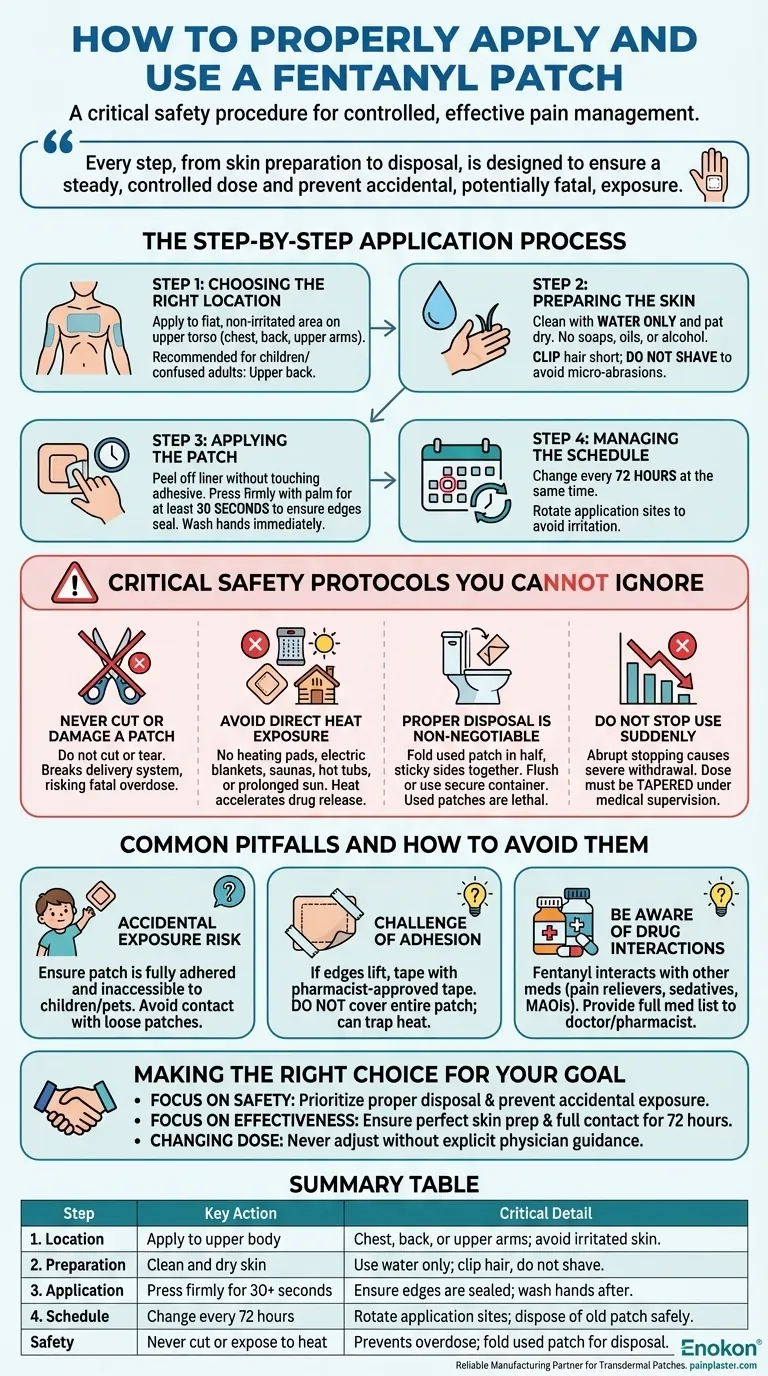
To properly apply a fentanyl patch, you must place it on a clean, dry, and hairless area of skin on the upper body, such as the chest, back, or upper arms. Press the patch firmly in place for at least 30 seconds to ensure it is fully sealed against the skin. A new patch should be applied every 72 hours, and the old one must be disposed of safely.
The correct application of a fentanyl patch is not just about making it stick; it is a critical safety procedure. Every step, from skin preparation to disposal, is designed to ensure a steady, controlled dose of medication and prevent accidental, potentially fatal, exposure.
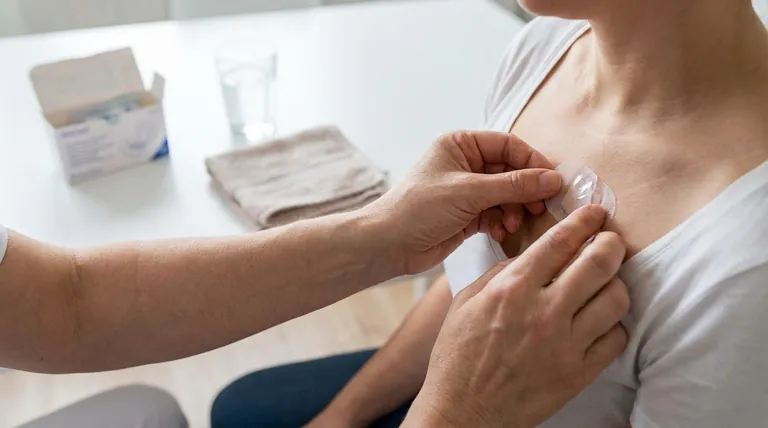
The Step-by-Step Application Process
Proper application is the foundation of safe and effective pain management with a fentanyl patch. Following these steps precisely minimizes risks and ensures the medication works as intended.
Step 1: Choosing the Right Location
The patch must be applied to a flat, non-irritated area on the upper torso.
Ideal locations include the chest, back, upper arms, or the sides of the waist. This ensures consistent absorption and helps keep the patch secure. For children or adults who may be confused, the upper back is the recommended site to prevent them from removing it.
Step 2: Preparing the Skin
The skin must be clean and completely dry before application.
Clean the selected area with water only and pat it dry. Do not use soaps, oils, lotions, or alcohol, as they can irritate the skin or interfere with the patch's adhesive. If the area has hair, clip it as short as possible; do not shave, as shaving can cause micro-abrasions that may alter drug absorption.
Step 3: Applying the Patch
A secure seal is essential for the medication to be delivered correctly.
After removing the patch from its sealed pouch, peel off the protective liner without touching the adhesive side. Immediately press the patch firmly onto the prepared skin with the palm of your hand for at least 30 seconds. Ensure the edges are stuck down completely. Wash your hands with water immediately after application.
Step 4: Managing the Schedule
The fentanyl patch is designed for a 72-hour (3-day) cycle.
Always change your patch at the same time of day as directed by your doctor. When applying a new patch, choose a different spot from the previous one to avoid skin irritation.
Critical Safety Protocols You Cannot Ignore
Fentanyl is a potent opioid, and deviating from safety protocols can have severe consequences, including overdose and death.
Never Cut or Damage a Patch
A fentanyl patch is a sophisticated drug delivery system. Cutting or tearing it breaks this system, which can cause the entire dose of medication to be released at once, leading to a fatal overdose. Always use a patch that is fully intact.
Avoid Direct Heat Exposure
Do not expose the patch to direct heat sources like heating pads, electric blankets, saunas, hot tubs, or prolonged sun exposure. Heat can accelerate the rate of drug release from the patch, significantly increasing the risk of a dangerous overdose.
Proper Disposal is Non-Negotiable
Even after 72 hours, a used patch contains enough fentanyl to be lethal to a child, pet, or another adult. Immediately after removal, fold the used patch in half so the sticky sides press together. Dispose of it according to your pharmacist's instructions, typically by flushing it down the toilet or placing it in a secure disposal container.
Do Not Stop Use Suddenly
Abruptly stopping fentanyl can cause severe opioid withdrawal symptoms. Your dose must be tapered down gradually under the direct supervision of your healthcare provider.
Common Pitfalls and How to Avoid Them
Understanding potential issues can help you manage your treatment more effectively and safely.
The Risk of Accidental Exposure
The primary risk to others comes from physical contact. Ensure the patch is always fully adhered and not accessible to children. Accidental transfer of the drug can occur if someone touches a loose or discarded patch.
The Challenge of Adhesion
If the edges of the patch begin to lift, you may tape them down with a first-aid tape approved by your pharmacist. Do not cover the entire patch with other bandages, as this can trap heat and increase drug absorption.
Be Aware of Drug Interactions
Fentanyl can have serious, sometimes fatal, interactions with other medications, including certain pain relievers, sedatives, and MAO inhibitors. Always provide your doctor and pharmacist with a complete list of all medications you are taking.
Making the Right Choice for Your Goal
Your approach to using the fentanyl patch should be guided by a clear understanding of its purpose and risks.
- If your primary focus is safety: Prioritize the proper disposal of used patches and be vigilant about preventing accidental exposure to children and others.
- If your primary focus is effectiveness: Ensure the skin is perfectly prepared before application and that the patch maintains full contact for the entire 72-hour period.
- If you are starting, stopping, or changing your dose: Never make any adjustments without the explicit guidance of your prescribing physician.
Ultimately, using this medication safely requires strict adherence to a precise and consistent routine.
Summary Table:
| Step | Key Action | Critical Detail |
|---|---|---|
| 1. Location | Apply to upper body | Chest, back, or upper arms; avoid irritated skin. |
| 2. Preparation | Clean and dry skin | Use water only; clip hair, do not shave. |
| 3. Application | Press firmly for 30+ seconds | Ensure edges are sealed; wash hands after. |
| 4. Schedule | Change every 72 hours | Rotate application sites; dispose of old patch safely. |
| Safety | Never cut or expose to heat | Prevents overdose; fold used patch for disposal. |
Are you a healthcare distributor or brand seeking a reliable manufacturing partner for transdermal patches?
At Enokon, we are a bulk manufacturer of reliable transdermal patches and pain plasters. Our technical expertise ensures your products are developed with precision, safety, and efficacy in mind. We offer custom R&D and development services to meet your specific needs.
Benefit from our expertise for your next project. Contact our team today to discuss custom development and manufacturing solutions.
Visual Guide
Related Products
- Menthol Gel Pain Relief Patch
- Icy Hot Menthol Medicine Pain Relief Patch
- Capsaicin Chili Medicated Pain Relief Patches
- Lidocaine Hydrogel Pain Relief Patch for Pain Relief
- Mugwort Wormwood Pain Relief Patch for Neck Pain
People Also Ask
- How effective are pain relief patches for muscle pain? Target Localized Pain with Transdermal Delivery
- How do pain relief patches compare to other pain relief methods? Discover Targeted, Long-Lasting Relief
- Who should consult a healthcare professional before using pain relief patches? Ensure Your Safety with Medical Advice
- What are pain relief patches and how do they work? Discover Non-Invasive Pain Management
- Can pregnant women use pain relief patches? Your Essential Guide to Safe Pain Management



















