
An essential oil patch can be worn for up to 24 hours. This time frame is recommended to ensure both consistent effectiveness and to minimize the potential for skin irritation from prolonged contact with the patch's adhesive and oils.
The 24-hour guideline for essential oil patches serves two primary functions: it marks the period of optimal oil release for therapeutic benefit and acts as a critical safety measure to prevent skin irritation.
The Principle Behind the 24-Hour Guideline
Understanding why a time limit exists is key to using these products safely and effectively. The recommendation is based on a balance between the patch's design and your body's response.
Ensuring Consistent Release
Essential oil patches are engineered to deliver a steady, controlled release of their active ingredients over a set period. After approximately 24 hours, the concentration of oils released diminishes significantly, rendering the patch less effective. Replacing it ensures you continue to receive the intended benefit.
Preventing Skin Irritation
Prolonged, uninterrupted contact with any adhesive can block pores and trap moisture, potentially leading to skin irritation. When combined with concentrated essential oils, this risk increases. The 24-hour limit is a safety buffer designed to prevent contact dermatitis, which can manifest as redness, itching, or a rash.
Common Pitfalls and Best Practices
Proper application and awareness of potential issues are just as important as the duration of wear. Adhering to these practices will significantly improve your experience.
Correct Application is Crucial
Always apply the patch to clean, dry, and healthy skin. As a critical safety precaution, never place a patch on broken or irritated skin, as this can increase absorption and cause significant discomfort or reaction.
Rotate Application Sites
To give your skin a break, avoid placing a new patch in the exact same spot as the previous one. Rotating the location allows the skin to breathe and recover fully, reducing the cumulative risk of irritation over time.
Monitor Your Skin's Reaction
Pay attention to how your skin feels. If you experience any discomfort, itching, or redness while wearing the patch, remove it immediately and gently wash the area with soap and water.
Making the Right Choice for Your Use Case
Your goal determines how you should approach the timing.
- If your primary focus is maximum therapeutic benefit: Adhere strictly to the 24-hour cycle, applying a fresh patch at the same time each day for a consistent effect.
- If your primary focus is skin safety or you have sensitive skin: Consider starting with a shorter duration, such as 8-12 hours, and always rotate the application site with each new patch.
- If you experience any form of irritation: Remove the patch immediately, discontinue use in that area, and consult the product's guidelines.
By respecting the recommended time frame, you can use essential oil patches with confidence and achieve the desired results safely.
Summary Table:
| Key Factor | Description |
|---|---|
| Optimal Wear Time | Up to 24 hours |
| Primary Benefit | Ensures consistent, effective release of essential oils |
| Primary Safety Measure | Prevents skin irritation from prolonged adhesive contact |
| Best Practice | Rotate application sites and monitor skin for reactions |
Need reliable, skin-friendly essential oil patches?
As Enokon, a bulk manufacturer of reliable transdermal patches and pain plasters, we combine technical expertise with rigorous safety standards. Our custom R&D and development services ensure your healthcare or pharma brand receives patches optimized for both 24-hour efficacy and superior skin tolerance.
Contact our experts today to discuss your custom patch development needs.
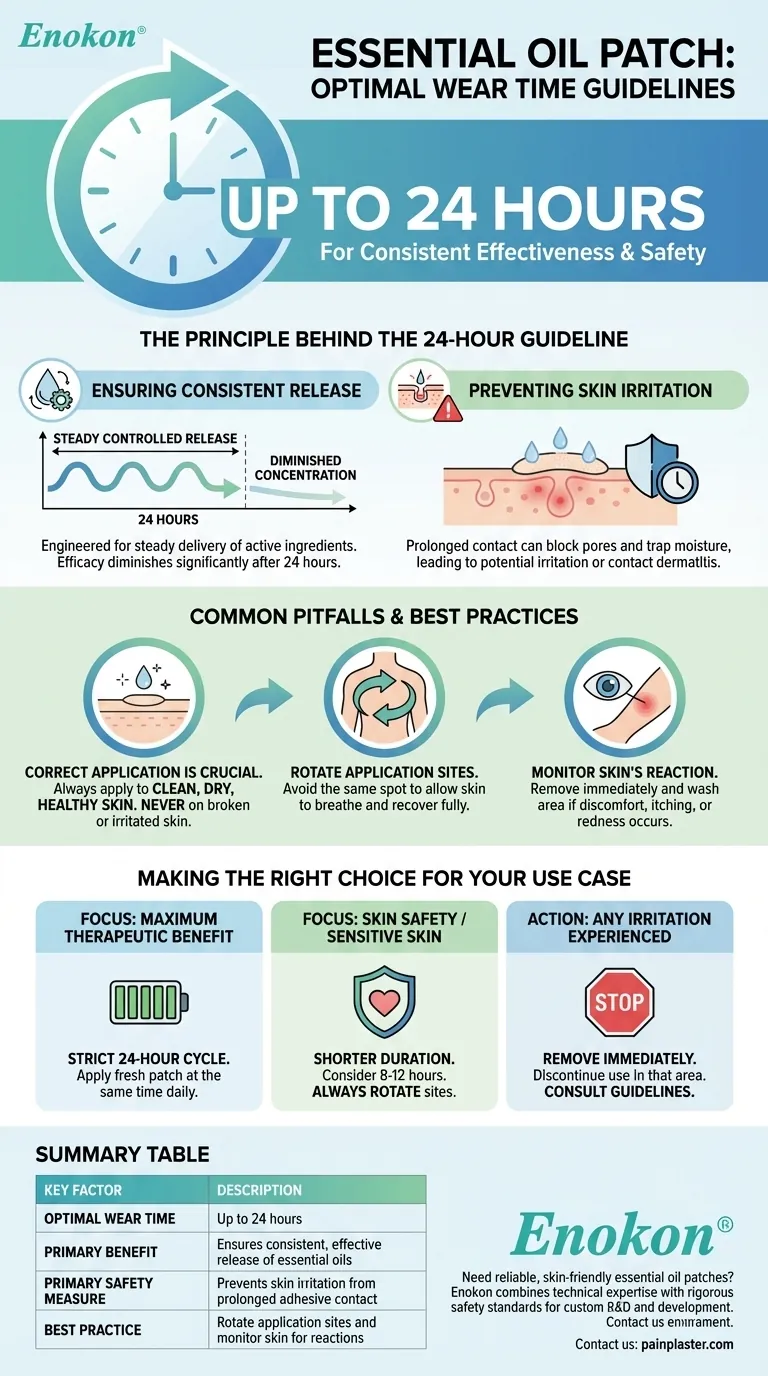
Visual Guide
Related Products
- Mugwort Wormwood Pain Relief Patch for Neck Pain
- Heat Relief Capsicum Patch for Lower Back Pain Relief
- Menthol Gel Pain Relief Patch
- Icy Hot Menthol Medicine Pain Relief Patch
- Natural Herbal Patch for Motion Sickness and Car Sickness Relief
People Also Ask
- What safety considerations should be kept in mind when using pain relief patches? Ensure Safe & Effective Pain Management
- What is the purpose of pain relief patches? Get Targeted Relief with Fewer Side Effects
- How do pain relief patches provide targeted relief? Discover the Science Behind Effective Pain Management
- How should pain relief patches be applied and used? A Guide to Safe & Effective Targeted Relief
- Are pain relief pills and patches available without a prescription? Choose the Right OTC Pain Relief



















