
In short, a fentanyl patch should be changed every 72 hours (3 days). This schedule is critical for ensuring a consistent and safe level of medication for pain management. Adhering to this timing precisely as prescribed by your doctor is essential to avoid both breakthrough pain and the risk of accidental overdose.
The core principle behind the 72-hour replacement cycle is maintaining a steady state of medication in your system. Deviating from this schedule can disrupt pain control and introduce significant safety risks. Your doctor's specific instructions are the definitive guide.
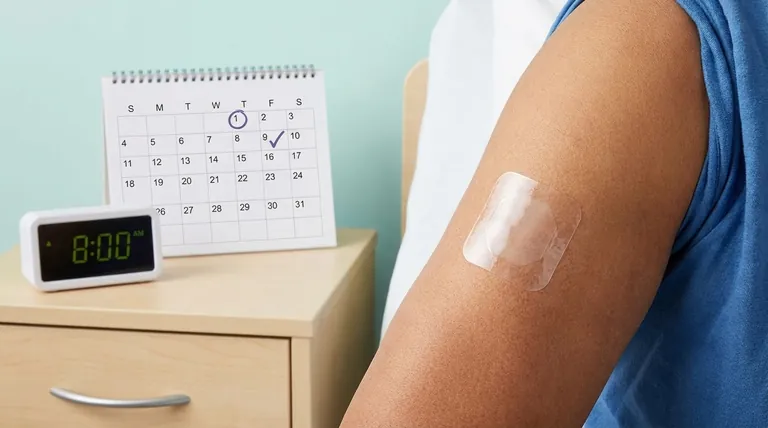
The Principle Behind the 72-Hour Cycle
A transdermal fentanyl patch is a sophisticated drug delivery system. Understanding how it works clarifies why the timing of a change is so important.
Why 72 Hours is the Standard
The patch is engineered to release a specific amount of fentanyl through the skin at a relatively constant rate, measured in micrograms per hour (mcg/hr). This design provides continuous pain relief over a three-day period.
After 72 hours, the patch's delivery system becomes less reliable, and the amount of medication it releases can decrease significantly.
Maintaining a Stable Medication Level
Changing the patch on a strict schedule prevents dangerous fluctuations. Changing it too late can lead to withdrawal symptoms and the return of severe pain. Changing it too early can lead to a build-up of the drug in your system, increasing the risk of a life-threatening overdose.
When a Schedule Might Differ
While 72 hours is the standard, a physician may occasionally prescribe a different schedule, such as every 48 hours, for specific patients who metabolize the medication differently. Never alter your schedule without direct medical supervision. The instructions on your prescription are the only ones you should follow.
Critical Safety Procedures for Patch Replacement
The process of changing the patch is just as important as the timing. Mishandling used patches can be extremely dangerous for others in your household.
Removing the Old Patch
Carefully peel the old patch off the skin. Avoid touching the adhesive side if possible.
Choosing a New Location
Apply the new patch to a different, clean, and dry area of skin on the upper torso (like the chest or back) or upper arms. Rotating the application site is crucial to prevent skin irritation.
The Danger of a Used Patch
Even after three days, a used fentanyl patch contains a significant amount of residual medication. This amount can be lethal if accidentally ingested or handled by a child, pet, or another adult.
Common Pitfalls and How to Avoid Them
The potency of fentanyl means there is no room for error. Understanding the risks is the first step toward preventing them.
Risk 1: Inconsistent Timing
Setting a recurring alarm or marking it on a calendar is a simple but effective way to ensure you change your patch at the same time every three days. Inconsistency is the primary cause of poor pain control or adverse effects.
Risk 2: Improper Disposal
Never throw a used patch in an open household trash can where it can be accessed. This is a critical safety failure.
The Correct Disposal Method
Immediately after removing the old patch, fold it in half with the adhesive sides sticking together. This seals in most of the remaining medication. Place it in a designated sharps container or a secure, childproof container and return it to a pharmacy for proper disposal.
Making the Right Choice for Your Goal
Your approach to using a fentanyl patch should be guided by your primary objective, whether it's pain control or ensuring household safety.
- If your primary focus is consistent pain control: Adhere strictly to the 72-hour (or your personally prescribed) schedule without fail.
- If your primary focus is the safety of your family and pets: Implement a rigorous and immediate disposal protocol for every used patch the moment it is removed.
- If you are experiencing breakthrough pain before the 72 hours are up: Do not apply a new patch early. Contact your prescribing doctor immediately to discuss your dosage and treatment plan.
Ultimately, precise timing and vigilant safety practices are the cornerstones of responsible fentanyl patch therapy.
Summary Table:
| Key Aspect | Details |
|---|---|
| Standard Change Frequency | Every 72 hours (3 days) |
| Primary Goal | Maintain stable medication levels for consistent pain control |
| Critical Safety Risk | Used patches contain residual, potentially lethal medication |
| Proper Disposal | Fold patch in half (adhesive sides together) and dispose in a pharmacy take-back program |
Partner with Enokon for Your Transdermal Patch Needs
As a bulk manufacturer of reliable transdermal patches and pain plasters, Enokon provides healthcare and pharmaceutical distributors and brands with the technical expertise for custom R&D and development. Ensure your products, like fentanyl patches, are manufactured to the highest standards of safety and efficacy.
Contact our experts today to discuss how we can support your product development and supply chain.
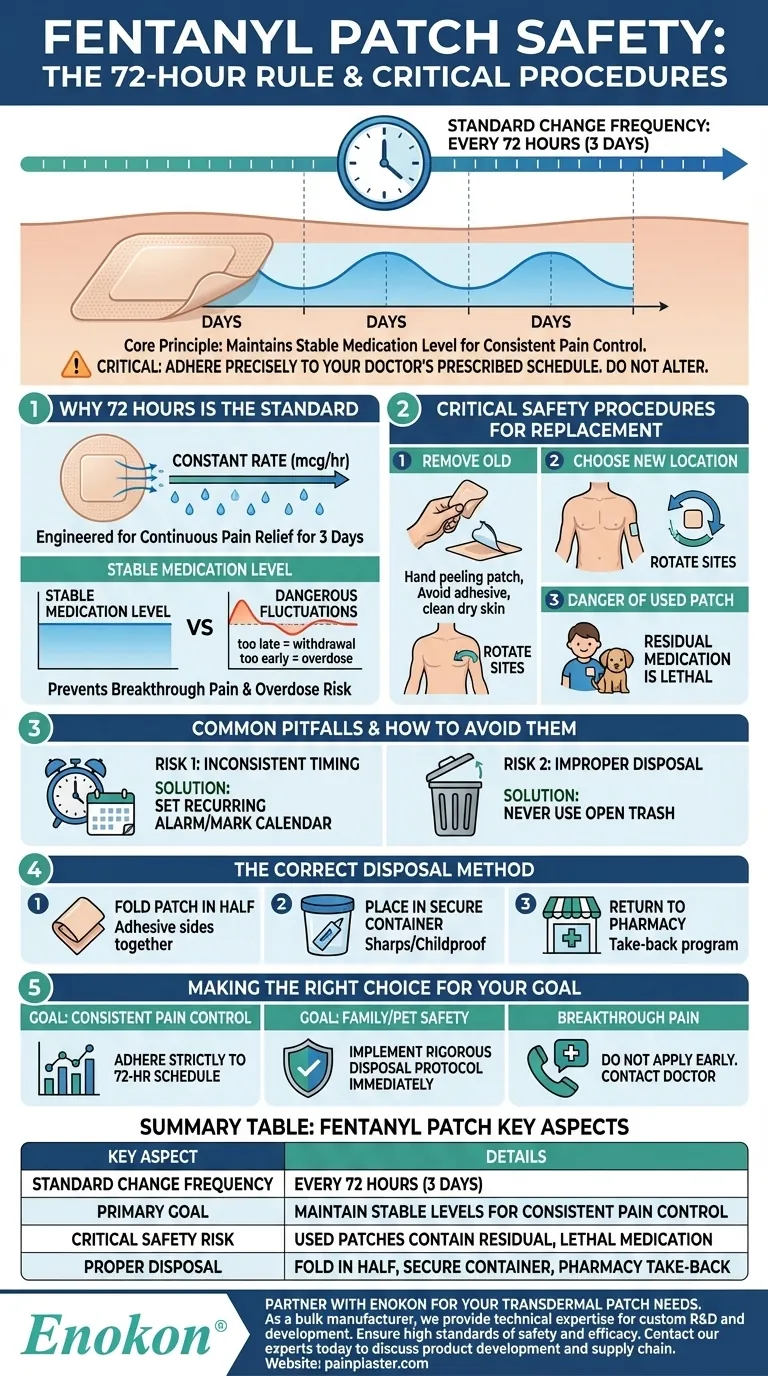
Visual Guide
Related Products
- Menthol Gel Pain Relief Patch
- Icy Hot Menthol Medicine Pain Relief Patch
- Far Infrared Heat Pain Relief Patches Transdermal Patches
- Silicone Scar Sheets Patch Transdermal Drug Patch
- Mugwort Wormwood Pain Relief Patch for Neck Pain
People Also Ask
- How effective are pain relief patches for muscle pain? Target Localized Pain with Transdermal Delivery
- How do pain relief patches compare to other pain relief methods? Discover Targeted, Long-Lasting Relief
- Who should consult a healthcare professional before using pain relief patches? Ensure Your Safety with Medical Advice
- Can pregnant women use pain relief patches? Your Essential Guide to Safe Pain Management
- What are some common applications of pain relief patches? Effective Relief for Muscle & Joint Pain
















