
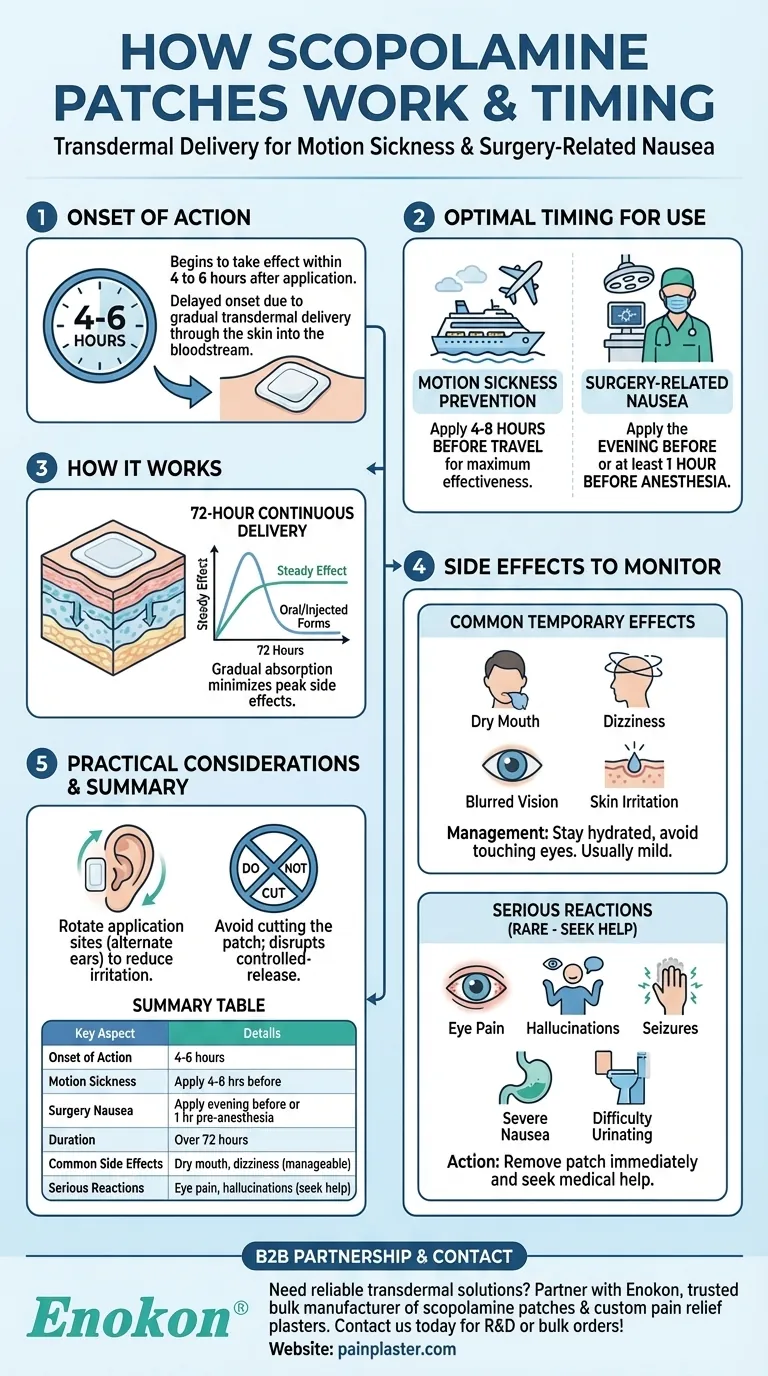
Scopolamine patches typically start working within 4 to 6 hours after application. For motion sickness, they are most effective when applied at least 4 to 8 hours before travel, while for surgery-related nausea, they are usually applied the evening before or at least 1 hour before anesthesia. The patch delivers the medication gradually through the skin, ensuring a steady effect over time. Common side effects like dry mouth or dizziness are usually mild and temporary, but serious reactions require immediate medical attention.

Key Points Explained:
-
Onset of Action
- The scopolamine anti inflammatory patch begins to take effect within 4 to 6 hours of application.
- This delayed onset is due to the transdermal delivery system, which slowly releases the medication into the bloodstream through the skin.
-
Optimal Timing for Use
- Motion Sickness Prevention: Apply the patch 4 to 8 hours before travel for maximum effectiveness.
- Surgery-Related Nausea: Apply either the evening before surgery or at least 1 hour before anesthesia to ensure the drug is active when needed.
-
How It Works
- The patch delivers scopolamine continuously over 72 hours, providing prolonged relief.
- The gradual absorption minimizes peak side effects compared to oral or injected forms.
-
Side Effects to Monitor
-
Common Temporary Effects: Dry mouth, dizziness, blurred vision, or mild skin irritation.
- Management: Stay hydrated and avoid touching the eyes after handling the patch.
-
Serious Reactions (Rare): Eye pain, hallucinations, seizures, severe nausea, or difficulty urinating.
- Action: Remove the patch immediately and seek medical help.
-
Common Temporary Effects: Dry mouth, dizziness, blurred vision, or mild skin irritation.
-
Practical Considerations
- Rotate application sites (e.g., behind alternate ears) to reduce skin irritation.
- Avoid cutting the patch, as this can disrupt the controlled-release mechanism.
For users prioritizing convenience and steady dosing, the patch’s design balances efficacy with tolerability—quietly simplifying nausea prevention in travel and clinical settings. Have you considered how its transdermal technology might benefit other therapeutic areas?
Summary Table:
| Key Aspect | Details |
|---|---|
| Onset of Action | 4-6 hours after application |
| Motion Sickness | Apply 4-8 hours before travel |
| Surgery Nausea | Apply evening before or 1 hour pre-anesthesia |
| Duration | Delivers medication over 72 hours |
| Common Side Effects | Dry mouth, dizziness (manageable) |
| Serious Reactions | Eye pain, hallucinations (seek help) |
Need reliable transdermal solutions for nausea prevention? Partner with Enokon, a trusted bulk manufacturer of scopolamine patches and custom pain relief plasters. Our expertise in transdermal technology ensures consistent dosing and patient comfort—ideal for healthcare distributors and pharma brands. Contact us today to discuss R&D support or bulk orders!
Visual Guide
Related Products
- Asthma Cough and Pain Relief Patch for Adults and Kids
- Lidocaine Hydrogel Pain Relief Patch for Pain Relief
- Menthol Gel Pain Relief Patch
- Herbal Medicated Anti Diarrhea Patch for Digestive Relief
- Icy Hot Menthol Medicine Pain Relief Patch
People Also Ask
- What role do natural ingredients and acupoint stimulation play in a cough relief patch? Synergistic Relief Explained
- What are the key benefits of using the cough relief patch? Soothe Your Cough with Targeted, Non-Oral Relief
- How does the cough relief patch provide targeted relief? Direct, Soothing Comfort for Coughs & Chest Congestion
- What makes the cough relief patch a convenient option for managing coughs? A Mess-Free, On-the-Go Solution
- What are the potential side effects of pain relief patches? A Guide to Safe Use & Key Risks


















