
To properly store clonidine patches, you must keep them at a controlled room temperature between 68°F and 77°F (20°C to 25°C). They should remain sealed in their original pouch until use, stored away from direct heat and moisture. Crucially, always keep new and used patches out of the reach of children and pets to prevent accidental exposure.
The core principle extends beyond simple storage; it's about maintaining the patch's integrity from the moment you receive it to the moment you safely dispose of it. Proper handling ensures the medication works as intended and protects others from accidental contact.
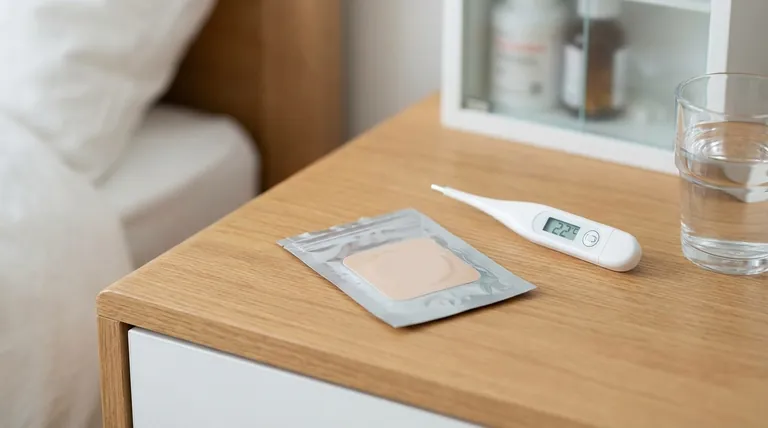
The Core Principles of Safe Storage
Understanding why these storage rules exist is key to ensuring the medication is both effective and safe for your household.
Temperature and Environment
Clonidine patches are sensitive to environmental conditions. Storing them at room temperature prevents the medication and the adhesive from degrading.
High heat can alter the drug's release rate, while excess moisture can weaken the patch's ability to stick to your skin. For this reason, avoid storing them in the bathroom, where humidity and temperature fluctuate significantly.
The Original Packaging
Always keep the patch inside its original sealed container or pouch until you are ready to apply it.
This packaging is designed to protect the patch from light, air, and moisture, all of which can compromise its effectiveness.
Accessibility and Safety
Perhaps the most critical rule is to keep clonidine patches out of sight and reach of children and pets.
Even a used patch contains enough residual medication to be harmful or even fatal if accidentally ingested or applied by a child.
Proper Handling and Disposal: Beyond Storage
Safe management of a clonidine patch continues through its application and disposal.
Application Guidelines
For the patch to work correctly, apply it to a clean, dry, and hairless area of skin, typically on the upper outer arm or chest.
Avoid skin that is irritated, scarred, or calloused. To prevent skin irritation, it's important to rotate the application site with each new patch. Never cut the patch, as this can damage the medication delivery system.
Secure Disposal
After removing a patch, fold it in half with the sticky sides together. This simple step seals in the remaining medication, making it much safer.
If available, using a medicine take-back program is the ideal method for disposing of used or expired patches.
After the Expiration Date
Do not use any patches after the expiration date printed on the packaging. Dispose of any expired medication using the secure folding method described above.
Understanding the Risks and Common Pitfalls
Improper handling of medication patches is a common but preventable source of problems.
The Risk of Improper Storage
Storing patches incorrectly can lead to reduced effectiveness. If the adhesive is weakened by moisture, the patch may loosen or fall off, interrupting your prescribed dose. Heat can damage the medication itself.
The Danger of Accidental Exposure
The primary risk is accidental exposure, especially to children. A discarded patch in a household trash can might seem harmless, but it still contains a potent dose of clonidine. This is why folding the patch is a non-negotiable safety step.
Common Mistakes to Avoid
The most frequent errors include storing patches in a bathroom medicine cabinet, tossing used patches in an open trash can, and forgetting to rotate application sites, which can lead to significant skin irritation over time.
A Simple Checklist for Safe Clonidine Patch Management
Follow these guidelines to ensure you are managing your medication safely and effectively.
- If your primary focus is medication effectiveness: Store patches in their original pouch at room temperature and apply them only to clean, dry, and healthy skin.
- If your primary focus is household safety: Always keep new and used patches away from children and pets, and immediately fold used patches sticky-side-in before disposal.
- If your primary focus is avoiding skin irritation: Be diligent about rotating the application site each week, never applying a new patch to the same spot twice in a row.
Adhering to these simple practices ensures your treatment is as safe and effective as possible.
Summary Table:
| Storage Aspect | Key Guideline | Why It's Important |
|---|---|---|
| Temperature | 68°F to 77°F (20°C to 25°C) | Prevents degradation of medication and adhesive. |
| Packaging | Keep sealed in original pouch until use. | Protects from light, air, and moisture. |
| Location | Away from heat, moisture, and children/pets. | Ensures safety and maintains drug integrity. |
| Disposal | Fold used patch sticky-sides together. | Seals in residual medication to prevent harm. |
Need Reliable, Safe-to-Use Transdermal Patches?
As a bulk manufacturer of pharmaceutical-grade transdermal patches, Enokon understands that proper storage begins with a robust product design. We partner with healthcare and pharma brands to develop reliable patches with stable drug delivery systems.
Benefit from our expertise:
- Custom R&D: Develop patches tailored for stability and user safety.
- Quality Manufacturing: Ensure consistent performance from the first patch to the last.
Let's collaborate to create a safer, more effective product for your patients.
Contact our technical experts today to discuss your transdermal patch needs.
Visual Guide

Related Products
- Lidocaine Hydrogel Pain Relief Patch for Pain Relief
- Herbal Medicated Anti Diarrhea Patch for Digestive Relief
- Menthol Gel Pain Relief Patch
- Asthma Cough and Pain Relief Patch for Adults and Kids
- Capsaicin Chili Medicated Pain Relief Patches
People Also Ask
- How does the aqueous base in a lidocaine patch contribute to drug delivery? Unlocking Sustained Pain Relief Technology
- What are the advantages of topical anesthetics over invasive Lidocaine infiltration? Discover Safer, Scalable Relief
- Which pain patch is most effective for arthritis? Find the Best Relief for Your Joint Pain
- Why are lidocaine patches preferred over oral medications? Targeted Relief & Scale Your Brand with OEM R&D Solutions
- Will a GP routinely continue prescribing lidocaine patches after the initial period? Understanding Short-Term Pain Relief



















